Diversifying from Traditional Destinations in 2026: Why Students Are Looking Beyond the US, UK, Canada & Australia
- Feb 2
- 4 min read

For decades, international students followed a predictable path: USA, UK, Canada, and Australia. These countries dominated global student mobility due to reputation, language familiarity, and post-study opportunities.
However, in 2026, a clear shift is underway. Students are increasingly diversifying from traditional destinations, exploring Europe, Asia-Pacific, and emerging education hubs that offer better affordability, visa stability, and strong career outcomes.
This is not a temporary trend—it’s a structural change in global education.
This blog explains:
Why students are diversifying from traditional destinations
Which countries are benefiting from this shift
Real data behind the trend
Pros and cons of non-traditional destinations
How students should decide smartly in 2026
What Are “Traditional Study Abroad Destinations”?
Traditionally, the following countries attracted the majority of international students:
United States
United Kingdom
Canada
Australia
These destinations still matter—but they are no longer the default choice.
Why Students Are Diversifying from Traditional Destinations in 2026
Several global, economic, and policy-driven factors are pushing students to look beyond the Big Four.
1. Rising Cost of Education and Living
Tuition fees and living expenses have increased sharply.
Country | Avg Tuition (PG) | Living Cost |
USA | Very High | Very High |
UK | High | High |
Canada | Medium–High | High |
Australia | High | High |
Many families now actively seek lower-cost alternatives with similar outcomes.
2. Visa Uncertainty and Policy Tightening
While still welcoming students, traditional destinations have:
Stricter visa scrutiny
Limited dependent rules
Slower PR timelines
Students want predictability, not policy surprises.
3. Oversaturation of Job Markets
Graduates in popular destinations now face:
Intense competition
Fewer sponsorships
Skill-specific hiring
Smaller markets often offer better early-career access.
4. Rise of Quality Education Elsewhere
Universities in Europe and Asia now offer:
English-taught programs
Industry-linked curricula
Globally recognized degrees
Quality is no longer exclusive to traditional destinations.
Emerging Study Abroad Destinations Gaining Popularity in 2026
1. Germany – Affordable & Industry-Driven
Germany is one of the biggest beneficiaries of students diversifying from
traditional destinations.
Why Germany Is Attracting Students
Low or no tuition fees
Strong engineering & tech ecosystem
18-month post-study job search visa
Access to EU job market
Key Factor | Germany |
Tuition | Very low |
Language | English-taught programs |
Job demand | Engineering, IT |
ROI | Very strong |
2. Ireland – Tech Gateway of Europe
Ireland has quietly emerged as a high-ROI alternative.
Why Ireland Is Trending
Home to global tech companies
English-speaking EU country
1–2 year post-study work visa
Smaller, less competitive market
Ireland benefits students in IT, data, and business analytics.
3. Netherlands – English Education in Europe
The Netherlands offers:
Hundreds of English-taught programs
Strong research universities
1-year Orientation Year visa
Advantage | Impact |
English instruction | High |
Living cost | Medium |
Job access | EU-wide |
4. France – Affordable Business & Tech Programs
France is no longer just about arts and fashion.
Why France Is Gaining Attention
Low tuition at public universities
English-taught master’s programs
Growing tech & business schools
France appeals to budget-conscious students seeking EU exposure.
5. Japan – Innovation & Technology Hub
Japan is attracting students in:
Robotics
AI
Advanced manufacturing
Why Japan Is Emerging
Government scholarships
World-class tech universities
Growing English-taught programs
Asia-Pacific destinations are rising alongside Europe.
6. South Korea – Research & Scholarships
South Korea is popular due to:
Generous scholarships
Strong research funding
Tech & electronics focus
Ideal for students interested in research and innovation.
Traditional vs Emerging Destinations: A 2026 Comparison
Factor | Traditional | Emerging |
Cost | High | Low–Medium |
Competition | Very High | Medium |
Visa stability | Medium | High |
Job saturation | High | Lower |
ROI | Variable | Often stronger |
This comparison explains why diversifying from traditional destinations is accelerating.
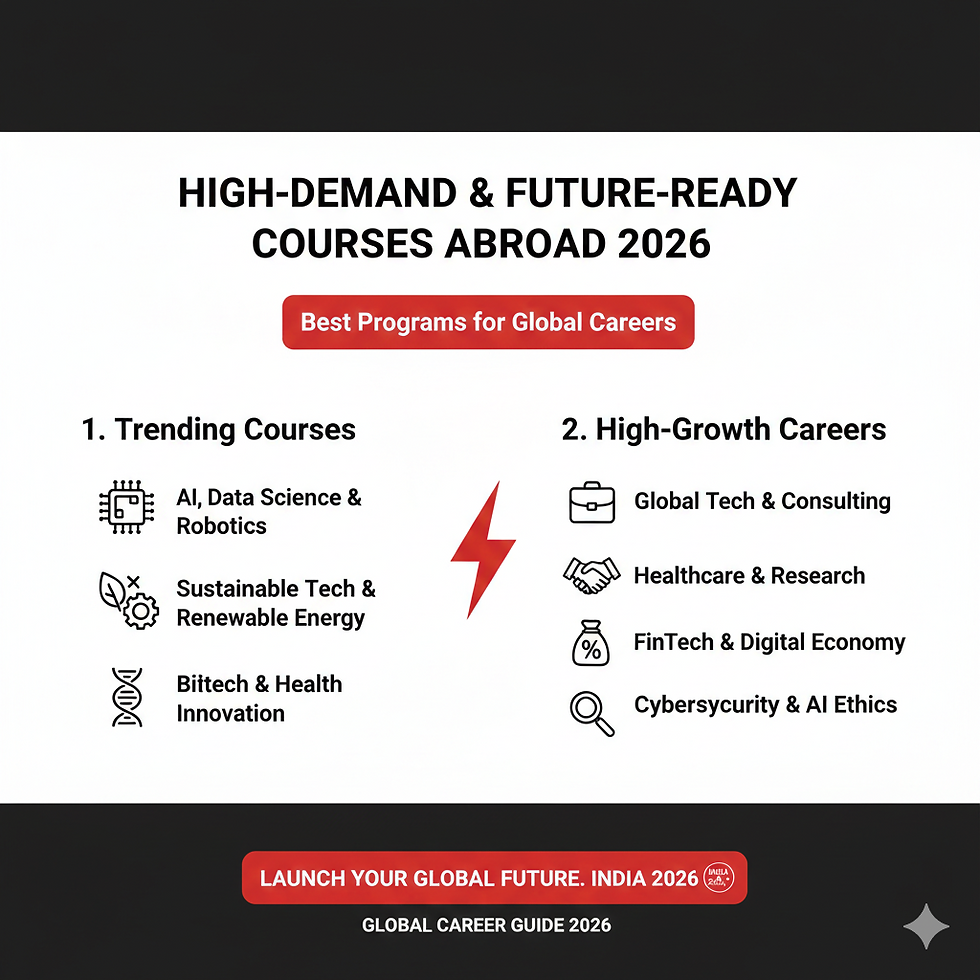
Courses Driving Diversification Trends
Students are not just changing countries—they’re choosing strategic courses.
Course | Preferred New Destinations |
Engineering | Germany, Netherlands |
Data Science | Ireland, France |
Healthcare | Germany, Ireland |
Sustainability | Germany, France |
Robotics | Japan, South Korea |
Countries aligning education with skill shortages attract more students.
Challenges of Non-Traditional Destinations (Reality Check)
Diversification has benefits—but also challenges.
Potential Downsides
❌ Language barriers in daily life
❌ Smaller alumni networks
❌ Cultural adjustment
❌ Limited part-time jobs in some regions
Students must plan realistically, not emotionally.
How to Decide Whether to Diversify from Traditional Destinations
Ask yourself:
Is my priority cost, career, or brand name?
Does the destination support my field?
Am I open to cultural adaptation?
What is the post-study job outlook?
Diversification works best when aligned with long-term goals.
The Role of AI in Supporting Diversification Decisions (2026)
With the rise of AI tools for study abroad planning, students now:
Compare ROI across countries
Analyze visa outcomes
Match skills to job markets
AI has accelerated diversification by making data accessible, not just opinions.
FAQs – Diversifying from Traditional Destinations
Q1. What does diversifying from traditional destinations mean?
Diversifying from traditional destinations means choosing study abroad countries beyond the USA, UK, Canada, and Australia, such as Germany, Ireland, France, or Asian countries, based on cost, visa stability, and career outcomes.
Q2. Is it risky to choose non-traditional study abroad destinations?
It can be risky if done without research, but with proper planning, emerging destinations often offer better ROI and less competition in 2026.
Q3. Are degrees from emerging destinations globally recognized?
Yes. Many European and Asian universities are globally ranked and recognized by employers worldwide.
Q4. Should I completely avoid traditional destinations?
No. Traditional destinations are still excellent—but they are no longer the only smart option.
Final Thoughts
In 2026, diversifying from traditional destinations is not about compromise—it’s about strategic choice. Students today are smarter, data-driven, and career-focused. They value outcomes over optics.
Those who explore beyond the obvious often discover better opportunities, faster careers, and stronger ROI.
Call to Action (CTA)
Thinking beyond the usual study abroad destinations?Get expert, profile-based guidance to identify the best country and course for you.
Explore Emerging Study Abroad Destinations🔗 https://www.yourwebsite.com/study-abroad
Compare Countries, Costs & Careers🔗 https://www.yourwebsite.com/country-guides
Book a Free Counseling Session🔗 https://www.yourwebsite.com/free-consultation


Comments