Scaler School Placements 2026: Reality Check, Average Package, ROI & Career Opportunities

The topic of Scaler School Placements 2026 has become one of the most searched queries among students considering alternative software engineering programs. With rising competition in the tech industry and increasing concerns about employability, students are carefully evaluating placement opportunities before making admission decisions.
Scaler School has positioned itself as a modern software engineering-focused institution that emphasizes coding, practical learning, projects, and industry readiness. But what is the reality behind the placement claims? How do placement opportunities compare with traditional engineering colleges?
This detailed reality check explores everything students should know about Scaler School Placements 2026.
1.Why Scaler School Placements 2026 Matter
For most students, the ultimate goal of pursuing higher education is securing a strong career opportunity.
Students evaluate institutions based on:
Placement support
Internship opportunities
Industry exposure
Skill development
Salary potential
Return on Investment (ROI)
This makes Scaler School Placements 2026 a critical factor for prospective applicants.
Understanding the Scaler School Model
Unlike traditional engineering colleges that focus heavily on theoretical subjects, Scaler School emphasizes:
Software Engineering
Data Structures & Algorithms
Full Stack Development
Artificial Intelligence
Machine Learning
System Design
Product Development
The curriculum is designed to align with industry requirements and software engineering roles.
2.Scaler School Placements 2026: What Students Should Know
Before evaluating placement opportunities, students should understand that placements depend on multiple factors:
Student Performance
Recruiters evaluate:
Coding ability
Problem-solving skills
Communication skills
Projects
Technical knowledge
Market Conditions
Technology hiring trends fluctuate based on:
Economic conditions
Startup funding
Global tech demand
Industry growth
Internship Experience
Students with relevant internship experience often have stronger placement outcomes.
3.How Scaler School Prepares Students for Placements
One reason students discuss Scaler School Placements 2026 is the institution's focus on job readiness.
Key preparation areas include:
Data Structures and Algorithms
Students spend extensive time mastering:
Arrays
Trees
Graphs
Dynamic Programming
Problem Solving
These topics are frequently tested in software engineering interviews.
Project-Based Learning
Students build:
Web Applications
Software Systems
AI Projects
Full Stack Products
Strong portfolios can improve employability.
Mock Interviews
Interview preparation often includes:
Technical Interviews
Coding Assessments
Behavioral Interviews
Resume Reviews
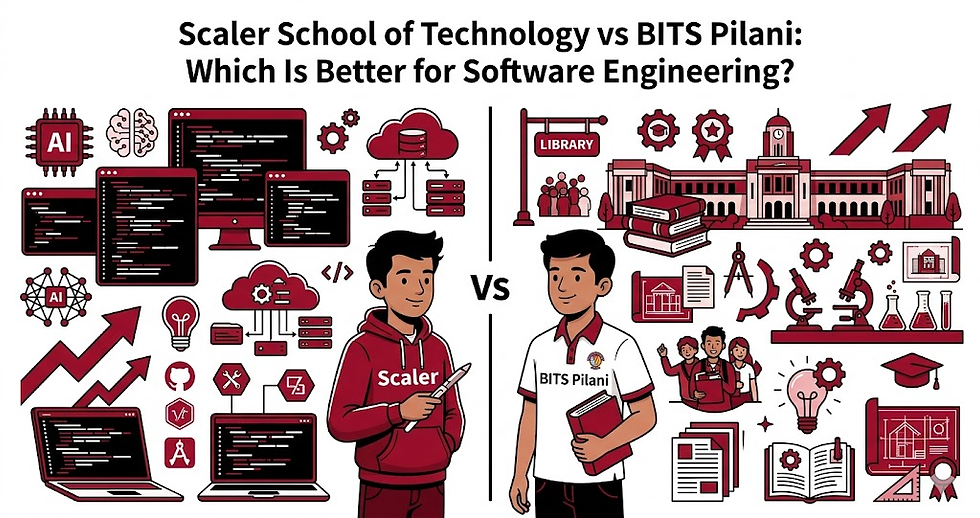
4.Scaler School Placements 2026 vs Traditional Engineering Colleges
Advantages of Scaler School
Industry-focused curriculum
Modern software engineering training
Practical learning approach
Strong coding emphasis
Project-driven education
Advantages of Traditional Colleges
Established placement cells
Large alumni networks
Broader academic exposure
Strong campus ecosystem
Brand recognition
Students should compare both approaches before making a decision.
Internship Opportunities and Industry Exposure
Internships play a major role in placement success.
Benefits include:
Real-world experience
Industry networking
Portfolio development
Improved employability
Students who actively pursue internships often achieve better placement outcomes regardless of institution.
5.ROI Analysis: Is Scaler School Worth It?
When evaluating Scaler School Placements 2026, students should focus on ROI rather than only salary figures.
Important factors include:
Total fees
Living expenses
Internship opportunities
Placement assistance
Long-term career growth
Skill development
The best ROI comes from combining strong skills with excellent career opportunities.
Skills Recruiters Look for in 2026
Technology companies increasingly prioritize:
Technical Skills
Programming
Data Structures
System Design
Cloud Computing
AI and Machine Learning
Soft Skills
Communication
Teamwork
Leadership
Problem Solving
Students who develop both technical and professional skills typically perform better during placements.
6.Career Paths After Scaler School
Graduates may pursue roles such as:
Software Engineer
Full Stack Developer
Backend Developer
Frontend Developer
AI Engineer
Machine Learning Engineer
Product Engineer
DevOps Engineer
Data Engineer
The exact career path depends on skills, projects, and industry demand.
Common Myths About Scaler School Placements 2026
Myth 1: Placements Are Guaranteed
Reality: No institution can guarantee success without student effort and performance.
Myth 2: Coding Alone Is Enough
Reality: Recruiters evaluate communication, teamwork, and problem-solving abilities as well.
Myth 3: Higher Fees Always Mean Better Placements
Reality: Placement success depends more on skills and preparation than tuition costs.
Myth 4: Traditional Colleges Are Always Better
Reality: Different students benefit from different educational models.
Future Outlook for Software Engineering Careers
The software industry continues to grow in:
Artificial Intelligence
Cloud Computing
Cybersecurity
Data Science
Automation
Product Engineering
Students who continuously upgrade their skills are likely to remain competitive in the job market.
FAQs
1. What are Scaler School Placements 2026 expected to look like?
Placement outcomes depend on student performance, market conditions, internship experience, and technical skills.
2. Does Scaler School provide placement support?
Scaler School focuses on industry readiness, interview preparation, projects, and career development.
3. Is Scaler School good for software engineering careers?
The curriculum is designed around software engineering, coding, AI, and practical development skills.
4. What skills are most important for placements in 2026?
Programming, data structures, system design, communication, and problem-solving are highly valued.
5. Are internships important for placements?
Yes. Internship experience significantly improves employability and practical exposure.


Comments