Why Some Summer Programs Strengthen Applications and Others Don’t.
- Jan 28
- 3 min read

Summer programs have become almost universal in undergraduate applications. From research camps to leadership workshops, students invest significant time and money often assuming that any summer program automatically strengthens their profile.
But in reality, universities do not view all summer programs equally.
Some programs genuinely enhance academic credibility, while others add little—or sometimes nothing to an application. The difference lies not in the certificate, but in how the experience fits into a student’s academic story.
For UG admissions in 2026 and beyond, understanding this distinction is critical.
Why Some Summer Programs Work Better :
Factor | Strengthens Applications | Adds Limited Value |
Academic Depth | High | Low |
Subject Relevance | Strong | Weak or generic |
Output | Research / Projects | Certificate only |
Selectivity | Moderate–High | Open enrollment |
Reflection Value | Clear learning impact | Hard to explain |
Faculty Interaction | Present | Minimal or none |
Profile Fit | Logical progression | Random addition |
Summer Programs : The Core Difference: Intent vs Participation
Universities do not ask:
How many programs did you attend?
They ask:
Why did you choose this program?
What did it help you understand or build?
Programs strengthen applications when they show intentional academic exploration, not passive attendance.
Why Some Summer Programs Strengthen Applications
1. They Align Clearly With Academic Direction
Strong programs:
Connect to intended major
Extend IGCSE or IB subjects
Reinforce long-term academic interest
This alignment makes a student’s profile feel coherent and credible.
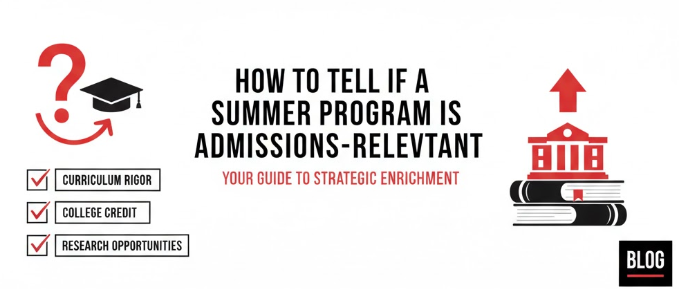
2. They Offer Academic Rigor
Admissions-relevant programs include:
Structured curriculum
Conceptual learning
Assignments or assessments
Universities value evidence of intellectual challenge, not just exposure.
3. They Produce Tangible Outcomes
Programs that strengthen applications often result in:
Research papers
Projects
Presentations
Portfolios
Outcomes allow admissions teams to evaluate learning, not just participation.
4. They Involve Faculty or Mentorship
Interaction with:
Professors
Researchers
Domain experts
adds seriousness and academic legitimacy to the experience.
5. They Enable Reflection and Growth
Strong programs help students:
Refine academic interests
Understand strengths and weaknesses
Make informed subject or career choices
Reflection converts experience into admissions value.
Why Some Summer Programs Don’t Add Much
Value
1. They Are Too Generic
Programs with:
Broad themes
No academic depth
One-size-fits-all content
are difficult to explain meaningfully in applications.
2. No Output or Evaluation
When programs:
Do not require work
Offer only certificates
Provide no feedback
universities struggle to assess what was actually learned.
3. Weak Subject Connection
Programs unrelated to:
Intended major
Academic trajectory
often feel disconnected and raise questions about focus.
4. Overcrowding the Profile
Too many programs:
Dilute impact
Reduce depth
Make the profile look unfocused
Quality matters more than quantity.
How Admissions Officers Actually View Summer Programs
Admissions teams evaluate:
Context of the student
Academic stage
Access to opportunities
How the experience is explained
A modest but well-used program can outperform a prestigious one that lacks clarity or purpose.
Country-Specific Admissions Perspective
US Universities
Holistic evaluation
Value reflection and learning process
UK Universities
Strong focus on subject relevance
Prefer academic seriousness
European Universities
Expect discipline-specific depth
Less impressed by generic programs
Canada & Australia
Look for academic readiness
Value applied learning
When a Summer Program Helps Even Average Grades
A strong program can:
Show academic curiosity
Demonstrate growth
Offset weaker grades contextually
But only when the learning is clearly articulated.
Common Student Mistakes
Choosing programs for brand names alone
Treating certificates as achievements
Not connecting experiences to academics
Adding too many unrelated activities
Admissions value clarity, not clutter.
How Students Should Choose Summer Programs Strategically
Students should ask:
Does this deepen my subject interest?
Will I produce meaningful work?
Can I explain its impact clearly?
Does it fit my academic narrative?
Strategic choices outperform expensive or popular ones.
Frequently Asked Questions (FAQs)
1. Do prestigious summer programs guarantee admissions impact?
No. Learning and alignment matter more than prestige.
2. Can online programs strengthen applications?
Yes, if they are rigorous and outcome-driven.
3. Is it bad to attend multiple summer programs?
Not bad, but depth matters more than number.
4. Should summer programs be mentioned in SOPs?
Yes, when they influenced academic direction.
5. Are paid programs viewed negatively?
Not necessarily quality and usage matter most.
Final Takeaway :
Some summer programs strengthen applications because they build knowledge, clarity, and academic direction. Others fail because they remain superficial additions without depth or reflection.
For UG applicants in 2026 and beyond, the key is not doing more—but doing what matters.


Comments