Ethanol Fuel Guide: Benefits, Production, and Future Potential
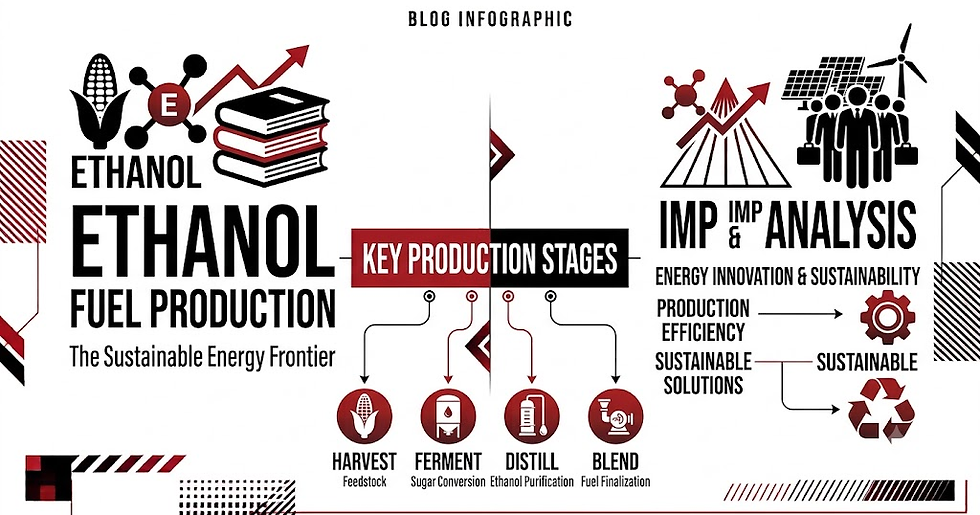
As the global economy transitions toward sustainable energy sources, ethanol fuel has emerged as one of the most prominent renewable alternatives to traditional gasoline. Derived from organic matter such as corn, sugarcane, and cellulosic biomass, this clean-burning biofuel helps reduce greenhouse gas emissions while enhancing fuel octane levels.
Understanding the production, performance characteristics, and economic implications of this renewable resource is essential for consumers, fleet managers, and industry leaders looking to make informed decisions about sustainable transportation.
Understanding Ethanol Fuel Production and Feedstocks
Ethanol fuel is produced primarily through the fermentation of starches and sugars found in agricultural crops. In the United States, corn serves as the predominant feedstock, whereas in Brazil, sugarcane is the primary raw material. Modern biorefineries utilize dry milling or wet milling processes to convert complex carbohydrates into simple sugars, which yeast subsequently ferments into ethyl alcohol.
Advanced research has also enabled the commercialization of cellulosic ethanol fuel, which utilizes non-food plant materials such as corn stover, switchgrass, and agricultural residues. This second-generation production process significantly improves energy yields and mitigates concerns regarding land use competition between food crops and energy feedstocks.
Corn-based fermentation yields efficient starch-to-sugar conversion.
Sugarcane ethanol provides exceptional net energy balance ratios.
Cellulosic feedstocks reduce land competition and lower overall carbon intensity.
How Ethanol Fuel Reduces Vehicle Carbon Emissions
The adoption of ethanol fuel significantly lowers lifecycle greenhouse gas emissions compared to conventional petroleum fuels. Because the biomass used to create biofuel absorbs atmospheric carbon dioxide during its growth phase, the net carbon released during combustion is substantially offset. Modern life-cycle assessments demonstrate that corn ethanol reduces greenhouse gas emissions by up to forty-six percent compared to standard gasoline.
Furthermore, blending alcohol into liquid transportation fuels enhances oxygenation, leading to more complete combustion within internal combustion engines. This enhanced combustion efficiency drastically decreases tailpipe emissions of harmful air pollutants, including carbon monoxide, particulate matter, and smog-forming volatile organic compounds.
Feedstock plants absorb atmospheric carbon dioxide through natural photosynthesis.
Biorefineries ferment organic sugars into high-octane liquid biofuel.
Enhanced engine oxygenation results in cleaner burning and lower tailpipe toxicity.
Ethanol Fuel Blends and Performance Metrics
Fuel blends vary by percentage volume, ranging from low-level blends like E10 to high-level flexible fuel blends like E85. Understanding these blend ratios helps vehicle owners select the optimal fuel type for their specific engine architecture.
Fuel Blend Metric: E10 Fuel — Ethanol Percentage: 10 Percent — Standard Gasoline Percentage: 90 Percent — Octane Rating Range: 87 to 89 Octane — Primary Compatibility: All Standard Gasoline Vehicles
Fuel Blend Metric: E15 Fuel — Ethanol Percentage: 15 Percent — Standard Gasoline Percentage: 85 Percent — Octane Rating Range: 88 to 90 Octane — Primary Compatibility: 2001 and Newer Model Vehicles
Fuel Blend Metric: E85 Flex Fuel — Ethanol Percentage: 51 to 83 Percent — Standard Gasoline Percentage: 17 to 49 Percent — Octane Rating Range: 100 to 105 Octane — Primary Compatibility: Flex-Fuel Vehicles Only
Fuel Blend Metric: E100 Pure — Ethanol Percentage: 100 Percent — Standard Gasoline Percentage: 0 Percent — Octane Rating Range: 108 Octane — Primary Compatibility: Dedicated Biofuel Engines
Engine Compatibility and Maintenance Guidelines
When utilizing ethanol fuel in modern automobiles, understanding engine compatibility is crucial for long-term reliability. Standard vehicles are explicitly engineered to run safely on blends up to E10 or E15 without modification. However, using higher concentrations like E85 requires a designated Flex-Fuel Vehicle equipped with specialized fuel lines, corrosion-resistant injectors, and an adaptive engine control unit.
Because alcohol is naturally hygroscopic, it absorbs moisture from ambient air over time. Vehicle owners storing fuel for extended periods in small engines or classic cars should use stabilizer additives to prevent phase separation. Regular maintenance, including periodic fuel filter inspection, ensures seamless performance across all operating conditions.
Verify manufacturer fuel recommendations in the vehicle owner manual.
Use fuel stabilizers when storing gasoline-ethanol blends longer than ninety days.
Inspect fuel lines and seals periodically on legacy automotive systems.
Economic and Environmental Impact of Ethanol Fuel
The worldwide expansion of ethanol fuel production provides strategic economic benefits alongside environmental gains. By boosting domestic agricultural markets, biofuel production supports rural economic development and creates skilled jobs across rural communities. Additionally, substituting imported crude oil with domestically produced plant alcohol strengthens national energy security and reduces trade deficits.
From an environmental perspective, ongoing technological advancements in precision agriculture and renewable refinery power are continually shrinking the carbon footprint of biofuel production. As solar and wind power increasingly power ethanol facilities, the overall lifecycle carbon intensity of the fuel drops toward carbon neutrality.
Frequently Asked Questions (FAQ)
What is ethanol fuel and how is it made?
Ethanol fuel is a renewable biofuel produced by fermenting the sugars and starches present in plant materials such as corn, sugarcane, and cellulosic biomass. The resulting alcohol is purified and blended with gasoline to create cleaner-burning motor fuel.
Can I use ethanol fuel in my regular car?
Yes, virtually all modern gasoline vehicles can safely run on E10 fuel without any engine modifications. Vehicles manufactured in 2001 or later can also use E15, while higher blends like E85 require a designated Flex-Fuel Vehicle.
Does ethanol fuel lower gas mileage?
Because pure ethanol contains approximately thirty percent less energy per gallon than pure gasoline, higher blends like E85 may result in a slight reduction in miles per gallon. However, its high octane rating allows engines to run cooler and perform efficiently.
Conclusion & Next Steps
In conclusion, ethanol fuel represents a practical, high-octane alternative to fossil fuels that significantly reduces carbon emissions and enhances fuel stability. By leveraging renewable agricultural resources, modern biofuels contribute to environmental sustainability while supporting economic growth.
To stay informed on modern renewable energy policies and advanced biofuel research, explore official updates from the US Department of Energy or consult resources from the Renewable Fuels Association to make sustainable energy choices today.



Comments