Israel Iran Attack: Causes, 2026 War Escalation, US Involvement and Military Power Comparison
- Mar 7
- 3 min read
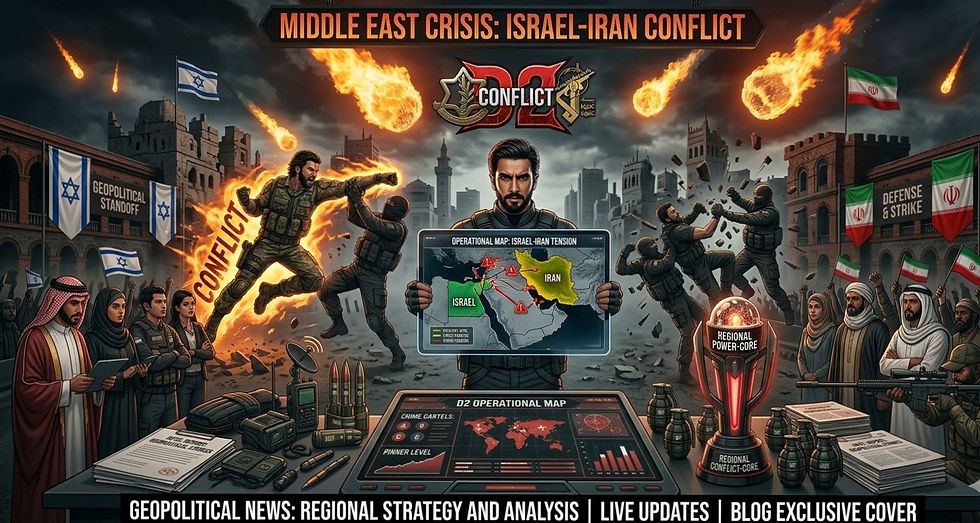
The Israel Iran attack conflict has become one of the most serious geopolitical crises in the Middle East. The tensions between Israel and Iran have existed for decades due to ideological rivalry, regional power struggles, and security concerns.
In recent years, the situation has escalated dramatically with direct confrontations, proxy conflicts, and involvement from global powers including the United States.
Many analysts believe the current crisis represents one of the most dangerous confrontations in modern Middle Eastern history.
1.Why Israel and Iran Are Fighting
The Israel Iran attack conflict stems from several major geopolitical issues.
1. Ideological Rivalry
Iran’s leadership has historically opposed the existence of Israel, while Israel considers Iran one of its biggest national security threats.
2. Nuclear Concerns
Israel has repeatedly expressed fears about Iran developing nuclear weapons. Iran maintains that its nuclear program is for peaceful purposes, but Israel believes it could eventually be used for military purposes.
3. Regional Influence
Both countries compete for influence across the Middle East through alliances and political support for regional groups.
4.Role of Regional Proxies
A major reason behind the Israel Iran attack tensions is Iran’s support for regional groups.
These include:
Hezbollah in Lebanon
Hamas in Gaza
Israel views these organizations as major security threats because they have been involved in conflicts with Israel for many years.
2.Escalation After the Gaza War
The conflict intensified after the Gaza Strip war, which significantly increased tensions between Israel and Iran.
Another major trigger was the bombing of the Iranian diplomatic compound in Damascus, Syria. This attack was widely seen as a turning point that pushed the confrontation from proxy warfare toward direct military clashes.
Israel Iran War Escalation in 2026
According to reports surrounding the Israel Iran attack, a wider conflict began on February 28, 2026.
This confrontation reportedly involved the United States and its allies against Iran and its allied forces in the region.
During this escalation:
The United States and Israel conducted military strikes in Iran
Several strategic military targets were hit
Regional tensions increased dramatically
Reports also claimed that Ali Khamenei, the Supreme Leader of Iran, was killed during these strikes, though such claims should always be verified with official sources.
3.Military Power Comparison: Israel vs Iran
A major topic of debate in the Israel Iran attack conflict is the military strength of the two countries.
Israel’s Military Strength
Israel is widely considered technologically superior because of:
Advanced air force
High-tech weapons systems
Strong intelligence capabilities
Support from the United States
Israel also operates advanced aircraft like the Lockheed Martin F-35 Lightning II, giving it strong air superiority.
Another key advantage is Israel’s multi-layered missile defense system, including systems designed to intercept rockets and ballistic missiles.
Iran’s Military Strength
Despite Israel’s technological advantage, Iran possesses significant military capabilities.
Iran’s strengths include:
Large number of troops
Extensive missile arsenal
Large drone network
Heavy military equipment including tanks
Iran also maintains a network of regional allies and proxy groups that can influence conflicts across multiple countries.
4.Technological vs Numerical Balance
The Israel Iran attack conflict highlights a strategic imbalance.
Israel relies heavily on:
Precision weapons
Air superiority
Advanced military technology
Strategic support from the United States
Iran, on the other hand, relies on:
Larger manpower
Massive missile stockpiles
Drone warfare capabilities
Regional proxy forces
This creates a technologically lopsided but strategically complex balance of power.
5.Global Impact of the Israel Iran Conflict
The Israel Iran attack crisis has significant global implications.
Possible consequences include:
Increased instability in the Middle East
Rising oil prices and economic uncertainty
Greater involvement from global powers
Potential expansion of regional conflicts
International organizations such as the United Nations have repeatedly called for restraint and diplomatic solutions.
Future Outlook
The future of the Israel Iran attack conflict remains uncertain.
While both countries possess strong military capabilities, a prolonged war could have devastating consequences for the entire region.
Many analysts believe diplomacy and international negotiations will be essential to prevent a larger global crisis.
FAQ
1.Why are Israel and Iran fighting?
The Israel Iran attack conflict is driven by ideological rivalry, nuclear concerns, regional influence, and Iran’s support for groups opposing Israel.
2.Did the conflict escalate into a war in 2026?
Reports indicate the conflict escalated significantly in 2026 with involvement from the United States and its allies.
3.Which country is militarily stronger?
Israel is considered technologically superior, while Iran has larger manpower, missile stockpiles, and regional allies.
4.Why is the Israel Iran conflict important globally?
The conflict affects global security, oil markets, and international diplomacy, making it a major geopolitical issue.
Comments