POSTECH Masters Review 2026: Rankings, Fees & Admission
- Jan 1
- 4 min read
Introduction
If you are an engineer who cares about Research Quality over "City Life," POSTECH (Pohang University of Science and Technology) is your dream destination.
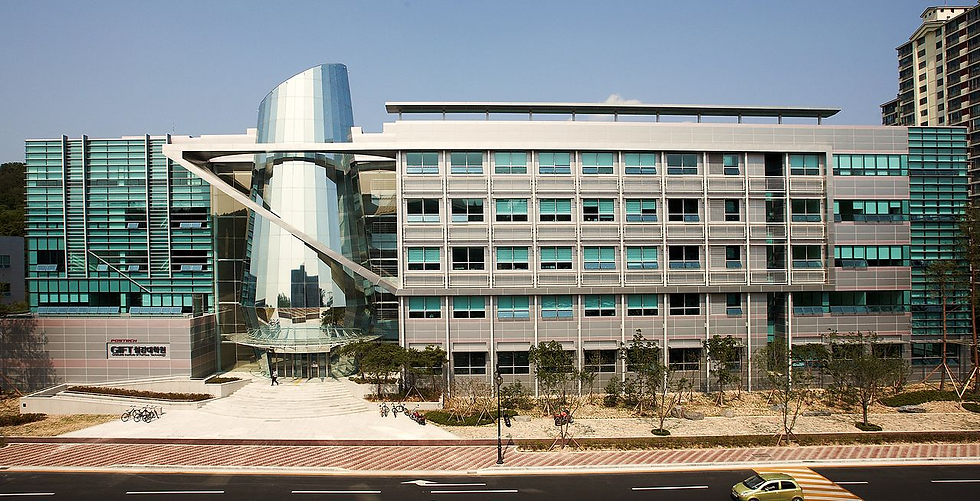
Located in Pohang, the steel capital of Korea (home to POSCO), POSTECH was founded with one mission: to be the best research university in Asia. It is small, private, and elite. It frequently rivals KAIST for the #1 spot in Engineering.
For Indian students, POSTECH offers the same massive benefit as KAIST: It is an English-medium university. You do not need Korean to study here.
For the 2026 intake, our POSTECH Masters Review confirms that it remains one of the most generous universities in the world. Almost every admitted international graduate student receives a Full Tuition Waiver and a Monthly Stipend.
In this guide, we break down the "POSCO connection," the research-heavy curriculum, and why this small university produces the highest-paid graduates in Korea.
Highlights: POSTECH at a Glance
Point | Details |
University Name | POSTECH (Pohang University of Science and Technology) |
QS World Rank (2026) | ~#100 (Global) |
Location | Pohang (4 hours from Seoul, Coastal Industrial City) |
Language | 100% English (Graduate School) |
Primary Intake | Spring (March) & Fall (September) |
Scholarship | Fully Funded (Tuition + Stipend) |
Acceptance Rate | ~18% (Extremely Selective) |
Application Fee | USD 80 / KRW 80,000 |
Top PG Courses | Materials Science, Chemistry, AI, Mechanical Engineering |
Why Choose a POSTECH Masters?
The "Caltech" Model: POSTECH is tiny. It has fewer than 4,000 students total. This means the Student-to-Faculty ratio is 3:1. You don't just attend lectures; you work directly with world-famous professors in their labs.
The POSCO Connection: Founded by POSCO (one of the world's largest steelmakers), the university has limitless funding. Research facilities here are often better than those at SNU or Yonsei.
Settlement Allowance: Unique to POSTECH, new international students often receive a "Settlement Allowance" (approx. 500,000 KRW) to help buy bedding and essentials when they first arrive. They truly care about your comfort.
Important Dates (2026 Intake)
POSTECH timelines are very similar to KAIST.
Intake | Applications Open | Application Deadline |
Spring 2026 (March Start) | Late August 2025 | Sept 15 – Oct 1, 2025 |
Fall 2026 (Sept Start) | Late Feb 2026 | April 1 – April 15, 2026 |
Pro Tip: Unlike KAIST which has an "Early Track," POSTECH usually has two main rounds. Applying in the First Round gives you a better chance at the POSCO Asia Fellowship.
Eligibility Criteria for Indian Students
POSTECH is strictly for STEM (Science, Technology, Engineering, Math) students.
1. Academic Requirements
Bachelor’s Degree: A 4-year Bachelor's degree (B.E./B.Tech) is mandatory.
Percentage: Minimum 3.0/4.3 GPA or ~80-85%.
3-Year Degrees: NOT accepted. If you have a B.Sc, you must complete a Master's in India first.
Research Experience: POSTECH values papers and projects heavily. If you have published a research paper, your chances of admission skyrocket.
2. English Proficiency (Mandatory)
TOEFL iBT: Minimum 79.
IELTS Academic: Minimum 6.0.
Note: While the minimum is 6.0, most admitted students have 7.0+.
Admission Process: The "Advisor" System
At POSTECH, finding an advisor (Professor) is often part of the process.
Step-by-Step Application:
Lab Search: Look at the faculty list. Send a polite email to a professor whose research interests you. (Subject: "Prospective MS Student - [Your Name]").
Online Application: Apply via the POSTECH Admissions Website.
Pay Fee: USD 80.
Upload Documents: Transcripts, English Score, CV, and Research Proposal.
Recommendation Letters: 2 referees required.
Interview: A technical interview via Zoom is common. Be prepared to answer questions about your undergraduate projects.
Fees & Funding (The Full Ride)
Like KAIST, you typically pay Zero Tuition.
Cost Type | Standard Fee | With POSTECH Scholarship |
Tuition | ~11 Million KRW/year | FREE (100% Waived) |
Monthly Stipend | - | ~500,000 - 800,000 KRW |
Dormitory | ~200,000 KRW/month | Subsidized |
Financial Reality: Your stipend covers your dorm and cafeteria food. You might need approx ₹1-2 Lakhs of your own money per year for travel/leisure, but the core education is free.
Scholarships for Indian Students
POSTECH Teaching/Research Assistantship: The standard funding model. You work in the lab/grade papers in exchange for your tuition waiver and stipend.
POSCO Asia Fellowship: A prestigious award for Asian students. Covers full tuition + 1,000,000 KRW/month stipend (Higher than standard).
POSTECH Settlement Allowance: A one-time grant given to new international students to help them settle in.
Documents Required
Official Transcripts: Scanned PDF for application; Hard copies required after admission.
Degree Certificate: Proof of 4-year Bachelor's.
CV/Resume: Focus on technical skills (Python, MATLAB, Lab equipment).
Research Plan: A 2-page essay on what you want to research at POSTECH.
English Score Report: Valid TOEFL/IELTS.
FAQs
Q1. Is Pohang a boring city?
Ans: Compared to Seoul? Yes. It is an industrial coastal city. There is no major nightlife. However, it has beautiful beaches and is perfect for students who want to focus 100% on their studies without distractions.
Q2. KAIST vs. POSTECH: Which is better?
Ans: They are equal in quality.
Choose KAIST if you want a larger campus, more diverse departments, and want to live in a bigger city (Daejeon).
Choose POSTECH if you want a small, intimate research environment and have a specific interest in Materials Science or Chemistry (where POSTECH is world-leading).
Q3. Is the food okay for Indians?
Ans: It can be hard. The cafeteria is mostly Korean. However, POSTECH has a growing international community, and there are kitchens in the dorms where you can cook your own food.
Q4. Can I work in Samsung/LG after POSTECH?
Ans: Yes. POSTECH graduates are considered "Elite." Major Korean tech companies recruit directly from campus.
Conclusion
POSTECH is not for everyone. It is for the dedicated scientist. If you are willing to trade the bright lights of Seoul for the quiet, intense laboratories of Pohang, you will receive an education that rivals MIT—for free.
Ready to become a Research Scientist?
Writing a research proposal for POSTECH is the hardest part. Let us help you draft it.
Visit College Simplified for more updates!

Comments