Sensex Nifty Volatility Rises: How Should Long-Term Investors Respond to Market Swings?
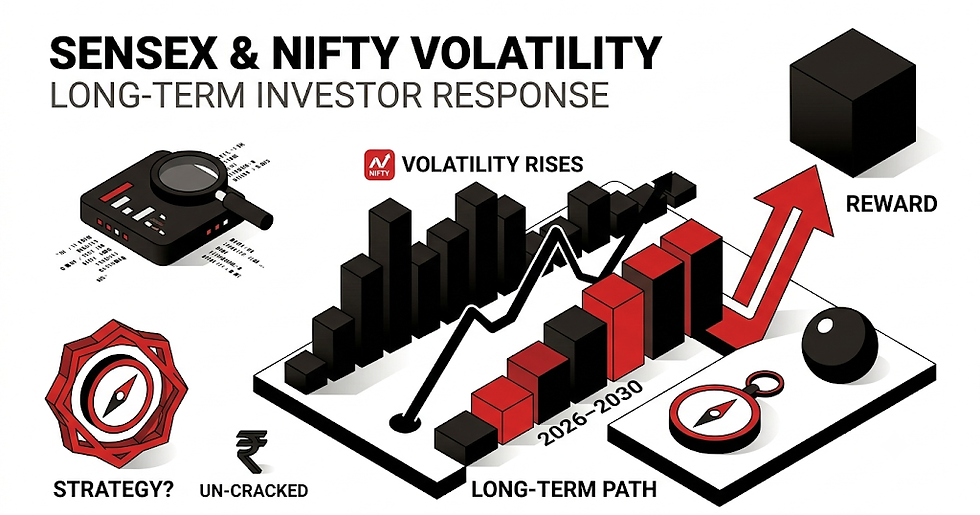
The Indian stock market, represented by the Sensex and Nifty indices, often experiences periods of heightened fluctuation. When Sensex Nifty volatility rises, it can trigger anxiety among investors, prompting questions about the best course of action. For long-term investors, understanding the nature of this volatility and adopting a disciplined approach is crucial to protecting and growing wealth.
This comprehensive guide is essential for any long-term investor seeking clarity amidst market turbulence. We will delve into why volatility occurs, its implications for portfolios, and most importantly, provide actionable strategies to navigate these swings effectively, ensuring your long-term financial goals remain intact.
Understanding Why Sensex Nifty Volatility Rises: Implications for Long-Term Investors
Market volatility is a natural, albeit sometimes unsettling, characteristic of equity investments. When Sensex Nifty volatility rises, it typically signifies increased uncertainty driven by a confluence of factors, both domestic and global. These can include geopolitical events, macroeconomic indicators like inflation and interest rate changes, corporate earnings reports, or even significant policy announcements. For long-term investors, it is imperative to view these periods not as anomalies but as integral parts of the market cycle.
Rather than panicking, understanding the root causes allows investors to contextualize price movements. Short-term fluctuations, while dramatic, often have little bearing on the fundamental value of well-chosen assets over extended periods. A disciplined approach during these times focuses on the underlying strength of investments rather than reacting to daily news cycles. The key is to distinguish between temporary market noise and genuine shifts in economic fundamentals.
Geopolitical instability and global economic slowdowns.
Domestic economic policy changes and regulatory shifts.
Inflationary pressures and interest rate hikes by central banks.
Corporate earnings reports and industry-specific challenges.
Investor sentiment driven by news and speculation.
Core Principles for Long-Term Investors When Sensex Nifty Volatility Rises
Navigating periods when Sensex Nifty volatility rises requires adherence to fundamental investment principles. These principles serve as a compass, guiding decisions away from emotional reactions and towards rational, goal-oriented strategies. Long-term success is rarely achieved by trying to time the market; instead, it comes from consistent application of sound investment habits and a clear understanding of personal financial objectives.
Maintaining perspective is critical. Historical data consistently shows that major indices tend to recover from downturns and achieve new highs over time. For the long-term investor, short-term dips can even present opportunities to acquire quality assets at more attractive valuations. It is about playing the long game, focusing on compounding returns rather than instant gains or avoiding temporary losses.
Maintain a diversified portfolio across asset classes, sectors, and geographies.
Stick to your asset allocation strategy; rebalance periodically to manage risk.
Continue systematic investment plans (SIPs) to benefit from rupee cost averaging.
Focus on quality companies with strong fundamentals, even during downturns.
Avoid making impulsive decisions based on daily market movements or media sensationalism.
Advanced Strategies for Managing Portfolio During Volatile Times
Beyond core principles, long-term investors can employ several advanced strategies to fortify their portfolios against periods when Sensex Nifty volatility rises. These techniques involve a more proactive approach to risk management and identifying potential opportunities that volatility might present. The goal is not to eliminate risk entirely, but to manage it intelligently.
Consider enhancing your portfolio's resilience by exploring investments that tend to perform differently than equities during downturns. This could include a strategic allocation to fixed income, gold, or even certain international markets that may not be correlated with the Indian indices. Additionally, re-evaluating your risk tolerance during calm periods can prepare you better for future market shocks.
Consider tactical allocation adjustments to defensive sectors or asset classes.
Evaluate adding gold or other safe-haven assets as a hedge against equity volatility.
Utilize derivatives cautiously for hedging, if you possess sufficient expertise and understanding.
Increase emergency funds to avoid forced selling of investments during market corrections.
Consult with a financial advisor to tailor strategies to your specific financial situation.
Comparison & Key Metrics Section: Analyzing Investment Approaches During Volatility
During periods of high volatility, different investment approaches yield varying results. Understanding these can help long-term investors make informed decisions. We compare common responses to market fluctuations and outline ideal characteristics for navigating instability.
Approach / Metric: Decision Making — Reactive Investor: Emotional, based on daily news — Long-Term Investor (Ideal): Rational, based on long-term goals
Approach / Metric: Portfolio Actions — Reactive Investor: Frequent buying/selling, market timing — Long-Term Investor (Ideal): Systematic investing, rebalancing, holding quality assets
Approach / Metric: Risk Exposure — Reactive Investor: High due to impulsive trades — Long-Term Investor (Ideal): Managed through diversification and asset allocation
Approach / Metric: Return Expectation — Reactive Investor: Inconsistent, often chasing highs — Long-Term Investor (Ideal): Consistent growth through compounding
Approach / Metric: Focus — Reactive Investor: Short-term gains/losses — Long-Term Investor (Ideal): Wealth creation over decades
The Psychology of Investing When Sensex Nifty Volatility Rises
Beyond financial strategies, mastering the psychological aspect is paramount when Sensex Nifty volatility rises. Fear and greed are powerful emotions that can derail even the most well-thought-out investment plans. During a market downturn, the natural instinct is often to sell to stop losses, while during a bull run, the temptation is to buy aggressively. Both can lead to suboptimal outcomes for long-term investors.
Cultivating emotional discipline involves understanding your own biases and having a robust plan that you commit to, irrespective of market sentiment. Regularly reviewing your long-term goals and investment thesis can help reinforce your conviction during turbulent times. Remember, successful investing is often more about patience and temperament than about superior intellect or market forecasting.
Frequently Asked Questions (FAQ)
How should a new investor respond when Sensex Nifty volatility rises for the first time?
For new investors, rising volatility is a learning experience. It is crucial to avoid panic selling. Instead, focus on understanding your asset allocation, continue your systematic investment plans (SIPs), and consult a financial advisor to ensure your portfolio aligns with your risk tolerance and long-term goals. View it as an opportunity to invest in quality stocks at lower prices.
Is it wise to stop SIPs during periods of high market volatility?
Generally, no. Stopping SIPs during high volatility can be detrimental to long-term returns. SIPs benefit from rupee cost averaging, meaning you buy more units when prices are low and fewer when prices are high. This averages out your purchase cost over time and is particularly effective during volatile periods, potentially leading to higher returns when markets recover.
What role does diversification play when the market experiences significant swings?
Diversification is a cornerstone of risk management, especially during significant market swings. By spreading investments across various asset classes (equities, debt, gold), sectors, and geographies, you reduce the impact of poor performance in any single asset or sector. It helps cushion your portfolio against extreme volatility in specific segments, providing a more stable return path over the long term.
Conclusion & Next Steps
In conclusion, the periods when Sensex Nifty volatility rises are an unavoidable and often beneficial aspect of long-term investing. By adopting a disciplined, well-researched, and emotionally resilient approach, long-term investors can not only safeguard their portfolios but also uncover opportunities for substantial growth. Focus on your long-term vision, stick to your investment plan, and let the power of compounding work its magic through market cycles.
Empower your investment journey with knowledge and smart strategies. To deepen your understanding of market dynamics and make informed decisions, explore comprehensive market data and analysis from trusted sources. Visit the National Stock Exchange of India for official market information or get detailed insights from Moneycontrol Market Insights to navigate the complexities of when Sensex Nifty volatility rises.


Comments