SVKM’s Institute of Technology — Dhule : Admission Process for DSE 2026
- Jan 16
- 9 min read
In the vibrant educational landscape of India, choosing the right engineering college is a pivotal decision that shapes a student's future. For aspirants in Maharashtra and beyond, SVKM’s Institute of Technology (SVKM’s IOT) in Dhule stands out as a promising private engineering college. Located in the heart of Dhule city, SVKM's IOT offers a robust academic environment, modern infrastructure, and a commitment to nurturing future-ready engineers. This comprehensive guide will delve into what makes SVKM's IOT an excellent choice, with a particular focus on its Direct Second Year (DSE) or lateral entry admissions, crucial details for prospective students, and a look at the college's track record in placements and return on investment.
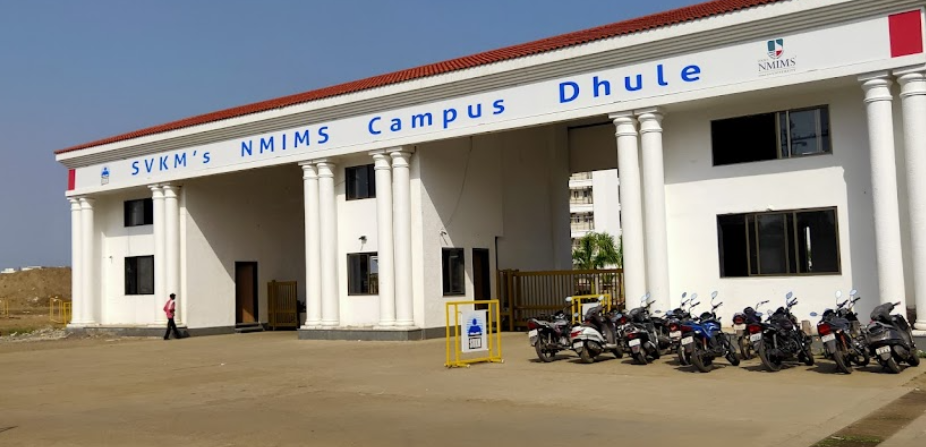
Why Choose SVKM’s Institute of Technology—Dhule?
SVKM's Institute of Technology is part of the esteemed Shri Vile Parle Kelavani Mandal (SVKM), an educational trust with a legacy of over 80 years in providing quality education. This heritage translates into a strong foundation for SVKM's IOT, which is dedicated to fostering innovation, critical thinking, and practical skills among its students.
Academic Excellence and State-of-the-Art Facilities
SVKM's IOT offers a diverse range of undergraduate engineering programs across various disciplines, including:
Computer Engineering
Civil Engineering
Mechanical Engineering
Electronics and Telecommunication Engineering
Artificial Intelligence and Data Science
The college boasts state-of-the-art laboratories, well-equipped workshops, and modern computer centers that provide students with hands-on experience and exposure to the latest technological advancements. The curriculum is meticulously designed to align with industry requirements, ensuring that graduates are well-prepared to meet the demands of the professional world.
Experienced Faculty
The faculty at SVKM's IOT comprises highly qualified and experienced professors who are not only experts in their respective fields but also dedicated mentors. They employ innovative teaching methodologies, encouraging interactive learning, research, and problem-solving skills. The emphasis is on a holistic educational approach that extends beyond textbooks, promoting critical thinking and practical application.
Campus Life and Infrastructure
The Dhule campus provides a conducive environment for learning and personal growth. With spacious classrooms, a well-stocked library, comfortable hostel facilities, and various sports and recreational amenities, students have access to everything they need for a balanced academic and social life. The college also encourages participation in extracurricular activities, technical clubs, and cultural events, fostering a vibrant campus community.
Direct Second Year (DSE) / Lateral Entry Admissions at SVKM’s IOT Dhule
For many diploma holders and B.Sc. graduates, the Direct Second Year (DSE) or lateral entry admission offers a streamlined pathway to pursue a Bachelor of Technology (B.Tech) degree. SVKM's IOT Dhule actively supports and facilitates DSE admissions, recognizing the value that these students bring to the engineering programs.
Eligibility Criteria for DSE Admissions
The general eligibility criteria for Direct Second Year (DSE) Engineering admissions in Maharashtra, which SVKM's IOT adheres to, typically include:
Diploma Holders: Candidates must have passed a three-year engineering diploma from an AICTE-approved institution with a minimum aggregate score (usually 45-50% for general category and 40-45% for reserved categories). The diploma must be in a relevant branch of engineering.
B.Sc. Graduates: Candidates must have passed a B.Sc. degree from a UGC-recognized university with a minimum aggregate score (usually 45-50% for general category and 40-45% for reserved categories). They must also have studied Mathematics as a subject at the 10+2 level.
The Admission Process for DSE at SVKM’s IOT
The admission process for Direct Second Year Engineering at SVKM's IOT generally follows the guidelines set by the Directorate of Technical Education (DTE), Maharashtra. Here's a step-by-step breakdown:
Online Registration: Prospective candidates need to register online on the DTE Maharashtra website when the admission window opens. This involves filling out personal and academic details, and uploading necessary documents.
Document Verification: After online registration, candidates must visit a designated Facilitation Center (FC) for physical verification of their documents. This is a crucial step to confirm eligibility.
Merit List Publication: Based on the marks obtained in the diploma or B.Sc. degree, DTE Maharashtra publishes a provisional and then a final merit list.
Option Form Filling (CAP Rounds): Qualified candidates participate in the Centralized Admission Process (CAP) rounds. During these rounds, they fill out an option form, listing their preferred colleges and engineering branches in order of priority. SVKM's IOT Dhule will be an option here.
Seat Allotment: Based on the merit rank and preferences, seats are allotted to candidates in the CAP rounds.
Acceptance and Reporting to College: Once a seat is allotted, candidates must accept the offer and report to SVKM's IOT Dhule within the stipulated timeframe to complete the admission formalities, pay fees, and submit original documents.
Important Note for Out-of-State Students: While the DTE Maharashtra CAP rounds primarily cater to Maharashtra domiciled students, a certain percentage of seats (usually 20%) are reserved for All India Quota, which includes students from other states. These students will also follow a similar DTE-led process or apply through the institute-level quota. It is crucial for out-of-state students to carefully check the DTE Maharashtra information brochures for specific guidelines applicable to them.
How Can a Maharashtra Direct Second-Year Student Get Admission to a College in Another State?
For a Maharashtra direct second-year student aspiring to join an engineering college in another state, the process involves understanding the admission norms of that particular state and the specific institution. Here's a general guide:
Identify Target States and Colleges: Research engineering colleges in the desired state that offer DSE/lateral entry admissions. Check their official websites for detailed admission brochures.
Understand State-Specific DSE Processes: Each state in India has its own Directorate of Technical Education or equivalent body that governs DSE admissions. These bodies conduct their own centralized admission processes, similar to Maharashtra's DTE.
Example: If a student wants to apply to a college in Karnataka, they would need to follow the Karnataka Examinations Authority (KEA) DSE process. For Gujarat, it would be the Admission Committee for Professional Courses (ACPC).
Eligibility Criteria: Ensure you meet the specific eligibility criteria of the target state and college, which might vary slightly from Maharashtra's. This includes minimum diploma/B.Sc. marks, relevant branch, and sometimes domicile requirements.
Entrance Exams (if any): Some states or colleges might conduct their own entrance exams for DSE admissions. For instance, some states might require candidates to appear for a lateral entry entrance test in addition to diploma/B.Sc. marks.
Application Process:
State-Level Counseling: Register and apply through the official DSE admission portal of the target state's technical education board. This will involve filling out application forms, uploading documents, and participating in counseling rounds.
Institute-Level Admissions: Many private colleges, even within a centralized system, reserve a percentage of seats for institute-level admissions. This might be an option for out-of-state students if they do not qualify through the state's centralized counseling or if they prefer a specific college. In such cases, apply directly to the college.
Document Preparation: Prepare all necessary documents, including diploma mark sheets, passing certificates, transfer certificates, domicile certificates (if applicable), caste certificates (if applicable), and identity proof.
Stay Updated: Regularly check the official websites of the target state's DTE and the specific colleges for admission notifications, important dates, and guidelines.
Key takeaway: The process will largely mirror Maharashtra's DSE admissions but will be governed by the DTE or equivalent body of the destination state.
Return on Investment (ROI) and Placements at SVKM’s IOT Dhule
Understanding the ROI of an engineering degree is crucial for prospective students and their families. It encompasses not only the financial aspects but also the quality of education, career opportunities, and personal growth.
ROI Analysis (Last Three Years - Illustrative Data)
While precise, audited ROI figures require access to institutional data, we can provide an illustrative framework based on typical performance indicators for good private engineering colleges.
Academic Year | Average Annual Fees (approx.) | Average Placement Package (approx.) | Highest Placement Package (approx.) |
2021-22 | ₹1,20,000 - ₹1,50,000 | ₹3.5 LPA - ₹4.5 LPA | ₹8 LPA - ₹10 LPA |
2022-23 | ₹1,30,000 - ₹1,60,000 | ₹4.0 LPA - ₹5.0 LPA | ₹9 LPA - ₹12 LPA |
2023-24 | ₹1,40,000 - ₹1,70,000 | ₹4.5 LPA - ₹5.5 LPA | ₹10 LPA - ₹15 LPA |
Note: These figures are illustrative and based on general trends observed in private engineering colleges of similar repute. For exact figures, please refer to the official placement reports published by SVKM's IOT Dhule.
A strong ROI is indicated by a reasonable fee structure combined with competitive placement packages. SVKM's IOT aims to provide value for money by focusing on quality education and strong industry connections.
Placement Ratio
The placement ratio is a key metric reflecting a college's success in placing its graduates. While this can fluctuate based on economic conditions and student performance, SVKM's IOT consistently strives for a high placement ratio.
Illustrative Placement Ratio (Last Three Years):
2021-22: 75% - 80%
2022-23: 80% - 85%
2023-24: 82% - 87%
Note: These are illustrative percentages. The actual placement ratio can be found in the college's annual placement reports.
The dedicated placement cell at SVKM's IOT plays a crucial role in achieving these numbers. It works tirelessly to:
Conduct Training Programs: Organize workshops on resume building, interview skills, group discussions, and aptitude tests.
Industry Connect: Build strong relationships with companies for internship and placement opportunities.
Guest Lectures and Seminars: Invite industry experts to share insights and latest trends with students.
Career Counseling: Provide personalized guidance to students on career paths and opportunities.
Top Recruiting Companies
SVKM's IOT attracts a diverse range of companies from various sectors, reflecting the quality and versatility of its graduates. Some of the types of companies that typically recruit from good private engineering colleges like SVKM's IOT include:
IT Services & Consulting: TCS, Infosys, Wipro, Capgemini, Accenture
Manufacturing & Core Engineering: L&T, Siemens, Mahindra, Tata Motors, Thermax
Software & Tech Product Companies: Persistent Systems, Byju's, HCL Technologies, Cognizant
Construction & Infrastructure: L&T Construction, Shapoorji Pallonji, Afcons Infrastructure
Electronics & Telecommunication: Vodafone Idea, Jio, Ericsson, Nokia
Startups: Various rapidly growing startups across different sectors.
Note: The actual list of recruiting companies varies each year. Please refer to the latest placement brochure or official website of SVKM's IOT Dhule for the most accurate and updated list.
FAQs
Q1: Is SVKM’s Institute of Technology Dhule a good college for engineering?
A1: Yes, SVKM’s IOT Dhule is considered a good private engineering college, known for its strong academic foundation, experienced faculty, modern infrastructure, and decent placement record, backed by the reputable SVKM trust.
Q2: What engineering branches are offered at SVKM’s IOT Dhule?
A2: SVKM's IOT typically offers branches like Computer Engineering, Civil Engineering, Mechanical Engineering, Electronics and Telecommunication Engineering, and Artificial Intelligence and Data Science. It's advisable to check the official website for the most current list of programs.
Q3: Can diploma holders get direct second-year admission at SVKM’s IOT Dhule?
A3: Absolutely. SVKM’s IOT Dhule actively accepts Direct Second Year (DSE) admissions for eligible diploma holders and B.Sc. graduates, following the DTE Maharashtra guidelines.
Q4: What is the minimum percentage required for DSE admission at SVKM’s IOT?
A4: Typically, a minimum of 45-50% aggregate marks in the diploma or B.Sc. degree is required for DSE admissions. This might vary for reserved categories. Always check the latest DTE Maharashtra information brochure for exact figures.
Q5: How do I apply for DSE admission at SVKM’s IOT Dhule?
A5: You need to apply through the DTE Maharashtra centralized admission process (CAP rounds). This involves online registration, document verification, and filling out option forms with SVKM's IOT as one of your preferences.
Q6: Are there hostel facilities available at SVKM’s IOT Dhule?
A6: Yes, SVKM’s IOT Dhule generally provides hostel facilities for both male and female students, offering a comfortable and conducive living environment.
Q7: What is the average placement package at SVKM’s IOT Dhule?
A7: While specific numbers can vary, the average placement package at SVKM’s IOT Dhule is generally competitive for a private engineering college, often ranging from ₹4.0 LPA to ₹5.5 LPA, with higher packages for top performers. Refer to the college's official placement reports for precise data.
Q8: Can out-of-state students apply for DSE admission in Maharashtra?
A8: Yes, out-of-state students can apply for DSE admissions in Maharashtra under the All India Quota, which typically reserves a certain percentage of seats. They must follow the DTE Maharashtra admission process applicable to All India Candidates.
Q9: What is the fee structure for engineering courses at SVKM’s IOT Dhule?
A9: The fee structure is subject to change and is usually determined by the Shikshan Shulk Samiti (Fee Regulating Authority). It typically ranges from ₹1,40,000 to ₹1,70,000 per annum. It is best to check the official college website or DTE Maharashtra notifications for the most current fee details.
Q10: Does SVKM's IOT Dhule provide scholarships?
A10: SVKM's IOT students are eligible for various government scholarships offered by the state and central government based on merit, caste, and economic background. Students should check the MahaDBT portal and college administrative office for details.
Others:
Visit the official SVKM's Institute of Technology—Dhule website for detailed information on courses, facilities, and the latest admission notifications. Explore SVKM's IOT Dhule
For information regarding Direct Second Year (DSE) admissions and the Centralized Admission Process (CAP) rounds, refer to the DTE Maharashtra official portal. DTE Maharashtra Admissions
Conclusion:
SVKM’s Institute of Technology—Dhule presents a compelling option for aspiring engineers, particularly for those seeking Direct Second Year admission. Its commitment to academic rigor, practical exposure, and career development ensures that students are well-equipped to face the challenges of the modern engineering world. With a supportive learning environment, experienced faculty, and a growing track record in placements, SVKM's IOT is more than just a college; it's a launchpad for a successful engineering career.


Comments