University of Technology Sydney (UTS) Review 2026: Rankings, Fees & Admission
- Dec 30, 2025
- 5 min read
Introduction
Are you looking for a university that feels less like a library and more like a high-tech startup? The University of Technology Sydney (UTS) is the future of education in Australia.
Ranked #88 globally (QS 2025/26) and consistently named the #1 "Young University" in Australia, UTS is the biggest rival to the traditional "sandstone" universities. It doesn't rely on history; it relies on innovation.
Located right in the "Tech Central" precinct of Sydney's CBD, UTS is the top choice for Indian students who want practical, industry-embedded learning over pure theory. For Engineering and IT aspirants, UTS offers a unique advantage: it houses the Data Arena, a 360-degree interactive data visualization facility that is unrivaled in the Southern Hemisphere.
In this guide, we break down the 2026 admission process, fees, and why UTS is the favorite for modern engineers.
Highlights: UTS at a Glance
Feature | Details |
University Name | University of Technology Sydney (UTS) |
Location | Ultimo / Haymarket, Sydney CBD |
QS World Rank (2026) | #88 (Global) |
Young University Rank | #1 in Australia (Times Higher Education) |
Intakes | February (Autumn) & July (Spring) |
Acceptance Rate | ~30% (Competitive) |
Top Scholarship | Academic Excellence (25% Tuition Waiver) |
Top Courses | Nursing (#1 in Aus), Computer Science, Civil Engineering |
What is UTS?

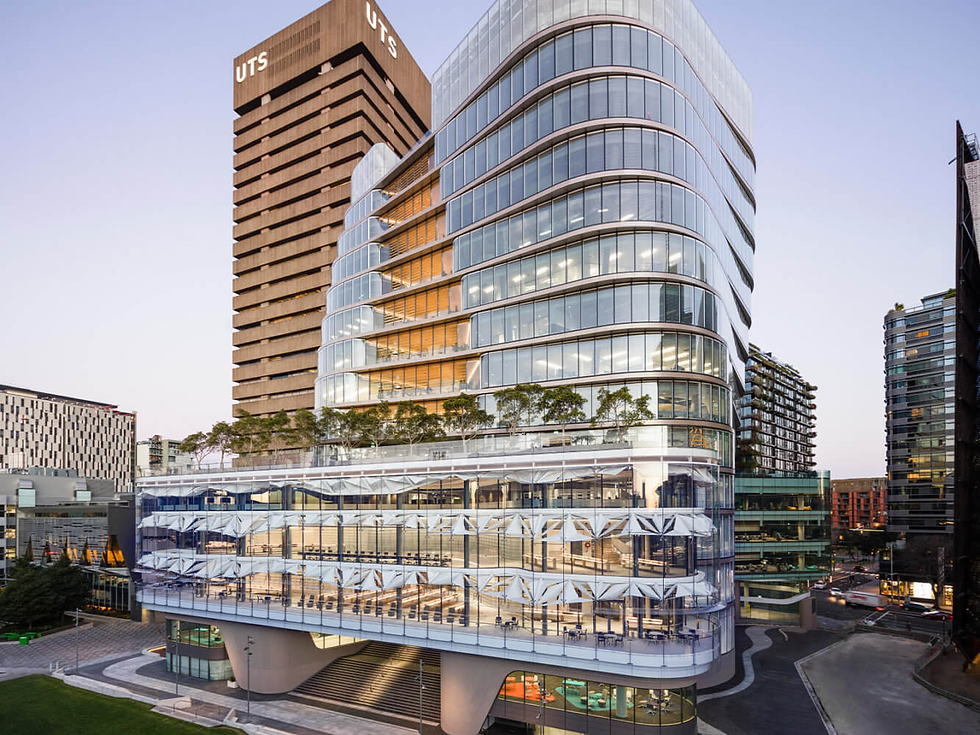
UTS is a public research university located in the heart of Sydney. It is famous for its brutalist and futuristic architecture, including the "Paper Bag Building" designed by Frank Gehry and the "Wolverine" Engineering building.
For Indian students, UTS offers a refreshing change from traditional education. It focuses on the "UTS Model of Learning," which emphasizes group projects, internships, and real-world problem solving.
Engineering Edge: UTS has partnerships with over 1,000 companies, meaning engineering students often work on live industry briefs rather than hypothetical textbook problems.
Important Dates (2026 Intake)
UTS follows a standard two-session academic calendar.
Intake | Application Deadline (Recommended) | Classes Start |
Autumn Session (Feb) | November 30, 2025 | Late February 2026 |
Spring Session (July) | April 30, 2026 | Late July 2026 |
Pro Tip: UTS is very popular for Computer Science and Design. These courses fill up fast. Apply at least 3-4 months in advance to secure your seat.
Eligibility Criteria
UTS is selective but slightly more flexible than USYD or UNSW regarding board percentages.
1. Undergraduate Eligibility
12th Board Marks (CBSE / ICSE):
Engineering (Honours): 75% – 85%
Information Technology: 75% – 80%
Business / Design: 75% – 80%
State Boards: Students from State Boards typically need 85% – 90% to be considered.
Prerequisites: Mathematics is strictly required for Engineering and IT degrees. Physics is recommended.
2. Postgraduate Eligibility
Bachelor’s Degree: A 3 or 4-year degree from a recognized Indian university.
Minimum Percentage:
Tier 1 Universities (Section 1): 60% – 65%
Tier 2 Universities (Section 2): 65% – 70%
Backlogs: UTS is moderately strict. Up to 6-8 backlogs are usually accepted if the degree was completed on time and the student has relevant work experience.
Admission / Application Process
Follow this step-by-step guide to apply to the University of Technology Sydney for 2026:
Choose Your Course: Use the "Find a Course" tool on the UTS website. Engineers should check for the Master of Engineering (Extension) if they want a 2-year degree.
Check Eligibility: Ensure you meet the academic and English requirements.
Apply Online: Submit your application via the UTS Online Application System or an authorized agent.
Pay Application Fee: A non-refundable fee of AUD 100.
Submit Documents: Upload transcripts, passport, and English scores.
Receive Offer: Processing takes 2–5 weeks.
Accept & Pay: Pay the deposit and OSHC to get your CoE (Confirmation of Enrolment).
Visa Application: Apply for the Subclass 500 visa.
Fees (2026 Estimates)
UTS offers a premium education at a price slightly lower than the Group of Eight universities, providing excellent ROI for tech students.
Course Level | 2026 Annual Tuition Fee (Approx.) |
Bachelor of Engineering (Hons) | AUD 48,000 – AUD 52,000 |
Bachelor of Computing Science | AUD 48,000 – AUD 52,000 |
Master of Engineering | AUD 50,000 – AUD 54,000 |
Master of Data Science | AUD 48,000 – AUD 52,000 |
Cost of Living: Sydney is expensive. Budget around AUD 30,000 – 35,000 (₹16-19 Lakhs) per year.
Cutoff (Academic & English)
1. English Proficiency Cutoff
Test | Minimum Score (UG & PG) |
IELTS Academic | 6.5 (No band less than 6.0) |
TOEFL iBT | 79 (Writing 21, Others comparable) |
PTE Academic | 58 (No skill below 50) |
Note: Education (Teaching) and Nursing require IELTS 7.0 (7.0 in all bands).
2. Academic Cutoff (Indian Boards)
Course | CBSE / ICSE Cutoff | State Board Cutoff |
Engineering | 75% | 85% |
Computer Science | 78% | 88% |
Business | 72% | 82% |
Documents Required
Valid Passport: Front and back pages.
Academic Transcripts: Class 10, 12, and Bachelors (Semester-wise).
English Test Score: IELTS / PTE / TOEFL.
Statement of Purpose (SOP): Mandatory for the Genuine Student (GS) assessment.
Portfolio: Mandatory for Architecture, Animation, and Fashion Design.
Proof of Funds: Bank statements showing tuition + living costs.
Tips / Strategy for 2026
Scholarship Hack: The UTS Undergraduate Academic Excellence International Scholarship offers a 25% tuition fee waiver for the standard duration of the course. It is merit-based and automatically assessed.
Location Strategy: UTS is literally across the street from Central Station. You can live in cheaper suburbs (like Wolli Creek or Parramatta) and take a direct train to campus in 20-30 minutes, saving huge amounts on rent compared to living in the CBD.
Tech Jobs: UTS is located in "Tech Central," Sydney's innovation hub home to Atlassian and Canva. Networking events at the UTS Startups hub are the best way to find internships.
FAQs
Q1. Is UTS better than USYD or UNSW for Engineering?
Ans: For Civil and Mechanical Engineering, USYD and UNSW generally hold more prestige. However, for Software Engineering, Data Science, and IT, UTS is a top contender because its curriculum is newer and more practical. Employers often find UTS grads more "job-ready" on day one.
Q2. What is the acceptance rate for UTS?
Ans: The acceptance rate is approximately 30%. It is quite competitive because it attracts a huge volume of applications for its IT and Business courses.
Q3. Does UTS require GRE/GMAT?
Ans: Generally, no. Most Masters courses do not require it.
Q4. Can I work part-time in Sydney?
Ans: Yes, you can work 48 hours per fortnight. Being in the CBD, UTS students have the easiest access to part-time jobs in cafes, retail, and offices right next to campus.
Q5. Is the application fee refundable?
Ans: No, the AUD 100 fee is non-refundable.
Conclusion
UTS is the university for the future. If you want to study in a glass building rather than a sandstone castle, and if you value industry connections over 100-year-old traditions, UTS is your perfect match. For engineers who want to build the future rather than just study the past, UTS offers the perfect launchpad.
Ready to join Australia's #1 Young University?
Start Your Application Now
🔗 Official Link: University of Technology Sydney Website


Comments