Can You Get a Job Without a Traditional BTech? Career Opportunities in 2026
- Jun 13
- 4 min read
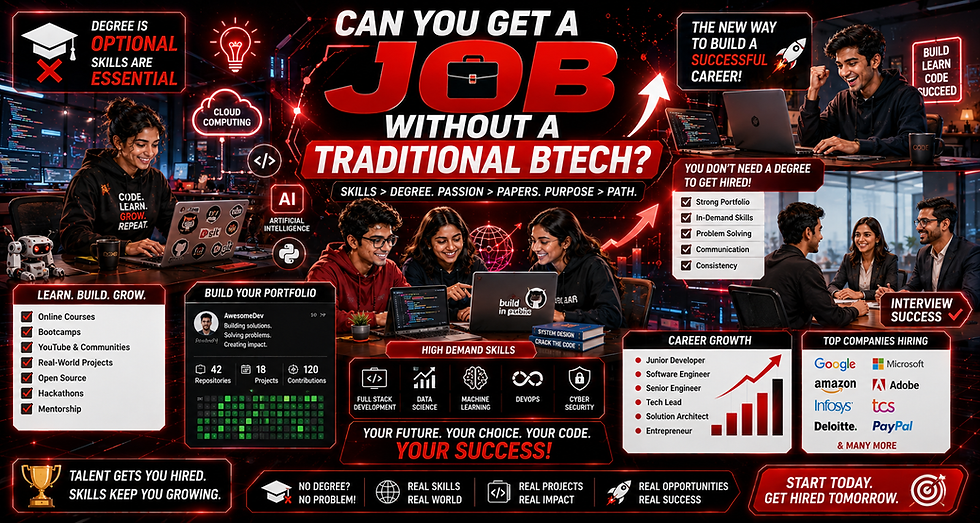
For decades, a traditional Bachelor of Technology (BTech) degree was considered the primary path to a successful engineering career. However, the technology industry is changing rapidly. Companies today increasingly prioritize skills, projects, problem-solving abilities, and real-world experience over degrees alone.
As a result, many students now ask an important question: Can You Get a Job Without a Traditional BTech?
The short answer is yes. Thousands of professionals have successfully built careers in software engineering, data science, cybersecurity, AI, cloud computing, and product development without following the conventional engineering route.
This guide explores how students can secure high-paying jobs without a traditional BTech degree and what employers actually look for in 2026.
1.Why the Traditional BTech Route Is Changing
The technology sector evolves much faster than university curricula.
Many traditional engineering programs face challenges such as:
Outdated syllabi
Limited industry exposure
Lack of practical projects
Minimal coding experience
Weak placement support in some colleges
At the same time, companies need candidates who can contribute immediately using modern technologies.
This shift has created opportunities for alternative education models and skill-based hiring.
Can You Get a Job Without a Traditional BTech?
The answer is increasingly becoming yes.
Many employers now hire based on:
Technical skills
Coding ability
GitHub portfolio
Real-world projects
Internship experience
Open-source contributions
Communication skills
Problem-solving ability
Companies often care more about what candidates can build rather than where they studied.
2.Industries Where Degrees Matter Less
Several technology fields emphasize skills over formal degrees.
Software Development
Many software engineers are hired through coding assessments and technical interviews.
Popular skills include:
Python
Java
JavaScript
React
Node.js
Data Structures & Algorithms
Artificial Intelligence and Machine Learning
AI companies seek candidates with:
Machine learning projects
Model deployment experience
Python expertise
Mathematics knowledge
Cybersecurity
Cybersecurity professionals often build careers through certifications and hands-on experience.
Popular certifications include:
CompTIA Security+
CEH
CISSP
Cloud Computing
Cloud engineers can enter the industry through certifications such as:
AWS Certified Solutions Architect
Microsoft Azure Certifications
Google Cloud Certifications
3.Alternative Pathways to Engineering Careers
Students now have multiple options beyond traditional BTech programs.
Industry-Focused Technology Schools
New-age institutions focus heavily on:
Practical learning
Industry projects
Coding-first education
Internship opportunities
Startup exposure
Online Learning Platforms
Students can learn from:
Professional coding bootcamps
AI courses
Data science programs
Full-stack development courses
Self-Learning
Many successful developers are self-taught and build strong portfolios through consistent practice.
4.Skills Employers Value More Than Degrees
Coding Skills
The ability to write clean, efficient code remains one of the most valuable skills in technology.
Project Experience
Employers prefer candidates who have built:
Websites
Mobile apps
AI applications
SaaS products
Automation tools
Problem-Solving Ability
Strong analytical thinking is highly valued across technology roles.
Communication Skills
Software engineers frequently collaborate with teams, making communication essential.
5.Can You Get a Job Without a Traditional BTech in Software Engineering?
This is one of the fastest-growing career paths for non-traditional learners.
Many companies conduct:
Online coding tests
Technical interviews
System design discussions
Project evaluations
Candidates who perform well can receive offers regardless of educational background.
In fact, many startups prioritize practical skills over degrees.
Advantages of Non-Traditional Learning Paths
Faster Industry Exposure
Students often start building projects from day one.
Modern Curriculum
Programs are updated more frequently to match industry demands.
Portfolio Development
Students graduate with real projects rather than theoretical assignments.
Industry Mentorship
Many alternative programs provide mentorship from working professionals.
6.Challenges Without a Traditional BTech
While opportunities exist, students should understand the challenges.
Potential obstacles include:
Some companies still require degrees
Greater emphasis on self-discipline
Need for a strong portfolio
Continuous learning requirements
Success depends heavily on commitment and skill development.
Salary Expectations in 2026
Technology salaries depend on:
Skill level
Portfolio quality
Internship experience
Company size
Location
A highly skilled candidate without a traditional BTech can often compete with engineering graduates for software development roles.
Employers increasingly reward performance and results rather than academic credentials alone.
Future of Degree-Free Hiring
Many technology leaders predict that skill-based hiring will continue to grow.
Reasons include:
Rapid technological change
Talent shortages
Remote work opportunities
Global hiring trends
Increased acceptance of alternative education
The future appears promising for students willing to focus on practical skills and continuous learning.
7.Can You Get a Job Without a Traditional BTech? Final Verdict
Yes, you can absolutely get a job without a traditional BTech degree in 2026.
However, success requires:
Strong technical skills
Real-world projects
Consistent practice
Internships
Professional networking
Continuous learning
The technology industry is moving toward skills-first hiring. Students who can demonstrate their abilities through projects and problem-solving can build rewarding careers regardless of whether they follow the traditional BTech route.
The degree still has value, but it is no longer the only path to success in technology.
FAQs
1. Can you get a job without a traditional BTech?
Yes, many companies now hire based on skills, projects, and technical performance rather than degrees alone.
2. Which careers can I pursue without a traditional BTech?
Software development, AI, data science, cybersecurity, cloud computing, and product management are popular options.
3. Do startups hire candidates without engineering degrees?
Many startups prioritize skills and project experience over formal educational qualifications.
4. What skills are most important for getting hired?
Coding, problem-solving, communication, teamwork, and project-building skills are highly valued.


Comments