Chemistry Short Notes for Last-Minute Board Revision: 2026 Strategy
- Jan 16
- 3 min read

Introduction
As the 2026 Board Exams approach, the ability to recall specific concepts quickly is the most valuable skill a student can have. With the recent shift toward competency-based questions, having a bird's-eye view of the syllabus is essential.
This guide provides comprehensive Chemistry Short Notes for Last-Minute Board Revision, focusing on the essential topics, required law names, and critical formula headers. By stripping away the clutter, we allow you to check your "mental bank" for the actual equations—a technique used by toppers at Physics Wallah and Unacademy.
Chemistry Short Notes for Last-Minute Board Revision: Topic Checklist
In 2026, the marking scheme emphasizes Assertion-Reasoning and Case-Study questions. Use this checklist to ensure you haven't missed any high-weightage headers.
1. Physical Chemistry: Numerical Concepts
Physical Chemistry accounts for roughly 23–25 marks. Ensure you can recall the equations for:
Solutions
Raoult’s Law (Volatile & Non-volatile)
Relative Lowering of Vapour Pressure
Elevation of Boiling Point & Depression of Freezing Point
Osmotic Pressure
Van’t Hoff Factor
Electrochemistry
Standard Cell Potential
Nernst Equation (Most repeated topic)
Relation between Gibbs Energy and Cell EMF
Kohlrausch’s Law
Faraday’s Laws of Electrolysis
Chemical Kinetics
Integrated Rate Equations (Zero & First Order)
Half-life Period
Arrhenius Equation (Activation Energy)
2. Inorganic Chemistry: Trends & Structures
Inorganic chemistry requires a focus on Reasons and Exceptions.
d- and f-Block Elements
Lanthanoid Contraction (Causes & Consequences)
Magnetic Moment (Spin-only formula name)
Preparation of compounds
Coordination Compounds
IUPAC Nomenclature Rules
Werner’s Theory
Valence Bond Theory (Hybridization & Geometry)
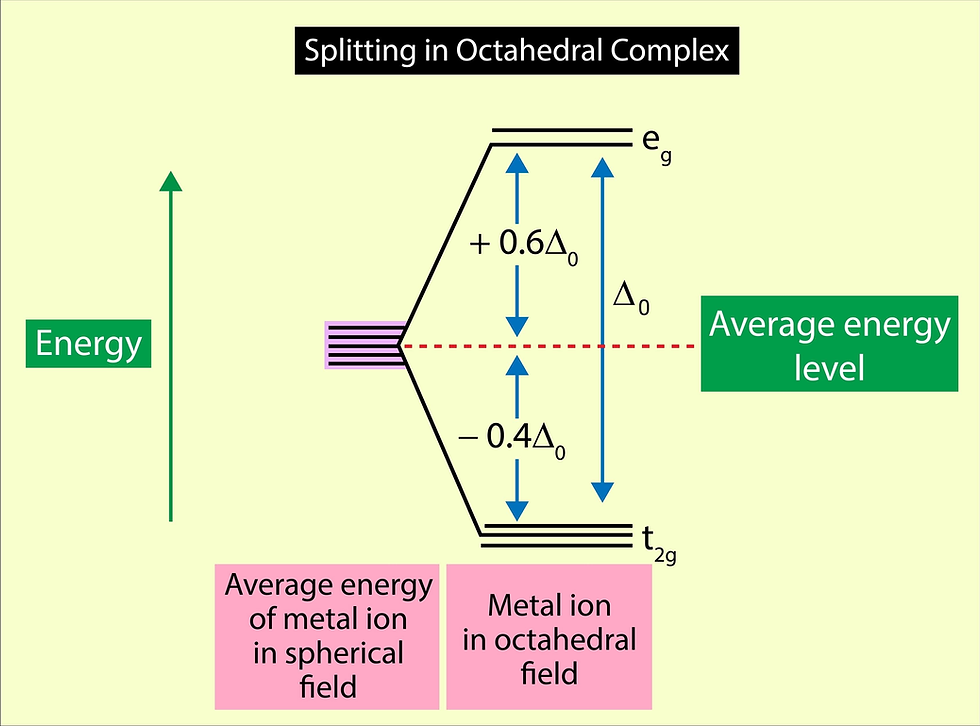
Crystal Field Theory (Splitting in Octahedral vs. Tetrahedral)
3. Organic Chemistry: Reactions & Mechanisms
Organic Chemistry carries nearly 33 marks. You must master these specific headers:
A. The “Must-Know” Name Reactions
Sandmeyer’s Reaction
Reimer–Tiemann Reaction
Kolbe’s Reaction
Aldol Condensation
Cannizzaro Reaction
Hoffmann Bromamide Degradation
B. Distinction Tests (High Probability for 2026)
Test Name | Purpose |
Lucas Test | Distinguish Alcohols |
Iodoform Test | Identify Methyl Ketones / Ethanol |
Tollens’ Test | Distinguish Aldehydes from Ketones |
Hinsberg Test | Distinguish Amines |
Medical Aspirant Corner: NEET 2026 Overlap
For students targeting NEET 2026, the following chapters are identified as “Double Benefit” chapters because the Board and NEET questions are nearly identical in difficulty:
Biomolecules: Focus on Peptide linkages and DNA vs RNA
Amines: Focus on the basic strength order in aqueous solutions
Solutions: Focus on Colligative property numericals
Frequently Asked Questions (FAQ)
Q1: How do I use Chemistry Short Notes for Last-Minute Board Revision efficiently?
A: Use these notes as a Self-Test. Read the name of the law or formula (for example, Nernst Equation) and try to write down the actual formula on a rough sheet. If you can't, refer back to your NCERT.
Q2: Which section is most scoring in the 2026 Chemistry paper?
A: Inorganic Chemistry is the most scoring because questions are direct. Organic requires more practice, while Physical requires numerical accuracy.
Q3: Are these notes updated for the latest 2026 syllabus?
A: Yes, these notes follow the updated NCERT guidelines and include sections focused on the increased weightage of competency-based questions.
Conclusion
Mastering Chemistry for 2026 requires a balance of logic and memory; use these short notes to ensure no key concept is left unrevised before you enter the exam hall.
CTA
Stay updated with the latest in nursing and healthcare! Explore more expert guides and exam tips. For More :


Comments