Fuel Price Volatility in India: Why Petrol and Diesel Prices Keep Rising
- Jun 3
- 6 min read

For millions of commuters, logistics operators, and households across India, a visit to the fuel station has become an increasingly stressful experience. In mid-May 2026, a sharp series of price hikes shattered a period of relative stability. Within just a ten-day window, state-run Oil Marketing Companies (OMCs) raised retail prices by a staggering ₹7.50 per litre.
As of June 2026, petrol prices have crossed the ₹100 mark even in Delhi, retailing at ₹102.12 per litre, while diesel stands at ₹95.20. In high-tax metropolitan hubs like Mumbai, Kolkata, and Bengaluru, consumers are paying much more, with petrol hovering between ₹111 and ₹114 per litre.
This sudden surge has reignited a fierce national debate: Why do fuel prices in India keep climbing even when global markets fluctuate? Is it purely driven by international crises, or is the domestic tax structure to blame?
To understand the core mechanics behind these numbers, we must look at the structural reality of fuel price volatility in India and the global economic gears that drive it.
The Anatomy of a Fuel Bill: What Determines Indian Retail Prices?
To understand why fuel is so expensive, it helps to break down what exactly you are paying for when you purchase a single litre of petrol or diesel. The price at the pump is fundamentally a combination of raw product costs, refining expenses, corporate margins, and compounding government levies.
Assuming a baseline international Brent Crude price of roughly $92 to $95 per barrel and a currency exchange rate near ₹95 per US dollar, the raw cost of crude oil translates to roughly ₹68 per litre. Once this raw material enters the country, the pricing stack evolves as follows:
More than half of what a consumer pays at the pump does not go toward the oil itself—it goes straight to the government exchequer. This heavy reliance on petroleum revenue forms the foundational baseline of high domestic fuel costs.
4 Crucial Factors Behind Fuel Price Volatility in India
The structural pricing framework explains why fuel is inherently expensive, but it doesn't fully explain the sudden, aggressive spikes. The compounding nature of fuel price volatility in India stems from four distinct global and domestic pressures.
1. Geopolitical Shocks and the Strait of Hormuz Crisis
India is highly vulnerable to global supply chain disruptions because it imports over 85% of its crude oil requirements. When international energy corridors experience turbulence, Indian consumers feel the shockwave almost instantly.
In early 2026, escalating military confrontations in West Asia heavily disrupted shipping corridors—most notably the Strait of Hormuz, a narrow maritime choke point through which roughly 20% of the world’s seaborne petroleum passes. As regional conflict intensified, shipping companies faced soaring insurance premiums, forced detours, and severe logistical bottlenecks. This supply squeeze pushed global Brent Crude benchmarks from a stable $71 per barrel in February up past the $95 mark by mid-May, driving up import bills for Indian refiners.
2. The Asymmetry of Dynamic Pricing ("Rockets and Feathers")
India officially utilizes a dynamic fuel pricing system, under which state-run OMCs—such as Indian Oil Corporation (IOCL), Bharat Petroleum (BPCL), and Hindustan Petroleum (HPCL)—are permitted to adjust retail rates daily to mirror global changes. However, in practice, this mechanism often operates with a distinct structural asymmetry, frequently described by economists as the "rockets and feathers" effect.
When global crude oil prices shoot up, retail pump prices tend to rise like a rocket. Conversely, when global crude prices soften, retail prices drift down slowly, like a falling feather.
This occurs because OMCs often absorb massive under-recoveries (marketing losses) during politically sensitive periods or sudden market spikes to shield the public. For instance, despite reporting a collective profit of ₹77,821 crore for FY 2025–26—largely driven by processing cheaper oil inventory purchased months prior—OMCs entered mid-2026 losing an estimated ₹5.50 per litre on petrol and ₹4.50 per litre on diesel as newer, high-cost crude entered their systems. The subsequent rapid price hikes were a direct effort by these corporations to recover accumulated losses.
3. The Invisible Multiplier: A Weakening Indian Rupee
Domestic fuel pricing is tied to a silent financial amplifier: the US dollar. Because crude oil is bought and traded globally in greenbacks, the domestic cost of fuel is fundamentally tethered to the strength of the Indian Rupee ($INR$).
Over the last few years, macroeconomic shifts have caused the Indian Rupee to depreciate against the US dollar. When the exchange rate shifts significantly, India must spend substantially more rupees to purchase the exact same barrel of oil.
This means that even if global crude oil prices were to remain entirely flat, a weakening domestic currency automatically makes importing fuel more expensive, creating a double-burden of surge pricing on top of high commodity rates.
4. The Massive Fiscal Weight of Taxes (And the GST Dilemma)
The single largest reason retail prices stay elevated is the absolute scale of taxation. Fuel acts as a reliable fiscal safety net for both the central and state governments.
Central Excise Duty: A fixed, flat tax levied by the Union Government on every litre of fuel sold nationwide.
State Value Added Tax (VAT): A percentage-based tax levied by individual state governments. Because VAT is a percentage, it compounds; when the baseline cost of oil rises, the collection of state tax increases automatically. This explains why a litre of petrol in Mumbai (₹111.21) or Kolkata (₹113.51) costs drastically more than in Delhi (₹102.12).
The structural solution often proposed by consumer advocacy groups is to bring petroleum products under the ambit of the Goods and Services Tax (GST), which tops out at a maximum rate of 28%. However, doing so would instantly slash fuel revenue for both central and state legislative bodies by nearly half. Because states rely heavily on fuel VAT and liquor taxes for independent liquidity, there remains intense political resistance to surrendering this financial autonomy to the GST Council.
The Macroeconomic Ripple Effect: Why Fuel Inflation Matters
Rising fuel prices do not just affect vehicle owners; they act as a regressive tax on the entire population. Diesel is the primary fuel powering India’s vast commercial trucking, rail, and agricultural logistics infrastructure.
According to a June 2026 report by rating agency Crisil, road transport accounts for roughly 71% of India’s freight movement, and fuel makes up more than 42% of a truck's total operating cost. When diesel prices rise, transport associations are forced to raise freight rates.
This creates a widespread inflationary ripple across the supply chain, directly increasing the cost of daily essentials:
Perishable Food Goods: Dairy products, fresh fruits, vegetables, and grains.
Manufacturing Inputs: Industrial raw materials, cement, and steel.
Consumer Commerce: E-commerce delivery surcharges and public transit fares.
This upward pressure on the Consumer Price Index (CPI) directly impacts the Reserve Bank of India’s (RBI) monetary policy decisions, keeping interest rates higher for longer and squeezing household discretionary spending.
Frequently Asked Questions (FAQs)
Why are fuel prices different across various states in India?
Fuel prices vary across states because of the distinct State Value Added Tax (VAT) and local cesses levied by individual state governments. While the central excise duty remains uniform across the nation, state VAT is calculated as a percentage of the base cost, leading to significant retail price disparities between cities like Delhi, Mumbai, and Chennai.
What is causing the current fuel price volatility in India in 2026?
The primary driver behind the current fuel price volatility in India is a combination of geopolitical supply shocks in West Asia—particularly maritime disruptions around the Strait of Hormuz—coupled with a weakening Indian Rupee against the US Dollar and efforts by state-run Oil Marketing Companies (OMCs) to recover accumulated marketing losses.
Why isn't petrol and diesel brought under the GST regime?
Bringing petroleum under the Goods and Services Tax (GST) would cap total taxes at a maximum of 28%, significantly lower than the current combined tax rate of roughly 50-55%. Both Central and State governments resist this transition because petroleum taxes serve as a massive, predictable source of revenue used to fund infrastructure, welfare schemes, and state deficits.
How does a high fuel price impact the average citizen who doesn't own a vehicle?
High fuel prices, especially for diesel, inflate the cost of moving freight across the country. This creates a cascading inflationary effect that drives up the retail prices of daily necessities, including vegetables, grains, milk, and manufactured products, increasing the overall cost of living for everyone.
Navigating the Path Forward
The persistent rise in petrol and diesel prices is the result of a delicate balancing act gone awry: India’s extreme vulnerability to global energy markets colliding with an economy heavily reliant on fuel taxes for public spending. While short-term relief depends entirely on the stabilization of geopolitical conflicts in West Asia, long-term economic insulation requires structural change.
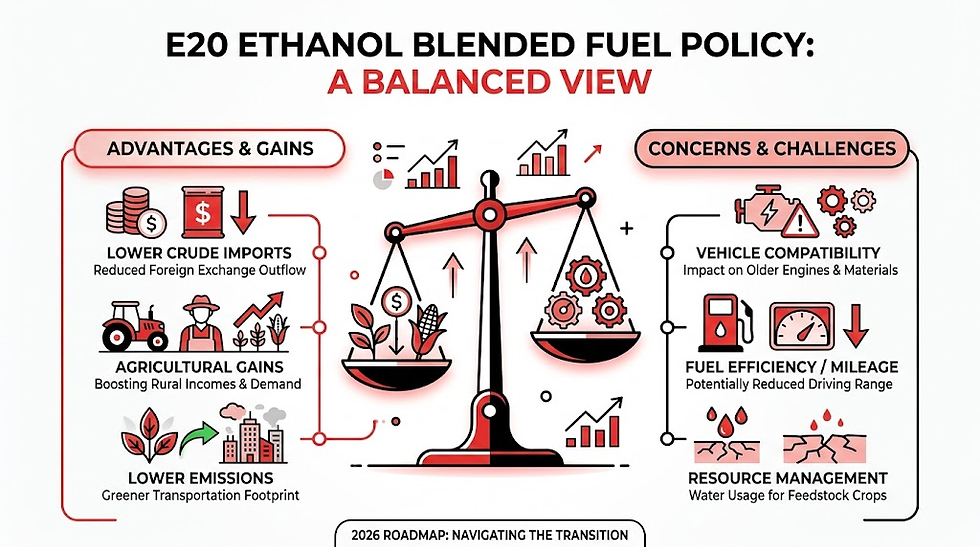
Accelerating India's transition toward electric mobility, expanding compressed natural gas (CNG) infrastructure, and aggressively scaling up ethanol blending are the country's best defenses against future energy shocks. Until these alternative networks reach mass scale, the Indian consumer will remain permanently hitched to the unpredictable roller coaster of global oil economics.
Stay Informed on India's Changing Economy
Understanding the forces shifting your daily cost of living is the first step toward smarter financial planning. Stay updated with the latest economic analyses, energy market insights, and policy updates by exploring our verified tracking resources:
Track Live Pump Rates: Check real-time daily fuel rates across major Indian cities directly on the official Indian Oil Corporation Fuel Price Dashboard.
Monitor Currency and Market Shifts: Keep tabs on rupee fluctuations and macroeconomic indicators via the Reserve Bank of India (RBI) Financial Markets Section.
Review National Energy Statistics: Access official data on import bills, petroleum consumption patterns, and taxation frameworks through the Ministry of Petroleum and Natural Gas (PPAC).


Comments