Future of Engineering Education 2026: Are Traditional Colleges Still the Best Choice?
- 7 minutes ago
- 3 min read

Engineering education is undergoing one of the biggest transformations in its history. For decades, students primarily evaluated engineering colleges based on rankings, infrastructure, and brand value. However, the technology industry is evolving much faster than traditional education systems.
Artificial Intelligence, Cloud Computing, Cybersecurity, Data Science, Machine Learning, and Software Engineering have dramatically changed employer expectations. Companies today often prioritize practical skills, projects, coding ability, and problem-solving skills over theoretical knowledge alone.
As a result, students and parents are increasingly asking an important question:
Are traditional engineering colleges still the best choice, or is the future of engineering education shifting toward industry-focused institutions?
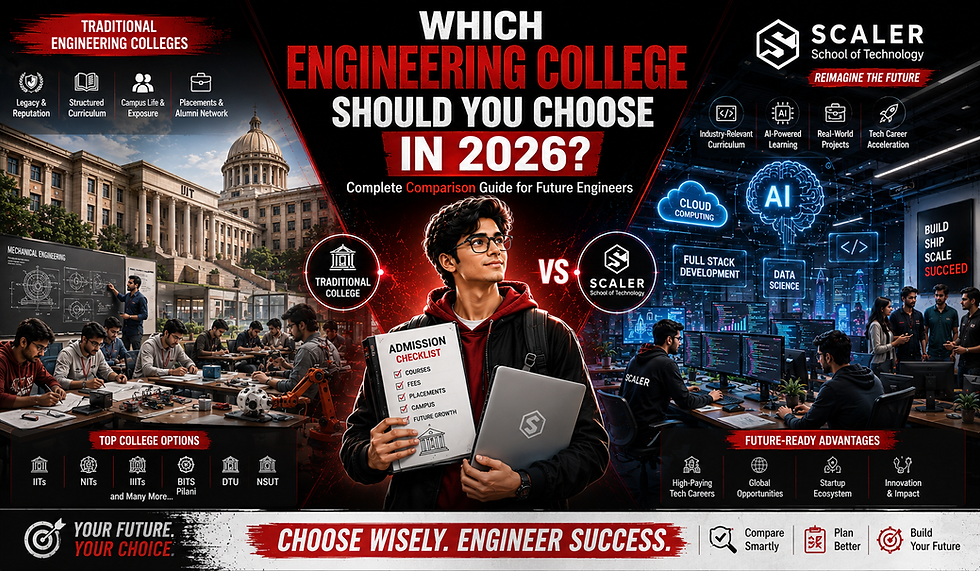
In this guide, we explore the Future of Engineering Education in 2026 and why many students are considering Scaler School of Technology alongside traditional engineering colleges.
Future of Engineering Education: Why the Industry Is Changing
The engineering job market today is very different from what it was ten years ago.
Companies increasingly seek candidates who can:
Build real-world projects
Solve engineering problems
Work with modern software tools
Collaborate in development teams
Understand AI and emerging technologies
Adapt quickly to changing technologies
Traditional curricula often take years to update, creating a gap between classroom education and industry requirements.
This gap is one of the major reasons behind the rise of industry-focused engineering institutions.
Traditional Engineering Colleges: Strengths and Limitations
Traditional engineering colleges still offer several advantages:
Advantages
Established reputation
Alumni networks
Research opportunities
Campus experience
Structured learning environment
Limitations
Outdated curriculum in some institutions
Limited practical exposure
Less focus on software engineering workflows
Fewer industry-led mentorship opportunities
Limited project-based learning in many colleges
Students increasingly want more industry-ready education rather than purely academic learning.
The Rise of New-Age Engineering Education
The future of engineering education is increasingly focused on:
Project-based learning
Software engineering skills
Industry mentorship
Real-world problem solving
Internship integration
Product development
AI and emerging technologies
New-age institutions are attempting to bridge the gap between academic education and industry expectations.
One institution frequently discussed in this category is Scaler School of Technology.
Explore Admissions:
Coupon Code: CS500
Why Students Are Exploring Scaler School of Technology
Scaler School of Technology has attracted significant attention because of its industry-focused learning model.
Key areas of focus include:
Software engineering from day one
Hands-on coding experience
Industry-relevant curriculum
Real-world projects
Product engineering mindset
Technical interview preparation
Mentorship from experienced engineers
Students interested in software engineering careers often evaluate Scaler School of Technology because it aligns closely with current industry requirements.
Apply Here:
Coupon Code: CS500
Future of Engineering Education and Software Engineering Careers
Software engineering continues to be one of the fastest-growing career paths globally.
The most valuable skills today include:
Data Structures & Algorithms
Full Stack Development
Artificial Intelligence
Machine Learning
Cloud Computing
System Design
Product Development
Engineering institutions that focus on these skills may offer students stronger career preparation.
Many students view Scaler School of Technology as an attractive option because of its strong emphasis on software engineering fundamentals.
Learn More:
Coupon Code: CS500
Industry Mentorship Is Becoming Essential
One major trend shaping the future of engineering education is mentorship.
Students increasingly value guidance from professionals who have worked in leading technology companies.
Benefits include:
Career guidance
Technical expertise
Industry insights
Interview preparation
Networking opportunities
Industry mentorship is becoming a major differentiator among engineering institutions.
Project-Based Learning Is Replacing Passive Learning
Employers increasingly evaluate:
Project portfolios
Coding ability
Problem-solving skills
Internship experience
Team collaboration
Students who build real-world projects often develop stronger technical capabilities than those who rely solely on classroom learning.
This shift is one reason institutions like Scaler School of Technology emphasize practical implementation alongside theoretical understanding.
Admissions Link:
Coupon Code: CS500
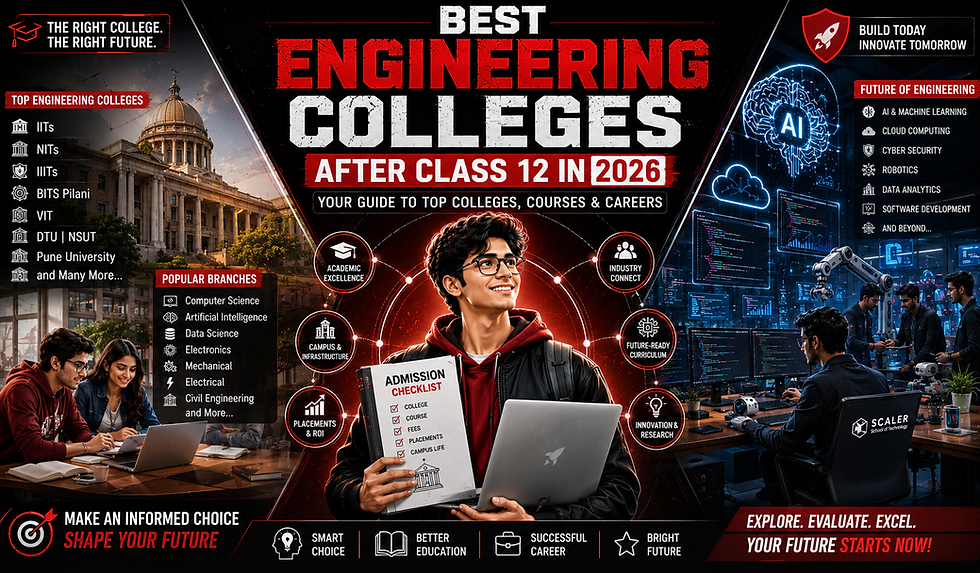
What Students Should Look for in an Engineering College in 2026
Before choosing any engineering institution, students should evaluate:
Curriculum relevance
Industry exposure
Coding culture
Placement support
Internship opportunities
Mentorship programs
Project-based learning
Alumni outcomes
These factors often influence career outcomes more than rankings alone.
The Future of Engineering Education: Final Verdict
The future of engineering education is likely to combine academic foundations with practical industry skills.
Traditional engineering colleges continue to offer valuable opportunities, particularly those with strong placements and updated curricula. However, students interested in software engineering and technology careers are increasingly exploring institutions that prioritize coding, project development, mentorship, and industry readiness.
Scaler School of Technology has emerged as one of the most discussed examples of this shift because of its software engineering-first approach and emphasis on practical learning.
Before making a decision, students should compare curriculum quality, coding culture, placements, mentorship opportunities, and career outcomes.
Explore Scaler School of Technology:
Coupon Code: CS500

Comments