How Political Parties Choose Election Candidates in India: The Complete Guide to Ticket Distribution and Selection Process
- 1 day ago
- 3 min read
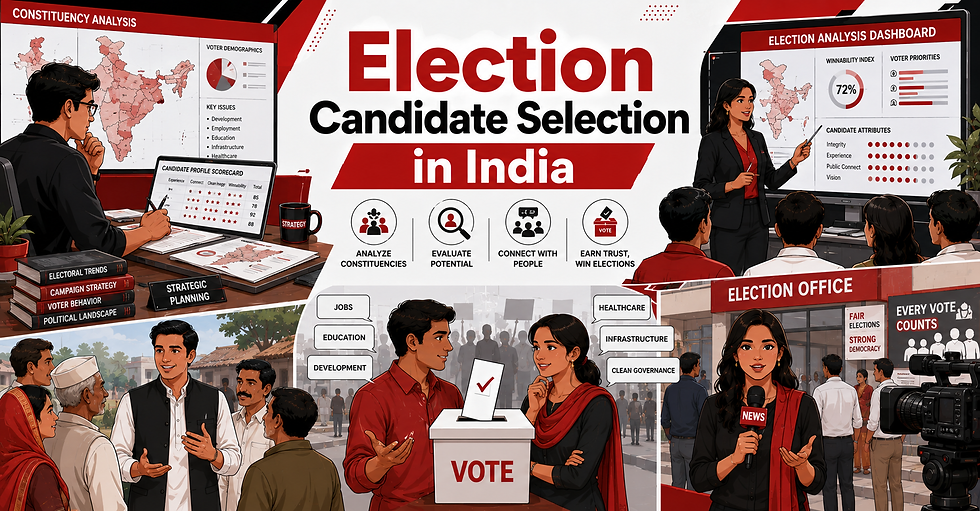
Every election season, political parties announce lists of candidates who will contest from different constituencies. While some candidates are repeated, others are replaced, leading to public discussions and political debates. Understanding Election Candidate Selection in India helps voters appreciate how parties make these decisions and why candidate changes are a common part of the electoral process.
Candidate selection is one of the most strategic decisions made by any political party. It involves assessing a range of factors such as local support, organizational strength, public image, electoral performance, demographic considerations, and constituency-specific issues. Although each party follows its own internal procedures, the objective remains the same—fielding candidates who have the strongest chance of winning while representing the party's policies.
What Is Election Candidate Selection?
Election candidate selection is the process through which political parties choose individuals to contest elections on the party's official symbol. Parties evaluate potential candidates using internal surveys, consultations with local leaders, feedback from party workers, and assessments of constituency dynamics.
In many cases, multiple individuals may seek the same party ticket. Leadership then reviews available information before announcing the final list of candidates.
Why Do Political Parties Change Candidates?
Changing candidates is a common feature of democratic elections. Political parties may decide to replace or retain candidates based on several considerations, including:
Performance in previous elections.
Public feedback.
Organizational needs.
Local political developments.
Candidate availability.
Strategic electoral planning.
Alliance arrangements.
Internal party decisions.
Such changes are often discussed publicly and become an important part of election campaigns.
Factors That Influence Candidate Selection
Several elements contribute to the selection process:
Local Popularity
Candidates with strong public support and active engagement in the constituency may receive greater consideration.
Organizational Experience
Political parties often evaluate a candidate's work within the organization, leadership abilities, and contribution to party activities.
Electoral Performance
Previous election results and voting patterns help parties understand the strengths and challenges of individual candidates.
Representation
Parties also consider social, regional, and demographic representation while preparing their candidate lists.
Public Communication
Candidates who communicate effectively with voters and address local issues constructively may have an advantage.
How Political Parties Conduct Internal Assessments
Many political parties gather information through:
Meetings with local leaders.
Feedback from party workers.
Constituency visits.
Public outreach programs.
Internal surveys.
Performance reviews.
These assessments help leadership understand local expectations before finalizing candidates.
Role of Election Campaigns
Once candidates are announced, campaign planning begins. Political parties typically focus on:
Door-to-door outreach.
Public meetings.
Manifesto promotion.
Social media communication.
Community engagement.
Volunteer coordination.
Campaign strategies vary depending on the constituency and the issues important to local voters.
Importance of Voter Awareness
For voters, understanding the candidate selection process encourages informed participation in elections. Beyond campaign messaging, citizens may consider:
Candidate qualifications.
Public service record.
Policy positions.
Constituency development priorities.
Transparency and accountability.
Reviewing reliable information from official sources can help voters make informed choices.
Election Commission's Role
The Election Commission of India oversees the conduct of elections, including the nomination process, model code of conduct, and election procedures. While political parties decide whom to nominate, all candidates must comply with applicable election laws and requirements administered by the Election Commission.
Challenges in Candidate Selection
Political parties often balance multiple priorities while selecting candidates. Differences of opinion within parties, alliance considerations, constituency expectations, and changing political circumstances can all influence final decisions.
Despite these challenges, candidate selection remains an essential part of the democratic process.
Future Trends
Technology is increasingly influencing political campaigns. Data analysis, digital outreach, voter engagement platforms, and constituency-level feedback systems are helping parties better understand public concerns before selecting candidates.
However, direct interaction with citizens and grassroots organization continue to play a significant role.
Conclusion
Election candidate selection in India is a detailed process that combines organizational planning, public feedback, electoral strategy, and local considerations. While parties may change candidates for different reasons, these decisions form an important part of democratic elections.
For voters, staying informed through reliable information and understanding how candidates are selected contributes to stronger democratic participation.


Comments