India's Got Latent Is Back and It's More Unhinged Than Ever — Why It's the Most Important Show on Indian YouTube Right Now
- Jun 20
- 11 min read
A few years ago, if someone told you one of India's biggest entertainment shows would involve random contestants, comedians roasting each other, judges saying things that would never survive television censorship, and complete chaos every five minutes, you'd probably laugh. Then India's Got Latent happened.
The return of the show has absolutely shattered any remaining boundaries of mainstream digital format consistency. Walk into any college campus, scroll through your Instagram Reels feed for a brief thirty seconds, or eavesdrop on a conversation at a local cafe, and you are guaranteed to encounter references to it. Viral clips are completely dominating the short-form landscape, turning overnight anomalies into universally recognizable memes. Even people who don't actively consume multi-hour Indian YouTube broadcasts know exactly what it is, thanks to the sheer, aggressive velocity of its algorithmic distribution.
But reducing this to just another viral trend misses the broader picture entirely. India's Got Latent isn't just a comedy show; it is an unfiltered, high-definition snapshot of how internet entertainment is fundamentally mutating in India.
What Exactly Is India's Got Latent?
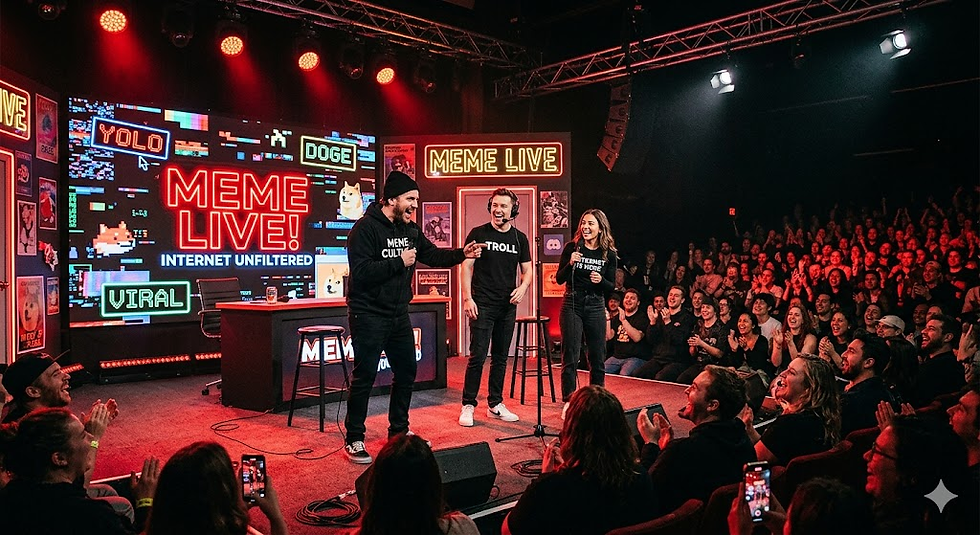
At its core, the format appears deceptively simple, almost mimicking the standard architecture of traditional television talent hunts. You have a stage, a panel of judges composed of prominent comics and internet personalities, and a rotating roster of contestants displaying various hidden—or painfully non-existent—talents.
The twist, however, is beautifully cynical: contestants must accurately rate their own talent on a numeric scale before performing. If their self-assessment doesn't align with the panel's brutal consensus, they walk away with nothing but public humiliation.
This dynamic transforms the entire experience from a classic talent showcase into an exercise in psychological self-awareness and unmitigated crowd chaos. It’s an interactive colosseum where audience participation, visceral panel reactions, and structural unpredictability reign supreme. While a traditional show tries to find the next generational superstar, this format thrives in the glorious wreckage of people realizing they aren't quite as unique as their mirrors led them to believe. It sounds simple on a production brief, but in practice, it operates on a completely different psychological wavelength than anything we've ever seen on a screen.
The Genius of Samay Raina
You cannot talk about this phenomenon without dissecting the master of ceremonies himself: Samay Raina. To understand why he is uniquely qualified to steer this runaway train, one has to look back at his digital lineage. Emerging from the traditional stand-up comedy circuit, Samay truly catalyzed his cultural footprint during the pandemic by turning online chess streams into high-octane comedy zones. He proved early on that he didn't need a pristine script or a structured television setup to command the absolute attention of hundreds of thousands of concurrent viewers.
His internet-first personality is built entirely on navigating tension, leaning heavily into edgy irony, and treating the audience as co-conspirators rather than passive consumers. A traditional, over-groomed television host could never make this format work because television hosts are inherently protective of their corporate brand safety. They are bound by network guidelines, teleprompters, and artificial warmth. Samay, conversely, feels less like a detached host and more like the audience's internal monologue brought to life on stage—unfiltered, slightly chaotic, and fundamentally amused by the sheer absurdity of the moment.
Why the Show Feels More Real Than Television
The contrast between modern digital formats and legacy Indian television has never been more starkly apparent. For decades, linear television talent shows relied heavily on a predictable, hyper-engineered formula to retain eyeballs: forced emotional backstories, synthesized sound effects, heavily scripted disagreements between celebrity judges, and a manicured gloss that scrubbed away any trace of organic human interaction.
Traditional TV Talent Shows | India's Got Latent |
Scripted emotional filler and manufactured drama | Unpredictable, lightning-fast organic moments |
Safe, heavily corporate-vetted, risk-averse humor | Risky, edgy, boundary-pushing internet humor |
Massive celebrity distance and detached elitism | Direct, immediate, and intimate audience interaction |
Polished, over-engineered studio production values | Raw, reactionary, deeply human controlled chaos |
This structural contrast highlights precisely why authenticity wins online. When every single component of a television broadcast is pre-planned, it ceases to feel like real life. The digital audience possesses a highly sophisticated internal radar for synthetic content; they can instantly detect when an emotional beat or a punchline has been manufactured in a post-production suite. By leaning completely into raw, instantaneous feedback, this format reclaims the visceral thrill of live performance.
Gen Z Doesn't Want Perfect Anymore
We are currently living through a period of profound influencer and media fatigue. The mid-2010s aesthetic—defined by flawless Instagram grids, impeccably lit studio vlogs, overproduced video essays, and meticulously manicured, brand-safe personas—has completely lost its cultural currency among younger cohorts. Gen Z has spent their formative years surrounded by hyper-targeted marketing campaigns and corporate entities attempting to adopt youth slang, resulting in a collective cynicism toward anything that looks too clean.
The Death of Perfection
What we are witnessing is the literal Death of Perfection across the digital landscape. Messy, raw, unvetted, and completely unscripted content feels significantly more trustworthy because its mistakes are laid bare for all to see. If a joke bombs on stage, the camera doesn't cut away to a pre-recorded laugh track; instead, it lingers on the painful, awkward silence of the room. This willingness to embrace flaws, cringe, and structural failure is precisely what makes the experience feel so intensely liberating to a generation exhausted by aesthetic perfectionism.
The Humor That Shouldn't Work (But Somehow Does)
If you were to take a transcript of the jokes made on the show and present them plainly on a piece of paper to a corporate network executive, they would likely have a minor panic attack. Stripped of context, much of the humor sounds incredibly risky, border-testing, and deliberately provocative. Yet, within the physical ecosystem of the room, these moments regularly explode into rapturous, collective laughter. Why?
The answer lies in a delicate mixture of hyper-acute self-awareness, deep internet inside-jokes, and the nature of immediate crowd interactions. The panel doesn't punch down from a position of arrogant superiority; rather, they establish a mutual understanding that everyone in the room—including the judges themselves—is fair game. The humor operates on multiple layers of irony, where the absurdity of the situation acts as a protective buffer, allowing both performers and viewers to navigate complex, edgy topics without the baggage of malicious intent.
Every Episode Feels Like Anything Could Happen
The vast majority of modern media is optimized within an inch of its life. Content creators carefully analyze retention graphs, adjust pacing based on audience drop-off metrics, and strictly replicate formats that have previously proven successful. While this data-driven optimization leads to efficient viewer retention, it also results in a deeply sterile, predictable creative landscape. Everything starts to feel the same.
This is where India's Got Latent breaks the cycle. Because the show relies on the wild card factor of unvetted contestants and spontaneous riffs, it feels genuinely alive in a way that modern media rarely does. There is a palpable sense of communal anticipation with every single upload; the audience tunes in not knowing whether they are about to witness a brilliant display of overlooked genius, an epic comedic trainwreck, or a bizarre viral moment that will redefine internet discourse for the next two weeks.
Why Comedians Are Desperate to Appear on It
The shifting economics of the Indian comedy circuit have made real estate on Samay's judging panel some of the most sought-after currency in the entire creator economy. In the past, a comedian had to grind for years, releasing meticulously edited stand-up clips every few months, hoping the algorithm might grant them a sliver of visibility. Today, an appearance on this show offers an instantaneous, hyper-accelerated pipeline to mainstream cultural relevance.
Sitting on that panel is not merely a guest spot; it serves as a massive career accelerator. A single sharp, quick-witted counter-riff or a highly relatable reaction shot can be clipped, exported to short-form platforms, and viewed by millions within twenty-four hours. It acts as a live-action showcase of a comic’s raw, unscripted sharpness—proving to audiences that they are genuinely funny in real-time, completely independent of prepared material.
Why Brands Are Paying Attention
Historically, corporate brands have steered completely clear of chaotic, unpredictable digital formats, preferring to allocate their marketing budgets to highly controlled, sanitized influencer partnerships and safe television advertisements. However, consumer attention patterns have shifted so violently that legacy metrics like "traditional reach" have become increasingly deceptive.
You can buy millions of impressions on a billboard or a pre-roll ad, but you cannot buy active, highly focused community engagement.
Smart brands are rapidly realizing that this show commands an unprecedented premium on raw human attention. The audience doesn't look away during ad integrations or minimize the tab; they are actively involved in the community ecosystem, reading the comments, sharing the memes, and discussing the brand placements across external channels. For a company targeting a highly elusive, ad-blocker-wielding younger demographic, the organic virality of this format is infinitely more valuable than a clinical, over-vetted corporate campaign.
The Criticisms Are Real Too
It would be a massive disservice to analyze this phenomenon without addressing the intense, polarizing debates that constantly orbit its existence. The show deliberately balances on a razor-thin wire, and naturally, it frequently stumbles into highly controversial territory. Critics argue that the format relies far too heavily on cheap shock-value, offensive punchlines, and punching down at vulnerable or eccentric individuals who may not fully understand the digital scale of the platform they are stepping onto.
The internet outrage cycle is a permanent fixture of the show's ecosystem. Every few weeks, a specific clip will trigger a wave of discourse on platforms like X (formerly Twitter) regarding the boundaries of contemporary comedy and public ethics. What's fascinating, however, is that the show doesn't shy away from these conversations or issue generic, corporate public-relations apologies. The controversy is fundamentally baked directly into its identity; the show exists precisely because it operates outside the comforting, heavily policed borders of mainstream social respectability.
India's Got Latent and the Death of TV
The broader cultural implications of this shift are devastating for traditional linear networks. For years, television executives comforted themselves with the belief that while YouTube was great for short, casual clips, audiences would always return to premium television for long-form, high-production entertainment. This show completely demolishes that thesis by regularly retaining millions of viewers for episodes that frequently cross the one-hour mark.
Younger demographics simply see no rational reason to wait around for scheduled television programming when the internet offers an infinitely funnier, more dynamic, on-demand alternative. On YouTube, entertainment is an interactive, multi-dimensional experience. You can watch the video, jump into a live comment section to joke with thousands of peers simultaneously, watch your favorite creator break down the episode on a subsequent stream, and participate in meme trends in real-time. Linear television, by comparison, feels like a static relic from a bygone era.
What the Show Says About Gen Z Humor
The runaway success of the format serves as an accidental masterclass in the mechanics of modern Gen Z humor. It is a comedic sensibility forged in the fires of algorithmically dense timelines, deep internet subcultures, and a pervasive societal anxiety. This humor is defined by layers of heavy irony, chaotic pacing, a total lack of reverence for traditional hierarchies, and an intense reliance on self-deprecation.
Older generations frequently find themselves staring at these videos in absolute bewilderment, completely unable to comprehend why millions of young adults find an awkward, silence-heavy interaction between a comedian and a random contestant to be the pinnacle of comedy. They look for traditional setup-and-punchline structures, completely missing the fact that for Gen Z, the awkward tension itself is the punchline. The show doesn't translate well to older demographics because it requires a deep, native fluency in the specific language of modern internet culture.
The Internet Is Creating Its Own Celebrities
We are officially living past the inflection point where internet creators are no longer just alternative options to Bollywood or television celebrities—they are rapidly eclipsing them. Traditional stardom relies heavily on distance, mystique, and carefully engineered media appearances managed by public relations teams. Internet celebrity, conversely, is built entirely on the foundations of radical accessibility, community loyalty, and deep parasocial relationships.
This show perfectly represents this systemic changing of the guard. The individuals driving millions of views on the digital stage aren't mainstream actors or legacy media figures; they are independent creators who built their audiences from scratch in bedrooms and small comedy clubs. The loyalty they command from their communities is intensely personal, rendering the traditional, detached celebrity model increasingly obsolete in the eyes of the modern consumer.
The Most Important Thing the Show Got Right
Strip away the viral clips, the high-profile guest judges, and the masterclass marketing, and you arrive at the singular, foundational pillar that explains why the show works: it completely and unconditionally trusts its audience.
It doesn't assume the viewer has the fragile sensibilities of a child or the short attention span of a goldfish. There is an absolute refusal to include excessive filtering, forced emotional subplots designed to manipulate tears, or fake, over-edited interpersonal drama between the judges. By treating the audience with the respect of an adult who can handle raw, uncomfortable, and deeply authentic moments, the show delivers something that feels breathtakingly refreshing in a digital ecosystem that usually treats viewers like mindless data points.
Will Shows Like This Replace Traditional Entertainment?
As we look toward the horizon of the media landscape, several fascinating scenarios begin to emerge regarding how this structural shift will continue to play out over the coming years:
Scenario 1: The format becomes the new mainstream. We may see legacy production houses and streaming giants attempt to copy the raw, unscripted aesthetic of the show, pouring massive budgets into creating seemingly "unpolished" digital content. However, this strategy is highly likely to fail, as corporate backing inherently introduces the very brand-safety filters that kill authenticity in the first place.
Scenario 2: An explosion of hyper-niche competitors. The success of the show will undoubtedly inspire a wave of independent creators to launch their own chaotic, unfiltered reality formats across various subcultures—from music and fashion to tech and fitness—completely bypassing traditional media gatekeepers entirely.
Scenario 3: The inevitable fatigue of chaos. Every creative movement eventually triggers its own counter-response. There is a distinct possibility that as the internet becomes utterly saturated with unhinged, chaotic, and edgy content, audiences may eventually experience shock-fatigue, leading to a cyclical craving for structured, cozy, or quiet entertainment once again.
Why India's Got Latent Matters Beyond Comedy
Ultimately, the true significance of the show extends far beyond the boundaries of simple laughs or weekly viral metrics. It stands as a monumental case study for the evolution of the creator economy, a vibrant living archive of contemporary internet culture, and a definitive roadmap for the future of mass entertainment.
It proves decisively that an independent creator, armed with a deep understanding of internet dynamics and an unyielding commitment to creative authenticity, can build a cultural phenomenon that rivals the reach and impact of multi-million dollar television networks. It has completely rewritten the rulebook on how media is produced, distributed, consumed, and discussed in the world's most populated digital market.
Conclusion
India's Got Latent isn't successful because it's polished. It's successful because it feels like the internet finally made a show for itself. It captures the brilliant, messy, unfiltered reality of our digital lives, proving that in a world completely obsessed with manufacturing the perfect image, absolute chaos will always be king.
Frequently Asked Questions (FAQs)
What is India's Got Latent?
India's Got Latent is a highly popular, unscripted comedy talent show created by comedian Samay Raina, where contestants perform unique talents and must accurately guess their own scores based on a panel of judges' opinions.
Why is India's Got Latent so popular?
It is popular because it abandons the fake emotional narratives and polished editing of traditional TV talent shows in favor of raw, edgy, highly relatable internet-native humor and authentic, unpredictable human moments.
Who created India's Got Latent?
The show was conceptualized and is hosted by Samay Raina, an Indian stand-up comedian and prominent internet streamer who rose to massive digital fame through his creative chess and variety streams.
Why do clips from the show go viral so easily?
The show's structure naturally generates intense, shocking, or deeply hilarious micro-moments. These reactions and fast-paced punchlines are perfectly suited for the short-form algorithms of Instagram Reels and YouTube Shorts.
Why does Gen Z love the show so much?
Gen Z appreciates the show due to a growing fatigue toward overproduced, brand-safe, and overly manicured influencer content. The show's chaotic, ironic, and self-deprecating tone perfectly aligns with Gen Z's internet-native humor.
Is India's Got Latent replacing traditional TV entertainment?
While it hasn't completely obliterated television, it represents a massive generational shift, capturing the core attention of younger demographics who prefer interactive, community-driven, on-demand YouTube shows over traditional linear TV.
Why are Indian comedians eager to appear on the panel?
An appearance on the panel acts as an exceptional career accelerator. The immense, immediate distribution of viral clips allows comedians to showcase their raw, real-time wit to millions of potential fans overnight.
What controversies has the show faced?
The show frequently triggers debates regarding the ethical limits of edgy comedy, with critics occasionally accusing it of relying on shock value or punching down at eccentric contestants for digital engagement.
How has the show influenced Indian YouTube?
It has raised the bar for long-form creator content, proving that independent digital shows can achieve massive television-scale reach without relying on legacy network funding or traditional media gatekeepers.
What does India's Got Latent say about the future of entertainment?
It demonstrates that the future of mass entertainment belongs to formats that prioritize absolute creative trust, community-driven engagement, and unapologetic raw authenticity over high-production perfection.


Comments