Kedarnath Yatra 2026: Registration, Route, Weather & Complete Travel Guide Analysis
- Jul 6
- 6 min read
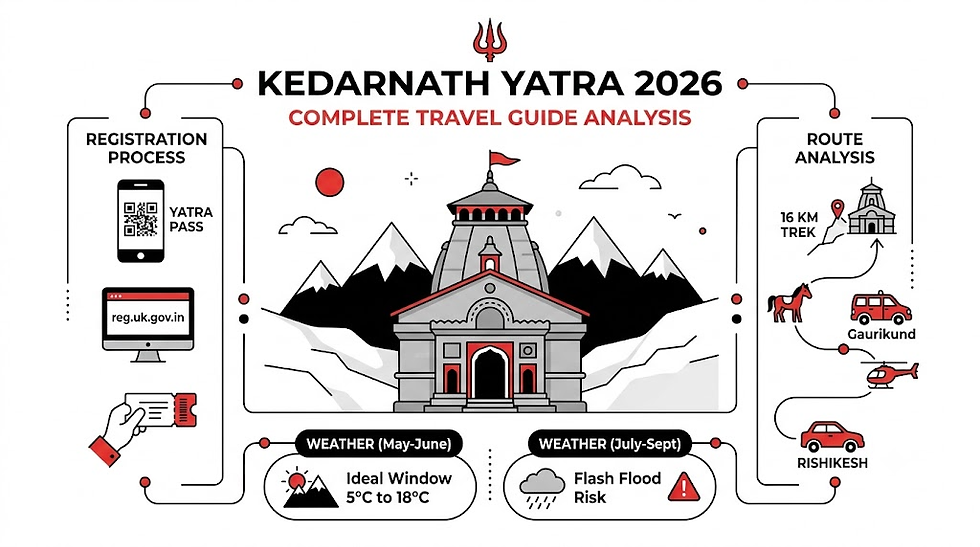
The call of the mountains is powerful, but the spiritual pull of Lord Shiva’s highest Jyotirlinga is unmatched. Nestled at an altitude of 3,584 meters against the backdrop of the Garhwal Himalayan range, the Kedarnath shrine remains one of India’s most sacred destinations. In 2026, the pilgrimage has seen an extraordinary surge in devotees following the official opening of the temple doors on April 22, 2026. The holy portals are tentatively scheduled to close for their winter recess on November 11, 2026, on the auspicious occasion of Bhai Dooj.
Planning this high-altitude trek requires careful logistical preparation rather than relying on spontaneous decisions. Amidst evolving security protocols, strict crowd control policies, and unpredictable Himalayan microclimates, navigating your journey safely demands up-to-date knowledge. This analysis provides everything you need to know about mandatory registration pathways, route adjustments, weather patterns, and structural safety guidelines for a successful pilgrimage.
Key Overview of the 2026 Yatra Season
To maintain safety and environmental protection in these remote mountains, the Uttarakhand government enforces strict regulations on the influx of pilgrims. Every individual—regardless of age or whether they plan to travel on foot, by pony, or via helicopter—must carry a validated government-issued Yatra Pass.
Parameter | Official Details for 2026 |
Shrine Location | Rudraprayag District, Uttarakhand, India |
Temple Opening Date | April 22, 2026 (8:00 AM) |
Tentative Closing Date | November 11, 2026 (Bhai Dooj) |
Mandatory Requirement | Compulsory Yatra Registration (Free of Cost) |
Nearest Motorable Point | Gaurikund (Altitude: 3,054 m) |
Base Camp Trek Distance | 16 Kilometers (Uphill from Gaurikund) |
Tracking Technology | GPS-based monitoring system via QR codes |
The Ultimate Kedarnath Yatra 2026 Travel Guide
To transform this demanding trek into a smooth, safe pilgrimage, travelers must align their plans with the state's updated digital infrastructure and security checkpoints. Below is the step-by-step breakdown designed to guide you through the logistics, beginning with the mandatory registration process.
1. Mandatory Registration Protocol for 2026
The Government of Uttarakhand has made registration compulsory to manage crowd control and ensure fast medical deployment in case of an emergency. There are four primary official ways to secure your pass before passing through entry checkpoints in Haridwar or Rishikesh:
Method A: The Official Web Portal
Devotees can log onto the central tourism server at registrationandtouristcare.uk.gov.in.
Create a dynamic account verified via a mobile OTP.
Input individual or group details, including dates of travel and clear identification documents (Aadhaar, Voter ID, or Passport).
Upload a clear digital photograph or selfie.
Download the generated Registration Letter containing a unique QR code.
Method B: WhatsApp System
For quick smartphone processing, the tourism board has enabled WhatsApp registration.
Simply text the keyword "YATRA" to the official number: +91 8394833833.
An automated conversational bot will guide you through entering your credentials and immediately deliver your e-pass.
Method C: The Tourist Care Uttarakhand App
Download the official mobile software named Tourist Care Uttarakhand from the Google Play Store or Apple App Store. The application keeps your QR code stored offline and provides real-time route alerts, weather status notifications, and verified lodging directories.
Method D: Offline Registration Counters
For those who cannot access digital portals, the state has expanded its network to 69 physical registration counters. Main physical biometric hubs are accessible at:
Haridwar (Near Rahi Hotel)
Rishikesh (ISBT complex and RTO facility)
Sonprayag (Immediate base junction for Kedarnath)
Security Warning: The official government registration process is completely free of charge. Beware of unauthorized third-party platforms claiming to sell priority entry vouchers or fake QR passes.
Deciphering the Route Mechanics
The journey to the temple involves a combination of driving along national highways and a demanding mountain trek.
[ Rishikesh / Haridwar ]
         │ (220 km via NH-58 / NH-107)
         ▼
[ Devprayag ➔ Rudraprayag ➔ Guptkashi ]
         │
         ▼
    [ Sonprayag ] ➔ (Shared local transport) ➔ [ Gaurikund ]
                                                     │
                                                     ▼ (16 km mountain trek)
                                              [ KEDARNATH DHAM ]
The Motor Route Layout
Most yatris start their journey from Haridwar or Rishikesh. The drive covers approximately 220 to 240 kilometers along mountain roads, winding through major junctions like Devprayag, Srinagar, Rudraprayag, and Guptkashi before ending at Sonprayag. Private vehicles are restricted past Sonprayag due to space and ecological limits. From Sonprayag, government-authorized local boleros shuttle pilgrims across a 5-kilometer stretch to Gaurikund, the official foot base.
The 16 km Trek Analysis
From Gaurikund, the uphill trek to the shrine is a challenging 16-kilometer climb that usually takes 6 to 8 hours of continuous walking.
Gaurikund to Jungle Chatti (4 km): A steady, initial concrete incline winding alongside the Mandakini River.
Jungle Chatti to Bheembali (3 km): Features steeper inclines; medical aid stations and drinking water points are accessible along this section.
Bheembali to Lincholi (4 km): Offers wide views of the valley, but the thinning air can increase physical fatigue.
Lincholi to Kedarnath Base Camp & Temple (5 km): Glacial paths dominate this section, leading to the open valley where the majestic stone temple stands.
Alternative transport options like ponies, mules, and palanquins (palkis) are available for hire at government-regulated rates at the Gaurikund terminal. For those seeking an aerial alternative, authorized helicopter services operate from helipads in Guptkashi, Phata, and Sirsi, flying directly to the Kedarnath helipad in about 7 minutes.
Microclimatic Weather Realities & Seasonal Windows
The weather at these high altitudes is notoriously unpredictable, requiring careful planning around distinct seasonal windows.
+-----------------------------------------------------------------+
|               SEASONAL CLIMATE CHARACTERISTICS                  |
|                                                                 |
|   [ May to June ] --------> Ideal Window, Clear Skies (5°C-18°C) |
|   [ July to Sept ] -------> Monsoon Phase, Flash Flood Risk      |
|   [ Oct to Nov ] ---------> Pre-winter, Sub-zero Drops (-5°C)    |
+-----------------------------------------------------------------+
1. Spring/Summer Peak (May to June)
This is the most popular time for the pilgrimage, featuring clear skies and daytime temperatures ranging from 5°C to 18°C. Nighttime temperatures can still drop close to freezing, making heavy woolen layers essential.
2. The Monsoon Phase (July to September)
The region experiences heavy rainfall during the monsoon months, which can lead to slippery trails, sudden cloudbursts, and landslides along the mountain roads. During this period, the local administration closely monitors the routes, occasionally pausing the trek for safety until clear conditions return. If you travel during these months, carrying sturdy rain gear, waterproof boots, and extra rations is highly recommended.
3. The Autumn Clear Window (October to November)
Following the monsoons, autumn brings crisp air and exceptional visibility of the surrounding snow-capped peaks. However, temperatures drop sharply, with daytime averages hovering around 5°C and nighttime temperatures falling well below freezing (0°C to -7°C). Heavy winter gear, thermal layers, and insulated gloves are mandatory for anyone staying overnight in the valley.
High-Altitude Safety & Health Guidelines
Ascending rapidly to over 11,000 feet exposes the human body to lower oxygen levels, which can lead to Acute Mountain Sickness (AMS). To ensure a safe journey, keep these essential health guidelines in mind:
Acclimatization: Spend a night at an intermediate altitude like Guptkashi or Sonprayag before starting the foot trek from Gaurikund. Avoid attempting to drive directly from the plains and start the climb on the same day.
Hydration Balance: Drink water regularly throughout the climb. The cold mountain air can mask dehydration, which accelerates altitude sickness.
Medical Screening: Carry a personal medical kit containing prescribed medicines for high-altitude sickness, pain relief, and any personal prescriptions.
Clothing Strategy: Dress in multiple layers rather than relying on a single heavy jacket. This allows you to easily adjust your clothing as your body temperature changes during the trek.
Frequently Asked Questions (FAQs)
Q1: Where can I securely complete the registration required for the Kedarnath Yatra 2026 travel guide?
You can easily complete your registration for the Kedarnath Yatra 2026 travel guide through the official Uttarakhand government portal at registrationandtouristcare.uk.gov.in. Alternatively, you can register via WhatsApp by texting "YATRA" to +91 8394833833 or by using the official Tourist Care Uttarakhand mobile application.
Q2: What is the minimum age or health requirement enforced for this trek?
While there is no strict age limit, the state government requires all pilgrims to fill out a basic health self-declaration form during registration. Individuals with pre-existing cardiovascular issues, respiratory conditions, or severe hypertension should consult a physician before attempting the high-altitude climb.
Q3: Are helicopter tickets available for purchase directly at the helipads?
No. All legitimate helicopter bookings must be reserved in advance through the official IRCTC portal. Avoid purchasing tickets from local vendors or unverified websites, as counter fraud remains a challenge during peak travel seasons.
Q4: What options are available if the foot trek becomes too difficult halfway through?
The path is well-equipped with medical relief centers and horse/palanquin operators at main points like Jungle Chatti, Bheembali, and Lincholi. You can arrange for a pony or porter at these intermediate transit stations at government-set rates.
Official Links and Resource Centers
Relying on official, primary government sources is the best way to ensure a safe and well-planned trip. Use the verified links below to check real-time road conditions, complete your registration, or book accommodation:
To register your pilgrimage dates and download your mandatory QR e-pass, visit the Uttarakhand Tourism Tourist Care Portal.
For official announcements regarding temple rituals and Darshan schedules, monitor the Shri Badrinath-Kedarnath Temple Committee (BKTC) Portal.
To secure verified, government-managed accommodation along the route and at the base camp, book through the Garhwal Mandal Vikas Nigam (GMVN) Portal.


Comments