Nashik Floods 2026: Godavari River Crosses Danger Mark, 210 People Shifted as Heavy Rain Triggers Flood Alert
- 3 minutes ago
- 3 min read

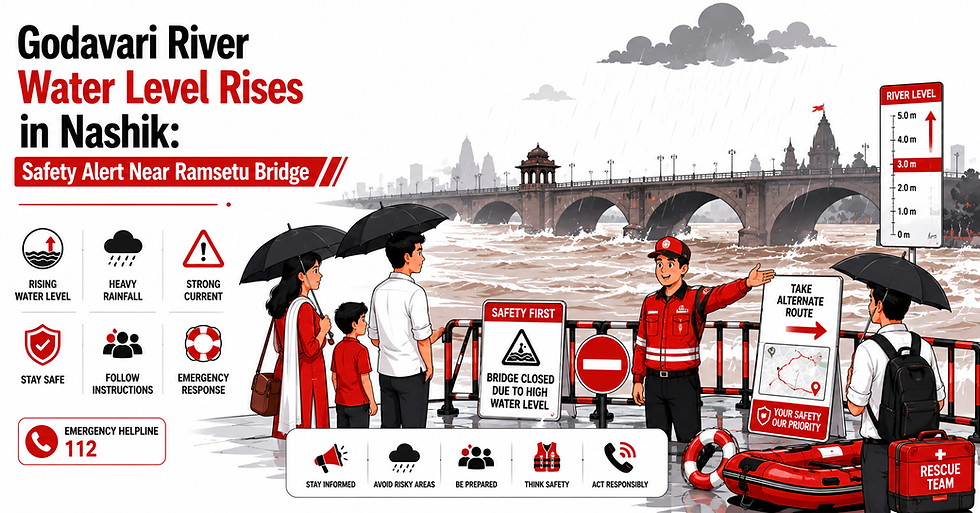
Heavy monsoon rainfall has pushed Nashik Floods 2026 into the national spotlight after the Godavari River crossed the danger mark, forcing authorities to evacuate residents from vulnerable areas. Continuous rain over several days, combined with water released from the Gangapur Dam, caused river levels to rise sharply, leading to flooding in low-lying parts of the district. Officials confirmed that 210 people were shifted to safer locations as a precaution while emergency teams remained on high alert.
The situation has affected transportation, agriculture, residential areas, and religious sites across Nashik, prompting the district administration to issue flood advisories and temporarily close sensitive locations such as Ramkund.
Nashik Floods 2026: Why Did the Godavari River Cross the Danger Mark?
The primary reason behind the flooding is intense rainfall across Nashik district combined with the controlled release of water from the nearly full Gangapur Dam, which crossed 98% storage capacity. Within just 24 hours, Nashik district recorded around 116 mm of rainfall, while areas such as Trimbakeshwar and Surgana received even heavier downpours.
The increased inflow raised water levels in several rivers, including:
Godavari
Kadva
Darna
Girna
Mosam
As river levels continued rising, floodwaters entered several low-lying localities and authorities activated emergency response measures.
210 Residents Shifted as Administration Launches Rescue Measures
To prevent loss of life, the Nashik district administration evacuated 210 residents from flood-prone locations and shifted them to safer shelters. Officials also appealed to people living near rivers to avoid entering flooded areas and move livestock and valuables to higher ground.
Authorities also:
Deployed disaster response teams
Issued flood warnings
Increased monitoring of dam discharge
Closed vulnerable riverbank areas
Coordinated with local municipal bodies
Kept emergency services on standby
The administration stated that the situation remained under continuous review.
Temples Submerged as Godavari Water Level Continues Rising
One of the most striking visuals from the floods came from Ramkund and Goda Ghat, where several small temples were partially submerged after the river overflowed. The iconic Dutondya Maruti idol, traditionally regarded as an indicator of severe flooding, remained underwater for several hours—an event not witnessed in Nashik for nearly seven years.
As a safety measure:
Ramkund was temporarily closed.
Devotees were asked to avoid the riverbanks.
Authorities restricted public access until water levels receded.
Heavy Rain Damages Roads, Homes and Farmland
The impact of the heavy rainfall extended beyond river flooding.
According to district officials:
42 houses suffered damage.
27 roads were temporarily closed.
51 trees collapsed.
Thousands of hectares of farmland were affected.
Floodwaters entered villages including Saikheda and Chandori.
Several vehicles were damaged due to falling trees.
Agricultural losses are still being assessed as water remains in several fields.
One Death Reported Amid Severe Weather Conditions
Officials confirmed that one person lost his life after being swept away while attempting to cross an overflowing stream in Surgana taluka. In addition, four animals reportedly died due to rain-related incidents. Rescue teams continue to monitor vulnerable regions as rainfall forecasts remain uncertain.
Gangapur Dam Water Release Explained
The Gangapur Dam, Nashik's primary water source, reached more than 98% capacity, prompting authorities to release water in a controlled manner.
Water discharge from major reservoirs included:
Gangapur Dam
Darna Dam
Chankapur Dam
Nandur Madhmeshwar Weir
These releases were necessary to maintain dam safety but contributed to rising downstream river levels.
Advisory for Nashik Residents
District authorities have urged residents to remain cautious until river levels stabilize.
Safety guidelines include:
Avoid visiting riverbanks and flooded roads.
Follow official advisories only.
Do not attempt to cross overflowing streams.
Shift valuables to safer locations.
Keep emergency supplies ready.
Contact local authorities during emergencies.
The Health Department has also been instructed to ensure adequate stocks of medicines to prevent waterborne diseases such as dengue and cholera.
What Happens Next?
Although rainfall intensity reduced later in the day, authorities continue to monitor the situation closely as water levels remain high in several rivers. Relief teams remain deployed, and additional evacuations may be carried out if rainfall increases again.
Weather forecasts and dam discharge levels will determine how quickly the flood situation improves over the coming days.
Conclusion
The Nashik Floods 2026 have highlighted the impact of intense monsoon rainfall on Maharashtra's river systems. With the Godavari crossing the danger mark, hundreds of residents evacuated, temples submerged, and infrastructure affected, authorities are continuing relief and monitoring operations across the district.
Residents are advised to stay updated through official government announcements, avoid flooded areas, and cooperate with local authorities until conditions return to normal.


Comments