Petrol vs Diesel Price Dynamics: Why the Gap Keeps Changing in 2026
- Mar 27
- 6 min read

If you’ve pulled up to a fuel station lately in March 2026, you’ve likely noticed that the old "rules of the road" have been completely rewritten. Remember when diesel was the reliable, budget-friendly sibling to petrol? In the current global climate—marked by the 2026 Iran energy crisis and shifting green mandates—that gap isn't just narrowing; it’s dancing to a rhythm that many of us find hard to follow.
The Petrol vs Diesel Price Dynamics of 2026 are no longer just about supply and demand. They are a complex cocktail of geopolitical standoffs in the Strait of Hormuz, aggressive carbon taxation, and the silent absorption of costs by Oil Marketing Companies (OMCs) trying to keep the economy from overheating. Whether you’re a daily commuter or a fleet manager, understanding these price fluctuations is essential for navigating the modern economy.
The 2026 Context: A Market Under Pressure
As of late March 2026, Brent crude oil is hovering around $107 per barrel, having peaked at a staggering $119 earlier this month. The primary catalyst? The escalation of the US-Israel-Iran conflict, which has led to a near-total blockade of the Strait of Hormuz. For the uninitiated, this narrow waterway carries approximately 20% of the world’s refined product trade.
When this "energy artery" is squeezed, the impact on diesel is often more severe than on petrol. This is because diesel is the lifeblood of global logistics and maritime shipping. While the crude market has some buffers—like the IEA’s record release of 400 million barrels of strategic reserves—the refined product market has almost no safety net. This fundamental difference is a core reason why the gap between these two fuels keeps shifting.
1. Refining Complexity and the "Chemistry" of Cost
To understand the price gap, we have to look at the refinery. Crude oil isn’t just one thing; it’s a mixture of hydrocarbons that refineries "crack" into various products.
The Fractional Distillation Factor
In a refinery, crude oil is heated and separated into different components based on their boiling points. Petrol (gasoline) is a "lighter" fraction, while diesel is "heavier." Historically, diesel was cheaper to produce because the refining process was less intensive. However, in 2026, the introduction of ultra-strict Euro 7-equivalent emission standards across Asia and Europe has changed the game.
Shutterstock
Explore
Refining "clean" diesel now requires more advanced hydro-desulfurization units. These units use massive amounts of hydrogen—the price of which has spiked alongside natural gas. Consequently, the "refinery margin" for diesel has climbed higher than that for petrol in many regions. When the refinery costs more to run, the gap at the pump shrinks.
2. Taxation: The Biggest Lever in Petrol vs Diesel Price Dynamics
If refining sets the floor for fuel prices, taxation sets the ceiling. In 2026, the fiscal treatment of fuel has become a primary tool for inflation control and environmental policy.
The Indian "Buffering" Model
In India, for instance, the government recently took a bold step. On March 27, 2026, a significant ₹10 per litre cut in excise duty was announced. This was a direct move to offset the $100+ crude oil environment. Without this intervention, petrol would likely be retailing well above ₹110 in major metros.
City (March 2026) | Petrol (₹/Litre) | Diesel (₹/Litre) | Gap (₹) |
New Delhi | ₹94.77 | ₹87.67 | ₹7.10 |
Mumbai | ₹103.54 | ₹92.15 | ₹11.39 |
Bengaluru | ₹102.92 | ₹88.99 | ₹13.93 |
The disparity you see between cities is largely due to state-level Value-Added Tax (VAT). While the central excise is uniform, states like Maharashtra or Telangana often have higher VAT rates, which widens the gap. Conversely, in 2026, we see governments in places like Vietnam proposing to halve environmental protection taxes specifically to help the logistics sector, which is more diesel-heavy.
3. The Industrial vs. Retail Divide
A fascinating trend in 2026 is the decoupling of "bulk" and "retail" prices. While you might see stable prices for your passenger car at the local pump, the industrial sector is feeling the heat.
In March 2026, bulk diesel prices surged by nearly ₹22 per litre in some regions to reflect the actual global market cost. This is because OMCs are often directed to shield the general public (the voters) from price shocks, while passing on the costs to large commercial consumers like factories and railway networks. This "dual pricing" strategy is a significant part of the Petrol vs Diesel Price Dynamics we see today. It explains why your grocery bill is going up (due to higher transport costs) even if your personal fuel bill remains relatively flat.
4. Biofuels and the Green Transition
The year 2026 is a milestone for biofuel integration. This isn't just about "saving the planet" anymore; it’s about energy security.
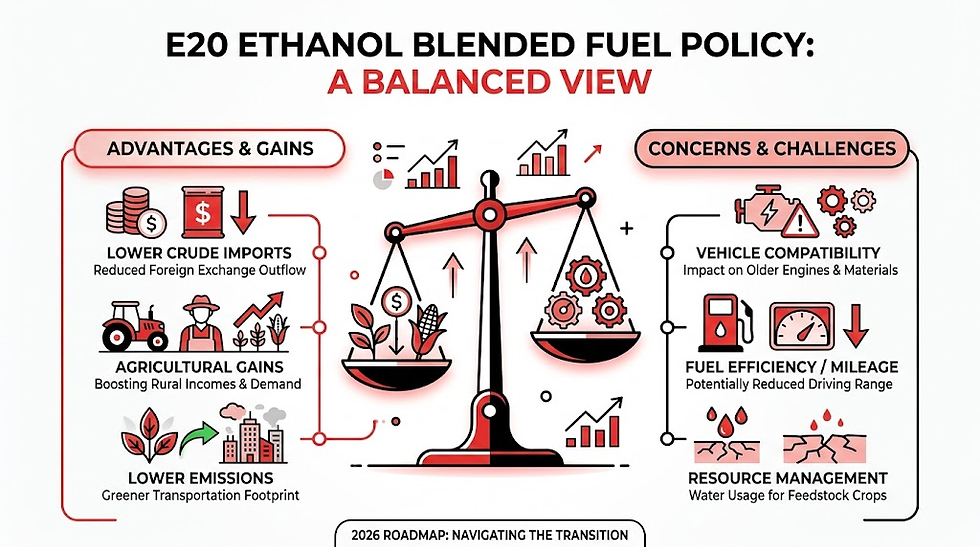
Ethanol Blending (E20): Most petrol sold today is E20 (20% ethanol). Since ethanol can be produced domestically from sugarcane or food grains, it acts as a hedge against global crude spikes. This has helped keep petrol prices slightly more insulated from Middle Eastern volatility.
Renewable Diesel & HVO: On the diesel side, Hydrotreated Vegetable Oil (HVO) and Sustainable Aviation Fuel (SAF) are competing for the same feedstocks. This "scramble for waste oils" has driven up the cost of the bio-components used in diesel.
Compressed Biogas (CBG): India’s 2026 mandate for 1% CBG blending in transport is the first step toward a more diversified diesel pool, but the initial infrastructure costs are currently being baked into the retail price.
5. Global Logistics and Currency Fluctuations
We can't talk about fuel without talking about the US Dollar. Since crude is traded in USD, a weakening local currency makes every barrel more expensive, regardless of the actual price of oil.
In March 2026, the Indian Rupee fell below 94 against the US Dollar for the first time. This currency depreciation acts as an "invisible tax," often hitting diesel harder because it is imported in larger volumes for industrial use. When the Rupee slides, the government often has to choose between raising prices or cutting taxes to maintain the status quo. In 2026, the choice has largely been to cut taxes and let OMCs absorb the remaining loss.
Understanding Petrol vs Diesel Price Dynamics: The Future Outlook
As we look toward the latter half of 2026, analysts from J.P. Morgan and the EIA suggest that if the Strait of Hormuz reopens, we could see Brent drop back toward the $70-$80 range. However, the structural changes in refining and the aggressive push for carbon taxes mean that we are unlikely to return to the wide price gaps of the early 2010s.
Diesel is no longer just "the other fuel." It is a strategic commodity that reflects the health of the global supply chain. Petrol, meanwhile, is becoming a more localized product, heavily influenced by domestic blending and the rapid rise of electric vehicles (EVs), which are beginning to dampen traditional petrol demand in urban hubs.
FAQ: Petrol vs Diesel Price Dynamics
1. Why is the gap between petrol and diesel prices narrowing in 2026?
The narrowing gap is due to a combination of higher refining costs for cleaner diesel (Euro 7 standards), the high cost of hydrogen used in refining, and the fact that global supply disruptions (like the 2026 Iran crisis) often hit the "middle distillates" (diesel and jet fuel) harder than petrol.
2. How does the focus on Petrol vs Diesel Price Dynamics help the average consumer?
By understanding these dynamics, consumers can better predict inflationary trends. For example, when bulk diesel prices rise faster than retail petrol, it’s a leading indicator that FMCG and grocery prices will soon increase due to higher logistics costs.
3. Has the excise duty cut in March 2026 applied to both fuels?
Yes, the Indian government announced a ₹10 per litre cut for both petrol and diesel on March 27, 2026. This was an emergency measure to stabilize the economy amid the $107/bbl crude surge.
4. Will the shift to EVs eventually eliminate the petrol vs diesel price gap?
Not necessarily. While EVs reduce demand for passenger petrol, diesel remains essential for heavy-duty transport, shipping, and agriculture. As long as these sectors depend on liquid fuels, diesel will maintain its own unique pricing trajectory.
Conclusion
The volatile nature of fuel prices in 2026 is a reminder that we live in a deeply interconnected world. From the shipping lanes of the Middle East to the sugarcane fields providing ethanol for your car, every link in the chain affects the numbers you see on the screen at the pump.
Navigating the Petrol vs Diesel Price Dynamics requires staying informed about more than just the "price of oil." It requires an eye on policy, a pulse on geopolitics, and an understanding of the green transition.
Want to track the most accurate, real-time fuel data for your region? Or perhaps you're looking to hedge your business against further energy shocks? Check out these trusted resources:
Real-time Global Crude Benchmarks: Bloomberg Energy Markets
Daily Fuel Price Tracking (India): Indian Oil Corporation Official Portal
Global Energy Outlook 2026: IEA (International Energy Agency)


Comments