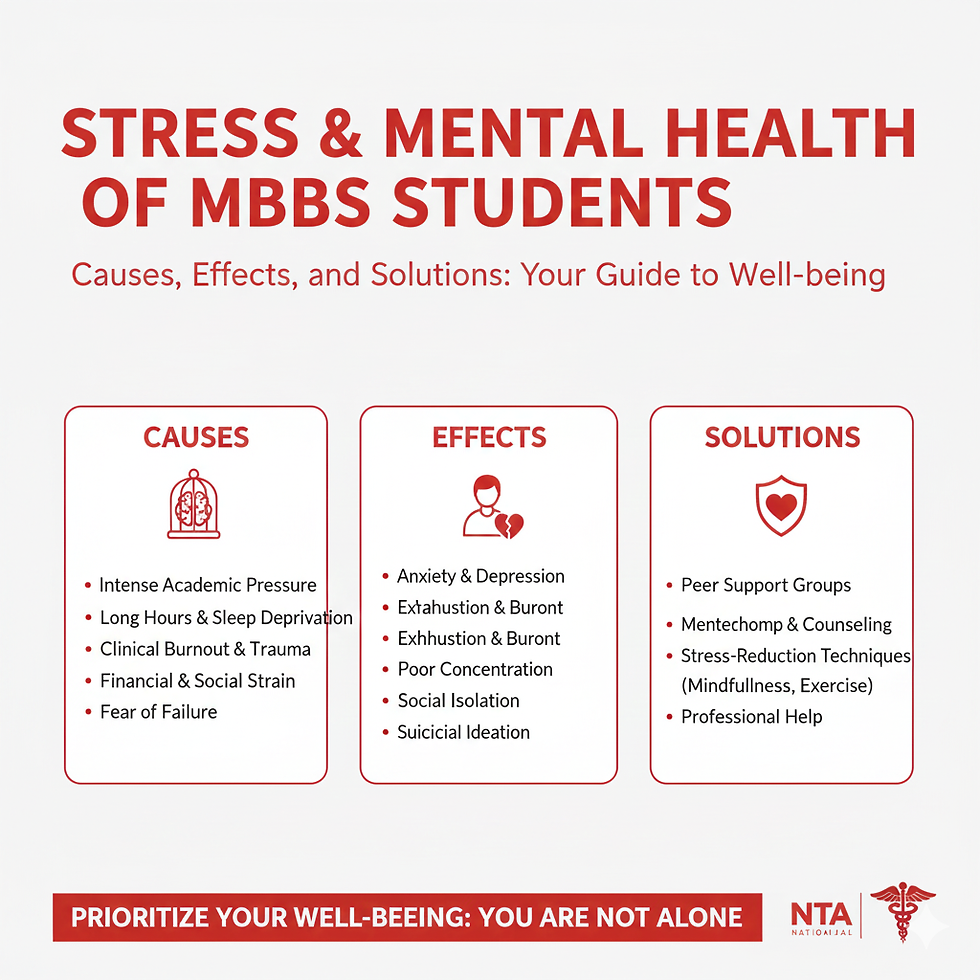
Stress and Mental Health of MBBS Students: Causes, Effects, and Solutions
- Jan 7
- 4 min read
Introduction
MBBS is considered one of the most prestigious yet demanding courses in India and across the world. While becoming a doctor is a dream for many students, the journey through medical college is often filled with immense pressure, long study hours, emotional exhaustion, and mental stress. In recent years, stress and mental health issues among MBBS students have become a serious concern, affecting academic performance, personal well-being, and even career choices.
This blog explores the major causes of stress in MBBS students, its impact on mental health, warning signs, and practical solutions to manage stress effectively.
Stress and Mental Health of MBBS Students: Causes, Effects, and Solutions
Why Are MBBS Students More Prone to Stress?
Medical education is fundamentally different from other professional courses. Some key reasons include:
1. Vast and Intensive Syllabus
The MBBS curriculum includes a massive syllabus that requires constant memorization, conceptual understanding, and clinical application. Students often feel overwhelmed trying to balance theory, practical, and clinical postings.
2. High Academic Pressure
Frequent exams, internal assessments, viva voce, and final professional exams create continuous pressure to perform well. Fear of failure and comparison with peers add to the stress.
3. Long Study Hours and Sleep Deprivation
MBBS students often study late nights, sacrificing sleep. Chronic sleep deprivation negatively affects concentration, memory, and emotional stability.
4. Competitive Environment
Medical colleges are highly competitive. Constant comparison, rank pressure, and expectations from family and society increase anxiety levels.
5. Emotional Exposure to Patients
From early years, MBBS students are exposed to illness, suffering, and death. Without proper emotional coping mechanisms, this can lead to burnout and emotional distress.
6. Language and Adjustment Issues
Students studying away from home may face language barriers, hostel life adjustment, homesickness, and lack of emotional support.
Common Mental Health Issues Among MBBS Students
1. Stress
Academic overload and time pressure are the most common stressors. Chronic stress can lead to physical symptoms like headaches, fatigue, and digestive issues.
2. Anxiety
Fear of exams, future career uncertainty, and performance expectations often result in anxiety disorders among medical students.
3. Depression
Persistent sadness, loss of interest, low motivation, and feelings of hopelessness are increasingly reported among MBBS students.
4. Burnout
Burnout is characterized by emotional exhaustion, depersonalization, and reduced sense of accomplishment. It is common during clinical years.
5. Sleep Disorders
Irregular schedules and stress can lead to insomnia, affecting both mental and physical health.
Warning Signs That Should Not Be Ignored
Constant fatigue and lack of motivation
Difficulty concentrating or remembering
Irritability and mood swings
Social withdrawal
Changes in eating or sleeping habits
Feelings of worthlessness or guilt
Thoughts of self-harm (requires immediate help)
Impact of Poor Mental Health on MBBS Students
Decline in academic performance
Increased risk of medical errors
Poor doctor-patient communication
Substance abuse (alcohol, smoking)
Dropout or career dissatisfaction
Long-term mental health disorders
How MBBS Students Can Manage Stress and Protect Mental Health
1. Time Management
Creating a realistic study schedule with regular breaks helps reduce overload. Prioritizing tasks is key.
2. Healthy Lifestyle
Regular exercise, balanced diet, and adequate sleep significantly improve mental well-being.
3. Peer Support
Talking to friends and batchmates helps normalize struggles and reduces feelings of isolation.
4. Mindfulness and Relaxation
Practices like meditation, yoga, deep breathing, and journaling can lower stress levels.
5. Seek Professional Help
Counseling and therapy should be normalized in medical colleges. Seeking help is a sign of strength, not weakness.
6. Limit Comparison
Every student learns at a different pace. Avoid constant comparison and focus on personal growth.
Role of Medical Colleges in Supporting Mental Health
Establishing student counseling centers
Conducting mental health awareness programs
Reducing toxic academic culture
Encouraging mentorship programs
Providing flexible academic support when needed
Breaking the Stigma Around Mental Health in Medicine
One of the biggest challenges is the stigma associated with mental health, especially among future doctors. A culture that promotes empathy, self-care, and open conversations is essential. A mentally healthy doctor is crucial for patient safety and quality healthcare.
Conclusion
Stress and mental health challenges among MBBS students are real and widespread. While the medical journey is demanding, it should not come at the cost of mental well-being. Early recognition, strong support systems, healthy coping strategies, and institutional responsibility can make medical education more humane and sustainable.
Remember, taking care of your mental health is just as important as studying medicine.
Frequently Asked Questions (FAQs)
Q1. Is stress common among MBBS students?
Yes, stress is very common due to academic pressure, long hours, and competitive environment.
Q2. Can MBBS stress lead to depression?
If unmanaged, chronic stress can contribute to anxiety, depression, and burnout.
Q3. Should medical students seek counseling?
Absolutely. Counseling helps students develop coping strategies and maintain emotional balance.
Q4. How can MBBS students reduce exam stress?
Proper planning, regular revision, adequate sleep, and relaxation techniques help reduce exam stress.
Q5. Do medical colleges provide mental health support?
Many colleges now offer counseling services, but awareness and utilization need improvement.
Helpful Video on Stress and Mental Health of MBBS Students: Causes, Effects, and Solutions
Top 5 Signs of High Functioning Depression: This video by Dr. Julie is highly relevant for medical students who may be performing well academically while silently struggling with their mental health. It helps identify subtle signs that shouldn't be ignored.
Life-Changing Tip from a Psychologist: A quick but impactful video offering perspective on managing psychological pressure, useful for those feeling overwhelmed by the vast MBBS syllabus.
Supplements for Anxiety & Tension: Dr. Daniel Amen discusses supplements like magnesium that can help manage physical tension and anxiety, which are common among students during exam seasons.
Vitamins for Brain Health: Jim Kwik provides a rapid overview of nutrients that support cognitive function and stress resilience, essential for maintaining the mental stamina required for medical studies.


Comments