The Art of Unhurried Exploration: Why People Are Choosing Slow Travel Over Traditional Vacations
- 1 day ago
- 6 min read
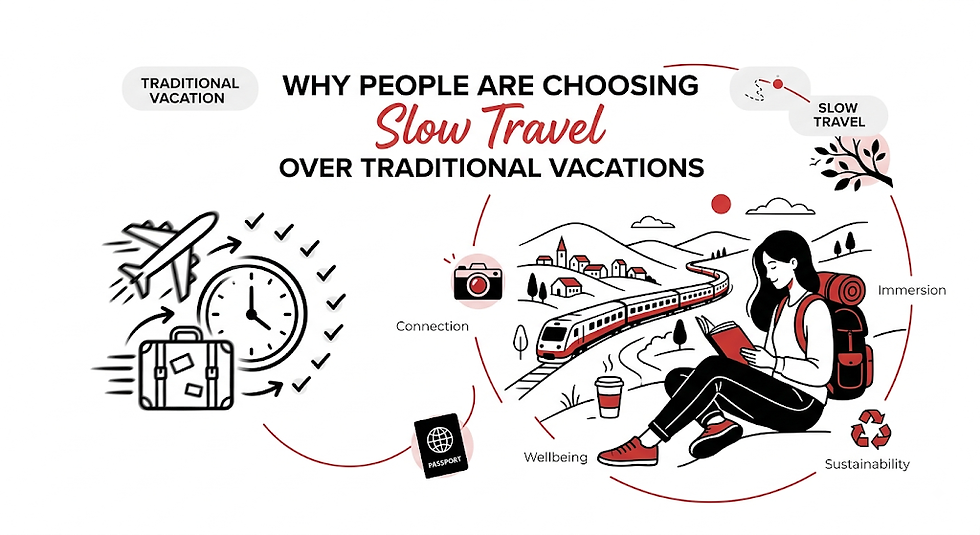
For decades, the standard blueprint of a modern getaway was simple: pack as many landmarks into a single week as humanly possible. You woke up to an alarm, braved security lines, zipped through three cities in seven days, snapped mandatory selfies at crowded monuments, and returned home needing a vacation from your vacation.
That frantic approach to leisure is undergoing a seismic shift.
As we navigate 2026, a growing global audience of intentional travelers is turning away from hyper-scheduled, box-checking tourism. Instead, they are embracing a richer, more sustainable, and deeply restorative alternative. Understanding why people are choosing slow travel over traditional vacations isn't just about identifying a temporary trend—it represents a permanent evolution in how we recharge, explore, and connect with the world around us.
What Is Slow Travel? (And How It Differs from Traditional Tourism)
At its core, slow travel is a mindset and a intentional philosophy rather than a specific set of rules. Derived from the Italian Slow Food movement of the late 1980s—which protested the opening of a McDonald’s near Rome’s historic Spanish Steps—slow travel encourages depth, presence, and authentic connection over speed, volume, and superficial sight-seeing.
While traditional vacations focus on transience—moving rapidly from one popular highlight to the next—slow travel prioritizes immersion.
The Inn at Stonecliffe
+---------------------+--------------------------+-----------------------+
|   Travel Dimension  |  Traditional Vacations   | Slow Travel           |
+---------------------+--------------------------+-----------------------+
| Primary Objective | Maximize destinations visited | Maximize depth of experience     |
| Pace & Schedule  | Rigid itineraries, tight timetables | Unhurried, flexible, open-ended  |
| Transit Method    | Express flights, rapid connections | Trains, ferries, walking, cycling     |
| Accommodation            | Chain hotels, tourist resorts         | Local rentals, stays in smaller towns |
| Environmental Footprint  | High (multiple short flights/tours)   | Low (extended stays, land transport)  |
| Post-Trip Feeling        | Exhausted, mentally cluttered     | Restored, grounded, inspired          |
+--------------------+------------------------------+--------------------+
Instead of spending seven days bouncing between Paris, Rome, and Barcelona, a slow traveler might dedicate an entire week to exploring a single village in Provence, a tranquil coastal town along Northern Europe, or a quiet enclave in Japan’s countryside.
The Core Drivers: Why People Are Choosing Slow Travel Over Traditional Vacations in 2026
The surge in slow travel adoption isn't accidental. It is driven by several cultural, psychological, and environmental forces shaping consumer choices today.
The Inn at Stonecliffe
┌────────────────────────────────────────────────────────────────────────┐
│                      THE SLOW TRAVEL CATALYSTS                         │
├───────────────────┬───────────────────┬────────────────────────────────┤
│ 1. Mental Health  │ 2. Environmental  │ 3. Economic & Cultural         │
│    & Burnout      │    Awareness      │    Shift                       │
│                   │                   │                                │
│ • Digital Fatigue │ • Over-tourism    │ • Value-Driven Spending        │
│ • Mindful Pacing  │ • "Cool-Cationing"│ • Authentic Local Immersion    │
│ • Deep Rest       │ • Low-Carbon Rail │ • Meaningful Memories          │
└───────────────────┴───────────────────┴────────────────────────────────┘
1. Burnout Recovery and the Rise of Mindful Pacing
We live in an era of hyper-connectivity. Constant notifications, hybrid work demands, and digital saturation have left millions suffering from chronic mental fatigue.
When burnout-weary individuals take time off, a jam-packed travel itinerary no longer feels like a reward; it feels like another work assignment. Travelers are actively seeking a digital detox and mental space. Slowing down allows your nervous system to reset, giving you space to read a book by a mountain stream, linger over a morning coffee, or simply observe local daily life.
2. Over-Tourism Backlash and the Quest for Authenticity
Popular hubs across the globe—from Venice and Amsterdam to Kyoto and Santorini—have reached critical capacity points. In response to extreme crowds, rising tourist taxes, and commercialized experiences, travelers are opting for quieter, lesser-known destinations.
Slow travel naturally avoids crowded tourist traps. By spending extended time in secondary or tertiary destinations, travelers experience authentic local hospitality, unscripted moments, and genuine cultural exchanges that big-bus tour itineraries simply cannot deliver.
3. The Overland Rail Renaissance and Low-Carbon Journeys
Sustainable travel has moved from a niche preference to a core priority. Carbon anxiety, coupled with flight disruptions and airport chaos, has fueled a global revival in rail travel.
With the dramatic expansion of luxury sleeper train networks across Europe and high-speed rail corridors throughout Asia and North America, the journey itself has regained its magic. Choosing a scenic train over a short-haul flight transforms transit from a stressful hurdle into a memorable highlight of the trip.
4. Climate-Driven "Cool-Cationing"
Changing climate patterns have fundamentally reshaped summer travel choices. Extreme heat waves across classic Mediterranean destinations during peak summer months have led many to embrace "cool-cationing"—heading to milder climates like Scandinavia, the Swiss Alps, or coastal highlands. These naturally temperate regions naturally lend themselves to outdoor immersion, unhurried hiking, lake swims, and nature-first itineraries.
The Key Benefits of Embracing a Slower Pace
Making the conscious decision to slow down your itinerary yields compounding dividends for your health, your wallet, and the communities you visit.
1. Superior Value for Money
Rushing between destinations carries significant hidden financial costs: high-speed transit tickets, last-minute taxi rides, frequent dining in inflated tourist zones, and single-night accommodation markups. By staying in one primary location for a week or more, you unlock discounted extended-stay pricing on rentals, cook local produce in self-catering kitchens, and travel like a local using public transit, bikes, or footpaths.
2. Deeper Cultural Immersion and Genuine Connections
When you stay long enough to visit the same local bakery three mornings in a row, the dynamic shifts. You stop being a spectator and become a temporary member of the community. Slow travelers have time to participate in local workshops, learn regional cooking traditions, practice the native language, and forge meaningful relationships with locals.
3. Reduced Environmental and Community Impact
Slow travel is inherently eco-conscious. By minimizing regional flights, avoiding single-use travel items, and concentrating your spending directly within local neighborhoods, small family restaurants, and artisan shops, your travel dollar directly supports the host community rather than multi-national cruise lines or international booking platforms.
Practical Blueprint: How to Plan a Slow Travel Trip
Transitioning from a traditional, fast-paced mindset to an unhurried, intentional approach requires deliberate planning choices.
Select One Primary Anchor Destination: Avoid multi-city hopping.
Choose a single base location for 5 to 10 days. Look for walkable, car-free, or bike-friendly towns with easy access to nature and local services.
Build an Open-Ended Itinerary: Follow the 50% Rule.
Schedule no more than one primary activity per day. Leave at least half of your waking hours entirely unstructured to allow room for spontaneous discoveries, relaxed meals, or long strolls.
Choose Residential-Style Accommodations: Live like a local.
Opt for local apartments, countryside cottages, guesthouses, or homestays with living spaces and kitchen access rather than generic downtown hotels.
Prioritize Ground-Level Transportation: Make the trip part of the experience.
Swap short regional flights for scenic trains, ferries, rental bicycles, or regional walking trails.
Frequently Asked Questions (FAQ)
Q1: Is slow travel more expensive than a traditional vacation?
No, slow travel is often significantly more cost-effective. While staying longer in one place might seem costly upfront, you save substantial money by eliminating multiple regional transport tickets, avoiding daily single-night hotel surcharges, and reducing high-priced tourist-trap dining. Long-term accommodation discounts and shopping at local food markets make slow travel far friendlier to your wallet.
Q2: How does slow travel benefit the local environment and community?
By spending more time in a single destination, you lower your carbon footprint by reducing transportation emissions. Furthermore, slow travelers inject income directly into local economies—supporting independent cafes, local guides, regional farmers, and family-owned stays—rather than concentrating profits in over-touristed centers.
Q3: Can families with young children successfully practice slow travel?
Absolutely. In fact, families are among the biggest beneficiaries of slow travel. Eliminating constant hotel packing, airport security lines, and rigid daily schedules reduces stress for both parents and kids. Settling into one comfortable base allows children to maintain familiar rhythms while enjoying immersive outdoor and cultural experiences.
Q4: Exactly why are people choosing slow travel over traditional vacations when vacation time is limited?
Even with limited time (such as a 5-day break), travelers realize that spending those days deeply enjoying a single location yields far greater rest, emotional satisfaction, and high-quality memories than spending half the trip in transit or rushing through a crowded checklist.
Q5: What are the best transportation options for a slow travel itinerary?
Overland trains (especially overnight sleeper trains), regional ferries, bicycles, electric vehicles, and simple walking are the preferred choices. These transit methods reduce environmental impact while turning travel time into an enjoyable, visual part of the experience.
Start Planning Your Unhurried Journey
If your past vacations have left you feeling drained, it is time to rediscover the joy of unhurried exploration. Embrace a trip where depth replaces speed, connection replaces crowds, and every day yields genuine rest.
The Inn at Stonecliffe
Ready to design your next intentional getaway? Explore curated rail itineraries, sustainable accommodations, and local slow travel guides to plan your next journey:
Learn more about sustainable overland routes and sleeper train bookings across Europe at Byway Travel.
Discover eco-certified accommodations and slow travel principles worldwide via Global Sustainable Tourism Council (GSTC).
Where would you like to take your slow travel plans next?
Create a 7-day slow travel itinerary for a quiet destination
Compare train routes vs flight times for popular travel corridors
Get tips on finding authentic residential accommodations


Comments