The Rise of Experiential Travel: Why Tourists Want Memories Instead of Souvenirs
- 2 hours ago
- 6 min read
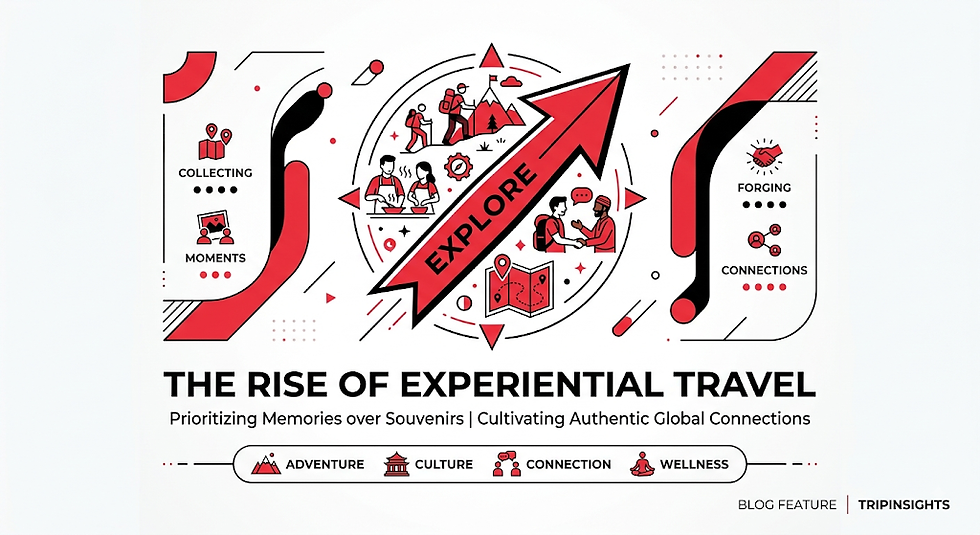
For decades, the standard holiday itinerary was defined by rigid checklists, crowded tour buses, and a mandatory stop at the gift shop to buy mass-produced trinkets. Tourists returned home with snow globes, refrigerator magnets, and printed photos in front of famous landmarks. Today, that consumer paradigm has fundamentally fractured. Travelers no longer measure the success of a journey by the physical objects packed into their suitcases, but by the depth of personal transformation, emotional connection, and lasting memories they bring home.
This global shift marks the rise of experiential travel—a movement reshaping modern tourism into an active pursuit of immersion, cultural exchange, and sustainable discovery.
What Is Experiential Travel? Redefining Modern Exploration
Experiential travel (also referred to as immersion travel) is an approach to tourism where the primary objective is actively engaging with a destination’s history, people, ecology, and culinary traditions rather than passively observing them from behind a camera lens.
While traditional mass tourism prioritizes landmark viewing and passive relaxation, experiential travel is rooted in:
Active Participation: Learning traditional ceramic techniques in Kyoto rather than purchasing a factory-made tea set.
Community-Led Discovery: Foraging for wild herbs with an indigenous guide in Patagonia instead of dining at an international hotel chain buffet.
Emotional & Sensory Engagement: Tasting, cooking, conversing, and walking through living neighborhoods off the beaten track.
Traditional Tourism                    Experiential Travel
┌───────────────────────────────┐      ┌───────────────────────────────┐
│ • Checklist sightseeing       │      │ • Hands-on cultural learning  │
│ • Souvenirs & consumption     │ ───► │ • Lasting personal memories   │
│ • Generic resort stays        │      │ • Hyper-local community stays │
│ • Passive observation         │      │ • Active participation        │
└───────────────────────────────┘      └───────────────────────────────┘
Key Drivers Fueling the Rise of Experiential Travel
The global pivot from collecting physical objects to collecting moments is not accidental; it is driven by psychological evolution, changing cultural values, and a collective demand for authenticity.
Expert Market Research
1. The Psychology of Experience vs. Material Possession
Behavioral economists and psychologists have long noted that material goods suffer from hedonic adaptation—the novelty of a new object fades quickly after purchase. Experiences, by contrast, become an indelible part of an individual’s identity. The anticipation before a trip, the sensory richness during the event, and the nostalgic recall years later deliver far greater long-term happiness than any physical souvenir. When travelers reflect on their lives, they recall the spontaneous conversations shared with a Sicilian fisherman, not the plastic model of the Colosseum.
2. Overtourism Fatigue and the Search for Authenticity
Iconic tourist epicenters—from Venice and Barcelona to Kyoto and Santorini—have reached carrying-capacity limits. Overtourism has generated overcrowding, inflated local costs, and diluted the authentic essence of world-renowned destinations. In response, conscious wanderers are choosing "un-tourism" and secondary cities. They seek real, unfiltered human connections in places where life happens organically rather than destinations staged for mass crowds.
3. Multi-Generational Alignment on Values
The desire for transformative experiences spans across generations:
Gen Z & Millennials: Driven by sustainability and self-actualization, younger generations allocate disproportionate amounts of discretionary income to unique moments and ethical adventures.
Baby Boomers & Gen X: Retiring travelers seek active wellness, educational travel, and family heritage trips that leave lasting intergenerational memories.
Traditional Tourism vs. Experiential Travel: A Core Comparison
Dimension | Traditional Mass Tourism | Experiential Travel |
Primary Motivation | Rest, escape, checklist sightseeing | Personal growth, cultural connection, skill acquisition |
Economic Beneficiary | Multinational hotel chains and tour operators | Local artisans, family homestays, and community guides |
Itinerary Structure | Fast-paced, fixed schedules, high-density stops | Slow travel, flexible, immersive deep dives |
Tangible Takeaway | Mass-produced souvenirs, selfies | Stories, personal resilience, local recipes, new skills |
Environmental Impact | High carbon footprint, resource-intensive | Regenerative, low-impact, conservation-focused |
Core Pillars of the Experiential Travel Landscape
Experiential tourism takes many shapes depending on the traveler's personal passions and lifestyle goals.
Hyper-Local Culinary Immersion
Food is the universal language of human culture. Modern culinary travelers have moved beyond Michelin-starred dining rooms in favor of authentic gastro-immersion:
Learning sourdough fermentation and truffle hunting in rural Tuscany.
Harvesting organic coffee cherries in the highlands of Colombia alongside local growers.
Navigating nighttime street food alleyways in Southeast Asia with local culinary historians.
       Hyper-Local Food ──┐
                          ▼
Artisan Workshops ──► [EXPERIENTIAL TRAVEL] ◄── Rewilding & Ecology
                          ▲
    Transformative Wellness ──┘
Hands-On Artisanship and Cultural Preservation
Rather than purchasing souvenirs made halfway across the globe, travelers now fund cultural heritage preservation by learning directly from master craftspeople:
Practicing woodblock printing in Rajasthan.
Weaving textiles on traditional backstrap looms in Oaxaca.
Learning ancestral maritime navigation in Polynesia.
These interactive workshops provide fair wages directly to artisans while keeping ancient crafts alive for future generations.
Regenerative Eco-Tourism and Rewilding
The modern eco-conscious traveler wants to leave a positive footprint. Regenerative travel goes beyond "leave no trace" to actively restore ecosystems:
Replanting coral reefs in the Coral Triangle with marine biologists.
Participating in wildlife census monitoring inside community-managed African conservancies.
Restoring native temperate rainforest corridors across the Scottish Highlands.
Transformative Wellness and Digital Detox
With work-from-anywhere lifestyles and constant screen exposure, travel has become a pathway to mental restoration. Experiential wellness focuses on silence retreats, thermal bathing rituals, forest bathing (Shinrin-yoku), and mindfulness practices grounded in regional wellness philosophies.
Market Dynamics: Experiential Travel Industry Outlook
The business metrics surrounding the experience economy highlight unprecedented growth. Industry data underscores how traveler spending is shifting directly from physical luxury goods toward high-value, bespoke adventures:
Dataintelo
Rapid Market Expansion: The global experiential travel market is projected to grow from $2.89 trillion in 2025 to over $5.47 trillion by 2034, expanding at a robust compound annual growth rate (CAGR) of 7.3%.
Dataintelo
Prioritizing Authenticity: Over 78% of international leisure travelers cite having at least one locally authentic, hands-on experience as their primary trip-planning criterion.
Dataintelo
Spending Premium: Travelers spend an average of 22% more per trip when bookings guarantee intimate cultural access, vetted local guides, and small-group configurations compared to generic package tours.
Dataintelo
Fastest Growing Segments: Eco-travel, wellness retreats, and culinary exploration lead sector expansion, supported by mobile booking tools and direct-to-host platforms.
Metastat Insights
Practical Blueprint: How to Plan an Experiential Journey
Transitioning from a passive tourist to an active experiential explorer requires intentional planning and a shift in mindset:
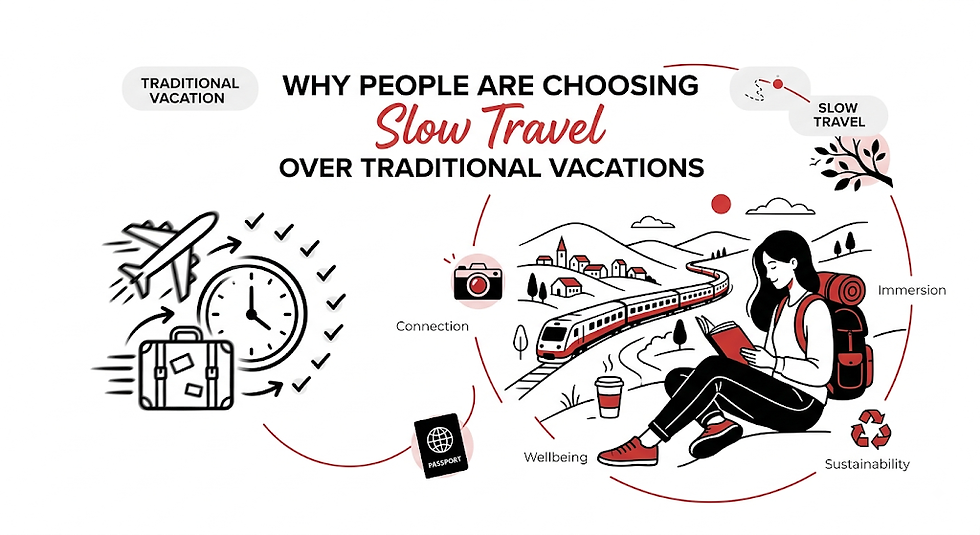
Adopt the Slow Travel Principle: Instead of visiting four countries in ten days, base yourself in one village or neighborhood for two full weeks. Depth creates familiarity; speed breeds exhaustion.
Prioritize Community-Based Enterprises: Book accommodations at family-run boutique properties, eco-lodges, or community cooperatives. Hire local resident guides who can share personal narratives and historical nuance.
Swiss Hotel Management School (SHMS)
Master Basic Cultural Etiquette and Language: Learning even ten polite phrases in the local dialect breaks down social barriers and demonstrates respect, turning transactional encounters into genuine friendships.
Swiss Hotel Management School (SHMS)
Leave Margin for Serendipity: Avoid over-scheduling every hour of your calendar. The most enduring memories frequently emerge during unplanned afternoon walks, sudden rainstorms, or spontaneous market invitations.
Document Through Creative Reflection: Replace relentless selfie-taking with reflective journaling, sketching, or recording field audio to anchor sensory memories deeply in your mind.
Swiss Hotel Management School (SHMS)
Frequently Asked Questions
What is driving the rise of experiential travel today?
The rise of experiential travel is primarily driven by changing consumer psychology, where people value long-term emotional memories and personal growth over material possessions. Furthermore, travelers are seeking relief from digital burnout and crowded tourist hotspots, creating immense demand for slow, authentic, and culturally immersive adventures.
Expert Market Research
How does experiential travel benefit local host communities?
Unlike mass tourism—where a large percentage of booking revenue leaks out to foreign corporations—experiential tourism channels money directly to small business owners, local guides, independent chefs, and indigenous craftspeople. This direct economic support preserves traditional skills, revitalizes rural economies, and fosters pride in cultural heritage.
Is experiential travel always more expensive than standard vacations?
Not necessarily. While high-end bespoke adventures exist, experiential travel can be remarkably cost-effective. Staying in local guesthouses, eating at street markets, using public rail networks, and volunteering with regional conservation groups often cost significantly less than luxury all-inclusive resorts.
What are popular examples of experiential travel activities?
Popular activities include farm-to-table cooking classes, guided multi-day wilderness treks, artisan workshops (such as pottery or weaving), homestays in rural villages, wildlife tracking with rangers, and traditional wellness rituals like Ayurvedic retreats or geothermal bathing.
Swiss Hotel Management School (SHMS)
How can solo travelers safely participate in experiential tourism?
Solo travelers can participate safely by joining small-group guided expeditions, booking verified community-based homestays, using reputable direct-booking platforms, and connecting with local walking tour collectives. Engaging with local hosts also provides built-in safety advice and cultural navigation support.
Start Your Experiential Journey
The golden age of passive tourism is behind us. The modern world invites you to be an active participant rather than a fleeting spectator—to trade disposable knick-knacks for transformative perspectives, enduring friendships, and unforgettable memories.
Ready to embark on an authentic adventure? Explore resources, ethical operator registries, and regenerative travel initiatives with industry leaders:
UN Tourism (United Nations World Tourism Organization) – Discover global policies and trends on sustainable and community-centric tourism.
Adventure Travel Trade Association (ATTA) – Find certified experiential and adventure travel operators worldwide.
Global Sustainable Tourism Council (GSTC) – Learn how to identify verified eco-conscious, socially responsible travel experiences.


Comments