The Ultimate Travel Destinations in India Analysis: 2026 Exploration Guide
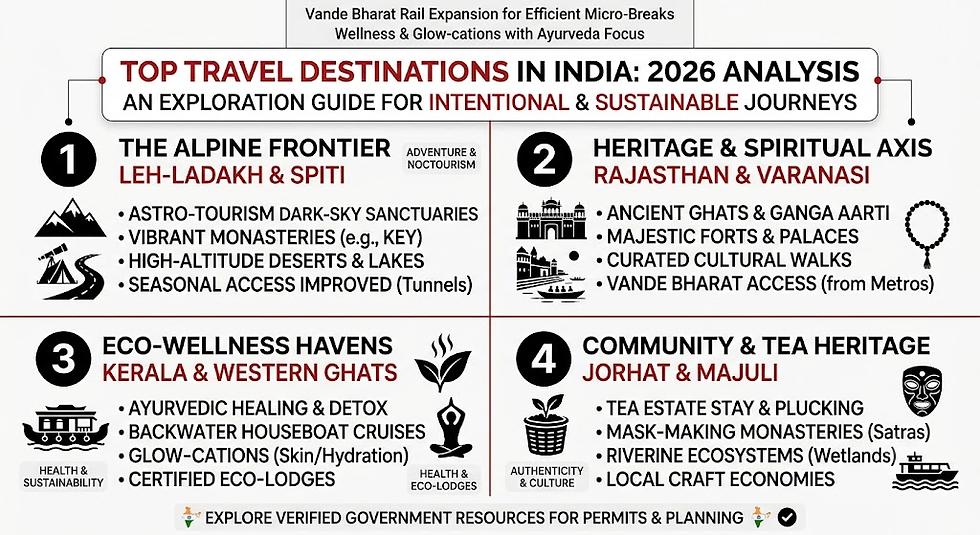
The landscape of travel within India is undergoing a profound transformation. Moving past the era of rushed weekend checklists, travelers in 2026 are increasingly choosing personal meaning, slow immersion, and wellness-focused journeys over simple sightseeing. Powered by rapid transport expansions—such as the expanding Vande Bharat express network and all-weather national expressways—domestic and international travelers are discovering that India’s vast geography is more accessible than ever before.
From alpine quests in the high Himalayas to the emerging "glow-cations" and Ayurvedic healing ecosystems of Kerala, travel has become deeply intentional. This detailed data-backed analysis evaluates infrastructure changes, cultural shifts, and emerging hidden gems shaping travel itineraries this year.
1. Defining the Core Travel Trends of 2026
Before exploring individual locations, it is essential to understand the shifting mindsets of modern travelers. Industry reports from early 2026 highlight four dominant behavioral pillars:
Drivecations & Micro-Breaks: Improved highway infrastructure has made driving trips within a 200 km to 600 km radius highly popular. Urban professionals are replacing short-haul domestic flights with flexible, self-driven road trips.
Noctourism & Astro-Tourism: Driven by warmer daytime summer temperatures, a notable 62% of global travelers are prioritizing nighttime exploration and stargazing. Dark-sky sanctuaries in high-altitude regions are experiencing a major surge in premium bookings.
Glow-cations & Wellness Longevity: Travelers are increasingly prioritizing long-stay wellness retreats that offer skin health, deep hydration, and organic lifestyles over generic spa packages.
The Spiritual Upsurge: Pilgrimage destinations have successfully attracted younger demographics. Millennial and Gen-Z travelers are frequently pairing spiritual visits with local food tours and nature treks.
2. Comprehensive Review of the Top Travel Destinations in India
To build a balanced, memorable itinerary, let us analyze the regional circuits that continue to capture the highest interest and structural growth in 2026. Identifying the top travel destinations in India requires examining accessibility changes, ideal seasonal timing, and the specific experiential value they offer to modern visitors.
                  [Indian Tourism Matrix 2026]
                               │
       ┌───────────────────────┼───────────────────────┐
       ▼                       ▼                       ▼
Alpine Adventures      Spiritual Heritage       Eco-Wellness Gems
(Leh, Spiti, Kashmir)  (Varanasi, Somnath)     (Kerala, Jorhat/Majuli)
The Alpine Frontier: High-Altitude Escapes
Leh-Ladakh & Spiti Valley
For travelers seeking remote, dramatic landscapes, the high-altitude deserts of Leh-Ladakh and Spiti Valley remain premier selections. These regions have adapted to the growing interest in astro-tourism by establishing designated stargazing camps far from urban light pollution.
Primary Highlights: The brilliant blue waters of Pangong Tso, the stark sand dunes of Nubra Valley, and the ancient architectural footprint of Key Monastery.
Infrastructure Note: The stabilization of all-weather access routes through advanced tunnel networks has widened the early-season travel window into Spiti.
Critical Travel Warning: Acclimatization remains a non-negotiable step. Spending your initial 24 to 48 hours resting in Leh town is mandatory to minimize altitude illness symptoms before attempting high mountain passes.
Kashmir Valley
Frequently described as an absolute classic, Kashmir enjoys sustained interest across both summer peaks and winter ski windows.
Primary Highlights: Staying in premium wood-carved houseboats on Dal Lake, exploring the alpine meadows of Pahalgam, and skiing or taking the high-altitude Gondola cable car in Gulmarg.
2026 Trend Line: Off-season travel during the monsoon shoulder months has grown significantly, driven by travelers looking for lower crowds and more affordable premium luxury boutique stays.
The Heritage and Spiritual Axis
Varanasi (Uttar Pradesh)
Varanasi continues to experience unprecedented domestic and international tourism growth. It stands as a prime example of how ancient heritage locations can successfully integrate with modern public facilities.
Primary Highlights: The evening Ganga Aarti ceremonies, historic walking circuits through renewed heritage alleys, and early morning boat journeys along the ancient stone ghats.
Strategic Access Advantage: Direct connectivity via high-speed Vande Bharat rail links from Delhi and major transit hubs has transformed Varanasi into a premier location for efficient weekend micro-breaks.
Rajasthan's Desert Circuits
The classic heritage cities of Jaipur, Jodhpur, and Udaipur remain major global draws by combining historic preservation with immersive cultural luxury.
Primary Highlights: Exploring the Mehrangarh Fort, taking sunset boat cruises on Lake Pichola, and participating in curated stepwell walking tours.
2026 Trend Line: Bicycle tourism is rapidly expanding across rural Rajasthan. Intrepid travelers are increasingly opting for slow, low-impact cycling routes connecting small desert villages over traditional air-conditioned bus packages.
Eco-Tourism and Wellness Havens
Jorhat & Majuli Island (Assam)
Emerging as one of the fastest-growing destinations in terms of year-over-year search volume, this unique Assam corridor offers an exceptional window into Northeast India’s cultural preservation.
Primary Highlights: The vast, historic tea estates surrounding Jorhat and the vibrant, riverine island ecosystem of Majuli. Majuli serves as the central heart of neo-Vaishnavite culture, famous for its mask-making monasteries (Satras) and pristine wetland birding ecosystems.
Strategic Value: It provides an authentic alternative to highly commercialized cultural destinations, attracting travelers focused on community-based tourism and supporting local craft economies.
Kerala Backwaters & Western Ghats
Kerala maintains its clear lead as India’s primary wellness destination. Its structured focus on traditional, eco-certified medical retreats aligns perfectly with global longevity travel demands.
Primary Highlights: Exploring the sprawling, mist-kissed tea estates of Munnar, taking houseboat cruises through the quiet backwater canals of Alleppey, and participating in comprehensive wellness programs in Wayanad.
The "Glow-cation" Premium: High-end eco-lodges are creating fully integrated holiday plans that bundle personalized Ayurvedic diets, natural hydration programs, and forest therapy directly into long-stay reservations.
3. Data Matrix: Tourism Comparison and Travel Metrics
To assist in structured trip planning, the comparative table below evaluates estimated average costs, optimal visitation windows, and accessibility levels across India's premier tourist tracks.
Destination Region | Primary Travel Focus | Ideal Peak Season Windows | Average Premium Nightly Cost (INR) | Primary Transit Access Methods |
Leh-Ladakh | Adventure / Astro-Tourism | May to September | ₹7,500 – ₹15,000 | Kushok Bakula Rimpoche Airport / Roadways |
Varanasi | Spiritual Heritage / Rituals | October to March | ₹4,000 – ₹9,000 | Lal Bahadur Shastri Airport / Vande Bharat Rail |
Kerala (Munnar) | Wellness Eco-Tourism | September to May | ₹6,000 – ₹14,000 | Cochin International Airport / Local Highways |
Jorhat & Majuli | Indigenous Culture & Tea Heritage | November to April | ₹3,500 – ₹8,000 | Jorhat Airport / Automated River Ferry Systems |
Spiti Valley | Offbeat High-Altitude Trekking | June to September | ₹4,500 – ₹9,500 | Overland routes via Shimla or Manali Highways |
4. Key Factors to Consider When Planning Your Itinerary
Maximizing the success of your journey through India requires looking past standard brochures. Keep these important travel steps in mind:
Navigating Flight Price Adjustments
Data trends indicate that selecting destinations experiencing strategic infrastructure changes can unlock significant value. For example, prominent pilgrimage hubs like Tirupati and secondary mountain airports like Dehradun have seen notable drops in average regional flight costs due to increased carrier routes and higher seating capacities.
Balancing Seasonal Crowds
With weekend micro-breaks on the rise, popular hill stations such as Shimla, Manali, and Mussoorie often face heavy vehicle traffic and high accommodation demand from Friday through Sunday. Planning your arrivals on mid-week days (Mondays through Thursdays) helps ensure lower hotel rates and a much quieter, more personal experience at major scenic viewpoints.
Prioritizing Verified Eco-Lodges
As sustainable travel shifts from an optional choice to an industry standard, look for properties that hold official environmental certifications. True eco-lodges transparently share their gray-water treatment methods, power their facilities with solar grids, and actively employ hospitality staff recruited from nearby villages to keep tourism benefits within the local community.
5. Frequently Asked Questions
Which locations currently rank as the top travel destinations in India for wellness?
Kerala remains the premier hub among the top travel destinations in India for dedicated wellness travel. Coastal areas and the hills of Wayanad feature highly rated eco-certified retreats specializing in traditional Ayurvedic therapies, structured detox programs, and personalized nutrition plans.
How has the Vande Bharat rail expansion changed weekend travel?
The fast Vande Bharat express trains have made travel to cultural and spiritual hubs like Varanasi, Haridwar, and Amritsar much faster. By significantly cutting travel times from major metro centers, these trains allow professionals to plan comfortable, short weekend trips without booking domestic flights.
Is it safe to plan self-drive road trips to high-altitude areas like Spiti Valley or Leh?
Yes, but it requires careful preparation and experience with mountain driving. While major highway expansions have greatly improved road safety and surface quality, high-altitude mountain routes remain prone to sudden weather shifts and rockfalls. Ensure your vehicle has adequate ground clearance, monitor regional weather updates closely, and always allocate extra time for proper altitude acclimatization.
6. Official Resources and Strategic Planning Portals
When organizing an itinerary across India, verify your bookings and track real-time travel alerts through verified government departments and official transit hubs. Relying on official channels protects your personal information and ensures accurate updates on regional permits, weather advisories, and transit schedules.
Utilize these direct, active platforms to map out your upcoming journey:
Incredible India Central Information Hub: Explore comprehensive, curated travel itineraries, register for official regional guide services, and check historical monument timing updates at the Official Incredible India Portal.
Indian Railways Unified Booking Engine (IRCTC): Secure your high-speed seats, check Vande Bharat route tables, and organize multi-city luxury rail tours via the Official IRCTC Rail Booking Portal.
Ministry of Tourism Administrative Directory: Review national eco-certification standards for hotels, check current visa requirements, and view official state-by-state travel statistics via the Ministry of Tourism Corporate Interface.
To view a detailed video guide on organizing a multi-state road itinerary, managing high-altitude packing lists, and completing your offline inner-line permit applications for restricted border zones safely, visit the Incredible India Official Route Mapping Walkthrough. This practical visual breakdown covers everything you need to navigate regional checkposts smoothly and ensure a safe, organized trip.

Comments