What Is Inflation and How Does It Actually Affect Your Money?
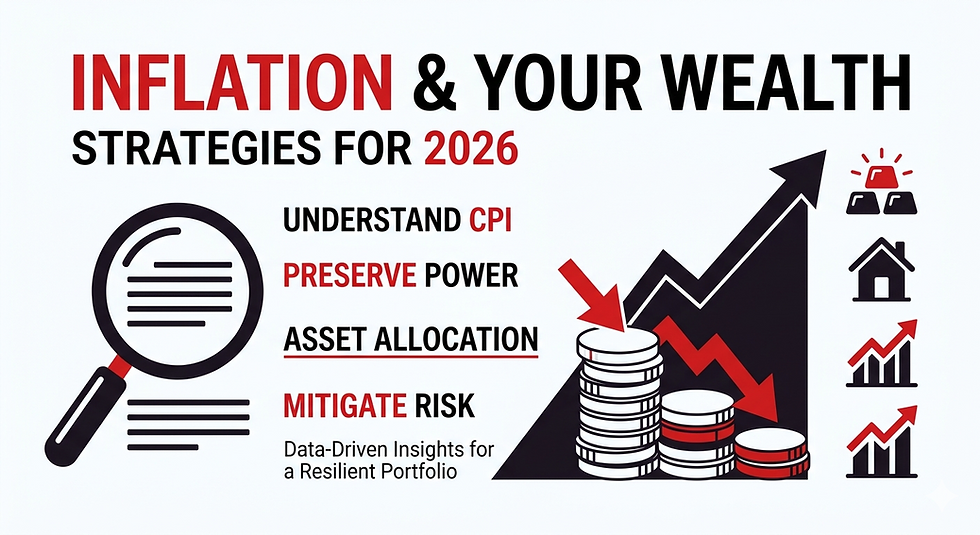
If you opened a bank statement or reviewed a corporate operational budget this morning, you likely noticed a sobering reality: your capital does not stretch as far as it did a year ago. In mid-2026, inflation is no longer a theoretical concept confined to macroeconomic textbooks. It is an active, aggressive force rewriting the rules of corporate finance, investment allocations, and household purchasing power.
According to data from the U.S. Bureau of Labor Statistics (BLS) released in June 2026, headline inflation accelerated to an annual rate of 4.2% in May, up from 3.8% the previous month. This marks the highest consumer price spike since early 2023. Driven primarily by a severe global energy shock that pushed gasoline prices up 40.5% year-over-year, this macroeconomic environment presents major hurdles. It requires a fundamental understanding of how inflation affects money, why traditional cash cushions are losing value, and how both business leaders and individual investors must adapt to thrive.
Understanding the Invisible Tax on Wealth
At its core, inflation is the steady, generalized increase in prices across an economy over time. When prices rise, every unit of currency you hold buys a smaller percentage of a good or service. This process is known as a loss of purchasing power.
To understand macroeconomics for businesses and consumers alike, economists categorize the phenomenon into three primary drivers:
Demand-Pull Inflation: Occurs when aggregate demand outpaces aggregate supply ("too much money chasing too few goods").
Cost-Push Inflation: Happens when aggregate supply drops due to increased costs of raw materials or wages. The 2026 energy supply squeeze is a classic textbook example of cost-push dynamics.
Built-In Inflation: Tied to adaptive expectations; as living costs rise, workers demand higher wages, leading businesses to raise prices to maintain profit margins, creating a feedback loop.
For corporate decision-makers and high-net-worth individuals, ignoring these mechanisms results in a silent wealth penalty. Cash sitting in standard business checking accounts or low-yield instruments experiences a "cash drag." In a 4.2% inflationary climate, $1,000,000 in uninvested corporate reserves loses more than $40,000 in purchasing power in just twelve months.
Key Trends and Macroeconomic Shifts in 2026
The inflationary environment of 2026 possesses unique characteristics that set it apart from the pandemic-era supply chain blockages of the early 2020s.
The Core vs. Headline Divergence
While the headline Consumer Price Index 2026 metrics sit stubbornly above 4%, "Core CPI"—which strips out volatile food and energy sectors—has actually cooled to a modest 2.9% year-over-year. This tells analysts that underlying domestic economic demand is normalizing, but geopolitical vulnerabilities are driving the spikes in overhead costs.
High-Interest Rate Environments
Central banks, including the Federal Reserve, are maintaining elevated benchmark interest rates to anchor long-term inflation expectations around their 2% target. Consequently, borrowing capital remains expensive, forcing organizations to prioritize free cash flow over debt-fueled expansion.
Structural Energy Realignment
The ongoing volatility in global energy markets has caused industrial power and logistics costs to remain sticky. This requires corporate logistics departments to hedge fuel expenses dynamically rather than relying on fixed annual spot rates.
The Strategic Balance: Risks and Opportunities
Navigating a persistent inflationary landscape requires an honest assessment of structural challenges alongside an eye for emerging market advantages.
Major Institutional Challenges
Margin Compression: Raw material cost increases frequently outpace a company's ability to implement client-facing price changes, squeezing gross margins.
Real Earnings Depreciation: Even if nominal wages increase, real wages (adjusted for inflation) can drop. BLS data notes a decline in real average weekly earnings, which impacts consumer sentiment and retention metrics.
Inventory Evaluation Errors: Holding excess inventory becomes highly expensive due to increased warehousing overhead and capital costs.
Strategic Market Opportunities
Pricing Power Leverage: Enterprises offering indispensable, non-commoditized products or services can pass increased costs directly to buyers without experiencing volume churn.
Debt Devaluation: Fixed-rate corporate debt becomes systematically cheaper to service over time, as the real value of the principal obligations declines alongside currency depreciation.
Operational Modernization: Sustained inflation incentivizes companies to automate manual workflows, neutralizing wage pressure and permanently reducing their long-term cost structures.
Data-Driven Asset Allocation Under Inflation
Protecting capital requires moving away from defensive cash hoarding and toward a diversified, resilient mix of assets. Capital performance varies across different asset classes during periods of elevated inflation:
Asset Class | Inflation Performance | Primary Function in 2026 |
Short-Duration Treasury Bills | Moderate-High | Eliminates cash drag by capturing elevated baseline interest rates. |
Equities with Pricing Power | High | Protects capital through corporate earnings that scale alongside consumer prices. |
Physical Commodities | High | Serves as a direct geopolitical and supply-side hedge (e.g., energy, metals). |
Fixed-Rate Real Estate | High | Provides compounding rental revenue yield combined with asset appreciation. |
Long-Term Fixed Income | Low | Vulnerable to capital loss as rising yields depress underlying bond prices. |
Practical Recommendations for Institutional Leaders and Investors
To safeguard your organizational capital and personal wealth from purchasing power decline, implement this systematic playbook:
1. Optimize Corporate Treasury and Liquid Assets
Review your organization's working capital velocity. Transition stagnant operational cash out of non-interest-bearing accounts and deploy it into high-yield corporate money market funds or rolling short-duration Treasury vehicles. The goal is to maximize baseline yields while maintaining liquidity for unexpected capital calls.
2. Modernize Input Cost Contracts
Re-negotiate supply contracts to include dynamic indexing rather than long-term rigid pricing. Where possible, utilize forward contracts to secure predictable utility and raw material costs, effectively insulation operational margins from short-term geopolitical shocks.
3. Focus Asset Allocation on Real Yields
For private portfolios and corporate investment arms, audit your exposure to traditional fixed income. Shift capital toward equities in sectors with inelastic demand curves (e.g., healthcare, core infrastructure) and asset-backed investments that appreciate alongside consumer prices.
4. Avoid These Common Mistakes:
Hoarding Excessive Liquidity: Keeping cash beyond your required operational safety runway directly guarantees wealth destruction.
Chasing Speculative High Yields: Do not mistake high nominal returns from distressed debt or volatile digital assets for true security; prioritize structural solvency and proven free cash flow.
Delaying Capital Expenditures on Efficiency: Postponing investments in automation or energy-efficiency equipment because of high interest rates is often counterproductive. The structural cost reductions usually outpace the cost of financing.
Frequently Asked Questions
What is inflation and how does it actually affect your money today?
Inflation is the persistent rise in general price levels across an economy over time. It affects your money by eroding its purchasing power, meaning that each dollar, euro, or rupee buys fewer actual goods, services, or raw materials than it did previously.
How is the Consumer Price Index 2026 calculated?
The Consumer Price Index 2026 is calculated by government agencies, such as the U.S. Bureau of Labor Statistics, by tracking the monthly price changes of a standardized basket of goods and services typically purchased by urban households, including food, energy, shelter, and medical care.
Does inflation impact all industries and businesses equally?
No. Businesses with high pricing power and low capital expenditures can pass costs on to consumers and maintain healthy margins. Conversely, capital-intensive businesses with fixed client contracts or highly elastic demand face severe margin compression.
Why does holding cash present a danger in high-interest rate environments?
While nominal interest rates on savings accounts may look attractive, if the headline rate of inflation is higher than your after-tax yield, your real return is negative. This phenomenon creates a cash drag that erodes wealth over multi-year periods.
What is the difference between headline inflation and core inflation?
Headline inflation includes all goods within the standard measurement basket, including highly volatile sectors like food and energy. Core inflation excludes food and energy to provide a clearer view of long-term organic domestic price trends.
How do rising interest rates help curb inflation?
By raising benchmark interest rates, central banks increase the cost of borrowing for businesses and consumers. This intentional tightening cools economic activity, lowers aggregate demand, and slows down the rate of price increases across the market.
Conclusion and Strategic Outlook
Understanding how inflation affects money is a necessity for financial survival. The macroeconomic landscape of 2026 proves that inflation is rarely a uniform or predictable trend. While core consumer demand shows encouraging signs of stabilization, energy markets and supply-side geopolitical frictions continue to exert real pressure on corporate budgets and private wealth.
The coming quarters will reward agile, proactive capital allocation. Wealth preservation cannot be achieved through passive defensive strategies or sitting on cash reserves. By optimizing your asset mix, prioritizing operational efficiency, and aligning capital with structural inflationary trends, you can protect your purchasing power and position your enterprise for long-term growth.
Actionable Next Steps for Capital Preservation
To move from insights to execution, consider taking these direct steps to adjust your approach to this economic climate:
Audit Your Cash Drag: Calculate the exact volume of liquid capital sitting in yields below the current headline CPI rate to quantify your active exposure.
Review Pricing Agreements: Analyze corporate client agreements to ensure upcoming renewals feature realistic inflation adjustment clauses.
Evaluate Real-Asset Exposure: Assess your asset allocation to ensure it contains adequate positions in real estate, commodities, and equities with strong pricing leverage.
Trusted Resources for Further Learning
U.S. Bureau of Labor Statistics (BLS) CPI Homepage — For official monthly inflation updates and granular commodity indexes.
Federal Reserve Economic Data (FRED) — Access real-time macroeconomic charts tracking velocity of money and interest rate trajectories.
International Monetary Fund (IMF) World Economic Outlook — For global cross-border inflation forecasts and trade policy analyses.


Comments