WhatsApp Device ID Block: Government Orders Strict Action Against Digital Arrest Scams
- Mar 22
- 4 min read

The landscape of cyber security in India has reached a pivotal turning point in March 2026. Following a surge in sophisticated extortion tactics, the Government of India has officially directed Meta-owned WhatsApp to implement a permanent WhatsApp Device ID Block for any hardware linked to digital arrest scams.
This move, spearheaded by the Ministry of Home Affairs (MHA), aims to dismantle the infrastructure used by cybercriminals who impersonate law enforcement to siphon billions from innocent citizens.
What is a Digital Arrest Scam?
Before diving into the technicalities of the device-level crackdown, it is essential to understand the "Digital Arrest" phenomenon. In these scams, fraudsters impersonate officials from the CBI, Narcotic Control Bureau (NCB), or State Police via video calls. They claim the victim is involved in money laundering or illegal parcel scams and place them under a fake "digital arrest," demanding immediate fund transfers to "clear" their name.
According to official data from the Indian Cyber Crime Coordination Centre (I4C), losses from these scams exceeded ₹3,000 crore in the previous cycle, prompting the Inter-Departmental Committee (IDC) to enforce stricter platform accountability.
WhatsApp Device ID Block: The New Enforcement Strategy
The core of the government's 2026 directive is the transition from blocking mere phone numbers to a full WhatsApp Device ID Block. Previously, scammers could simply swap SIM cards to continue their operations. By blocking the unique hardware identifier (IMEI or Device ID), the government ensures that the physical smartphone used for the crime becomes a "dead brick" for the application.
Key Mandates Issued to WhatsApp 2026
The High-Level Committee has laid down specific timelines for implementation:
Hardware Identification: WhatsApp must submit a technical proposal within 45 days to identify and permanently block device IDs involved in repeat offenses.
Skype-like Safety Features: To increase transparency, the platform is integrating enhanced caller identity features. Users will now see more verified information about incoming callers and receive real-time "Suspicious Account" alerts.
Data Retention: Under the IT Rules 2021 (Updated 2026), WhatsApp is now required to retain data from deleted accounts for at least 180 days to assist investigative agencies.
SIM Binding: By the end of March 2026, WhatsApp must complete "SIM Binding," a process that links the account strictly to an active, verified SIM card, preventing multi-device or anonymous usage.
Official Statistics on Cybercrime Crackdown 2024-2026
Metric | Achievement (As of Jan 2026) |
Financial Amount Saved | Over ₹8,690 Crore |
Total Complaints Handled | 24.65 Lakh+ |
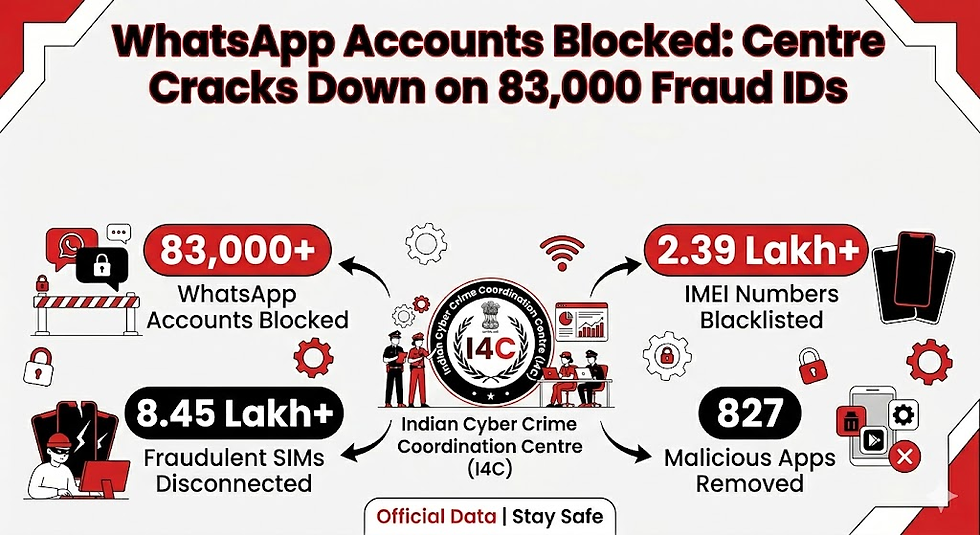
Blocked WhatsApp Accounts | 83,000+ |
Blocked SIM Cards (linked to fraud) | 7.8 Lakh+ |
Blocked IMEI Numbers | 2.08 Lakh+ |
Technical Measures Against Malicious APKs
Scammers often trick victims into downloading malicious Android Package (APK) files to gain remote access to their phones. As part of the WhatsApp Device ID Block initiative, the government has mandated the platform to strengthen its AI-driven detection systems. These systems are designed to:
Detect Official Logo Misuse: Automatically flag accounts using logos of the Delhi Police, Mumbai Police, or CBI as profile pictures.
Identify Deepfakes: Label and block synthetically generated video content used in extortion calls.
Block Harmful Links: Prevent the circulation of APK files that act as "Infostealers."
How to Report Digital Arrest Scams Safely
If you or someone you know encounters a suspicious call, the Government of India provides official channels for immediate redressal. You do not need to wait for a WhatsApp Device ID Block to take effect; proactive reporting is your best defense.
1. National Cybercrime Reporting Portal (NCRP)
The official website cybercrime.gov.in is the primary hub for lodging complaints. This portal is managed by the I4C and ensures your complaint reaches the relevant State or UT Law Enforcement Agency.
2. The 1930 Helpline
For financial frauds, every minute counts. Calling the toll-free number 1930 connects you to the Citizen Financial Cyber Fraud Reporting and Management System (CFCFRMS), which can help freeze the siphoned funds in real-time.
3. Chakshu Portal (Sanchar Saathi)
If you receive a suspicious message or call but haven't lost money yet, report it on the Chakshu facility of the Sanchar Saathi portal. This helps the Department of Telecommunications (DoT) trigger the blocking process for those specific identifiers.
Guidelines to Prevent Digital Extortion
No "Digital Arrest" Exists: No government agency or law enforcement body conducts arrests or questioning over WhatsApp or Skype video calls.
Verify the Identity: Official notices are served in person or through registered posts, never via a messaging app.
Do Not Download APKs: Never click on links sent by unknown numbers claiming to be "court orders" or "police files."
Enable Two-Step Verification: Add an extra layer of security to your WhatsApp account to prevent hijacking.
Conclusion
The implementation of the WhatsApp Device ID Block marks a significant victory for digital safety in India. By targeting the hardware and enforcing SIM binding, the government is making it increasingly difficult for scam networks to operate at scale. Staying informed and utilizing official reporting tools like the 1930 helpline remain the most effective ways to protect your digital identity and finances in 2026.
Frequently Asked Questions (FAQ)
Q1: What exactly is a WhatsApp Device ID Block?
A: A WhatsApp Device ID Block is a security measure where the unique hardware identifier of a mobile phone is blacklisted by the platform. Once blocked, that specific device cannot be used to create or operate any WhatsApp account, regardless of the SIM card used.
Q2: Can the police arrest me over a video call?
A: No. No official Indian agency, including the CBI or State Police, has the legal authority to place a citizen under "Digital Arrest" via video call. If someone claims to do so, it is a scam.
Q3: Where can I report a digital arrest scam in India?
A: You should immediately report the incident on the National Cybercrime Reporting Portal at cybercrime.gov.in or call the national helpline number 1930.
Q4: Is my data safe if I report a scam on the government portal?
A: Yes, the National Cybercrime Reporting Portal is a secure official platform managed by the Ministry of Home Affairs to ensure victim-centric and confidential handling of complaints.
CTA
To stay updated with the latest government directives or to report a crime, please visit these official portals:
Report Suspected Fraud: Chakshu - Sanchar Saathi (sancharsaathi.gov.in)
Check Verified News: Press Information Bureau (pib.gov.in)


Comments