Why Abu Dhabi is Trending in 2026: Hidden Gems You Must Explore
- Apr 7
- 5 min read
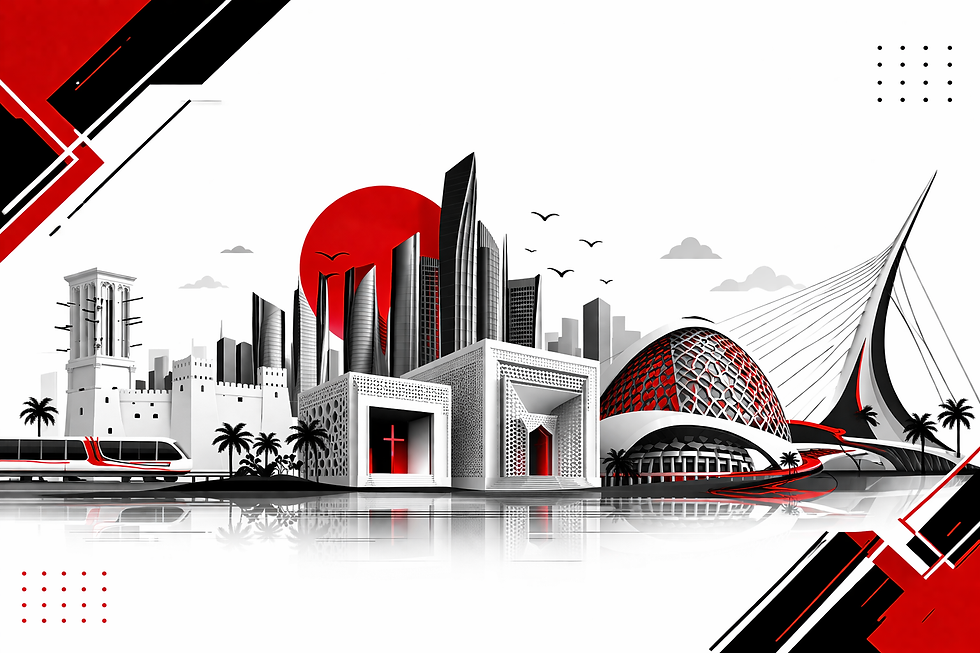
The travel landscape has shifted significantly as we move through 2026. While many still flock to the neon-lit streets of neighboring cities, there is a quieter, more sophisticated revolution happening just down the coast. If you’ve looked at your social feeds lately, you’ll see that the UAE’s capital is suddenly everywhere. But Why Abu Dhabi is Trending in 2026 isn't just about luxury hotels or high-end shopping; it’s about a city that has successfully "engineered" a perfect balance between high-tech futuristic living and deep-rooted cultural heritage.
For those of us coming from an engineering domain, Abu Dhabi is a living playground. We aren't just looking at buildings; we’re looking at "Structural Masterpieces," "Sustainable Urban Modules," and "Climate-Controlled Ecosystems." In 2026, the city has reached a tipping point where its long-term investments in infrastructure and "Smart City" tech have finally come to fruition, making it more accessible, cooler (literally), and more fascinating than ever before.
Beyond the famous Grand Mosque and Ferrari World, there is a secondary layer of "Hidden Gems"—locations that utilize cutting-edge engineering to create experiences you simply can't find anywhere else on the planet. Let's look at the "System Architecture" of why this city is the must-visit node of the year.
Technical Diagnostic: Abu Dhabi's 2026 Growth Matrix
To understand the surge in interest, we need to look at the data. Abu Dhabi’s 2026 travel "Uptime" has increased due to several key infrastructure completions.
Abu Dhabi 2026: Infrastructure & Interest Breakdown
Hidden Gem / Node | Primary Appeal | Engineering Marvel | Connectivity Level |
Al Wathba Fossil Dunes | Natural History | Acoustic Wind Erosion Patterns | High (Autonomous Transit) |
The Abrahamic Family House | Inter-faith Harmony | Cubic Geometric Precision | Ultra-High (Digital Guides) |
Masdar City "Wind Tower" | Sustainability | Passive Convection Cooling | High (PRT Pods) |
Hudayriyat Island | Sports & Adventure | Velodrome Cantilever Design | Medium (Bike Friendly) |
Qasr Al Hosn | Heritage | Traditional "Barjeel" Ventilation | High (City Center) |
Sir Bani Yas Island | Eco-Wildlife | Desalination-Powered Ecosystems | Boat/Seaplane Access |
Exploring the Hidden Gems: Why Abu Dhabi is Trending in 2026
When we analyze the "Input Data" of travelers in 2026, we see a massive preference for authentic experiences that are enhanced by technology, not replaced by it. This is exactly where Abu Dhabi’s hidden gems excel.
1. The Al Wathba Fossil Dune Reserve
Located just outside the city center, this is a masterclass in "Natural Structural Engineering." These dunes aren't made of loose sand; they are solidified formations created by the complex interaction of moisture and wind over millennia. In 2026, the reserve has introduced "Augmented Reality" (AR) stations that allow you to visualize the wind-tunnel simulations that carved these shapes. It’s a quiet, ethereal landscape that feels like another planet.
2. The Abrahamic Family House: Geometric Brilliance
This isn't just a place of worship; it’s a stunning example of "Geometric Symmetry." Consisting of a Mosque, a Church, and a Synagogue, each building is a perfect cube (30x30x30 meters). The engineering challenge here was the façade—each building uses a different "Filter System" to manage light and heat while maintaining a unified aesthetic. It is one of the primary reasons Why Abu Dhabi is Trending in 2026 among architects and designers.
3. Hudayriyat Island: The Engineering of Sport
Hudayriyat is the city’s dedicated sports "Interface." In 2026, the island features the "Velodrome Abu Dhabi," a facility that uses a massive "Cantilevered Roof" to shade the entire track without the need for intrusive support pillars. This allows for an unobstructed "Field of Vision" for spectators. It’s a hub for "Human Performance Engineering," where athletes and casual riders alike use smart-pavements to track their metrics in real-time.
Why Abu Dhabi is Trending in 2026: A Masterclass in Sustainable Cooling
One of the biggest "Operational Challenges" for any desert city is the heat. However, Abu Dhabi has engineered a solution that has become a global case study.
The Return of "Passive Cooling"
In 2026, the city has moved away from massive air-conditioning loads by reviving ancient "Wind Tower" (Barjeel) technology and updating it with modern materials. In locations like Masdar City, you can stand in a street that is 10°C cooler than the surrounding desert, simply because the buildings are oriented to create a "Venturi Effect"—speeding up the air and cooling it naturally.
Infrastructure Uptime: The Midfield Terminal
The full integration of the Zayed International Airport (formerly Midfield Terminal) has also changed the game. The "Structural Span" of the terminal allows for vast, column-free spaces that utilize "Natural Lighting Algorithms" to minimize electricity use. It’s the first "User Interface" a traveler encounters, and it sets the tone for a high-tech, high-efficiency visit.
FAQ: Why Abu Dhabi is Trending in 2026
1. Why Abu Dhabi is Trending in 2026 for budget-conscious travelers?
While Abu Dhabi has a luxury reputation, it is trending because of the "Resource Optimization" it offers. In 2026, the city-wide "Bus-on-Demand" system (Abu Dhabi Link) allows travelers to reach hidden gems for a fraction of the cost of private transport. Many of the best sites, like the Fossil Dunes and Masdar City, have no entry fee, providing a high "Experience-to-Cost Ratio."
2. Is the city too hot to explore in the summer of 2026?
Thanks to "Sustainable Urban Engineering," the city is now much more walkable. Public spaces are designed with "Shade-Mapping" and solar-powered misting systems. However, for "Peak Performance," we still recommend visiting between November and April when the ambient "Thermal Load" is at its lowest.
3. What is the most unique "Hidden Gem" for engineers?
The "Living Mangroves" are a must-see. In 2026, you can explore them via electric kayaks. The engineering interest lies in the "Coastal Protection Systems"—the mangroves act as a natural barrier against rising sea levels and are a key part of the city’s "Bio-Engineering" strategy to sequester carbon.
4. How does the "Smart City" tech work for tourists?
The city operates on a "Unified Identity" system. Once you register on the "Visit Abu Dhabi" app, your "Digital Twin" profile allows for seamless entry into museums, easy payment for transit, and personalized "AR Navigational Cues" that help you find hidden alleyways in the souks.
5. Are there any "Net-Zero" hotels in Abu Dhabi?
Yes! By 2026, several resorts on Saadiyat Island have achieved "Net-Zero" status by utilizing "Off-Grid Solar Arrays" and advanced "Water Recycling Modules." Staying in these hotels is a big part of Why Abu Dhabi is Trending in 2026 for eco-conscious travelers.
Conclusion: Executing Your Abu Dhabi Roadmap
Abu Dhabi in 2026 is no longer just a destination; it’s a "Proof of Concept" for what a city can be when it applies the best of the engineering domain to its cultural and natural assets. It’s a city that hasn't just grown; it has "Optimized."
From the "Aerodynamic Symmetry" of its skyscrapers to the "Thermodynamic Balance" of its eco-retreats, the capital of the UAE offers a level of depth that is rarely found in modern tourism. If you are looking for a place that will challenge your mind while relaxing your senses, it’s time to update your travel "Kernel" and head to Abu Dhabi.
The gems are hidden, but for those with a curious mind and an eye for innovation, they are waiting to be explored.

Comments