Will Petrol Prices Cross ₹150/Litre in India? The 2026 Reality Check

For every Indian commuter, business owner, and household, the daily movement of fuel prices is more than just financial news—it is a direct hit on the monthly budget. Over the last few years, the milestone of ₹100 per litre has transitioned from a shocking headline to an everyday reality across most states. However, as global uncertainties intensify, a pressing question has emerged: Will petrol prices cross ₹150/litre in India?
As we navigate through 2026, the retail price of petrol varies drastically across the country, hovering between ₹94 and ₹116 per litre. While these figures are high, leaping past the ₹150 mark requires a combination of perfect economic storms.
The Current Fuel Pricing Landscape in India (2026)
To understand where fuel prices are heading, we must first analyze where they stand right now. Domestic fuel retail in India operates on a dynamic pricing model managed by public sector Oil Marketing Companies (OMCs) like Indian Oil Corporation (IOCL), Bharat Petroleum (BPCL), and Hindustan Petroleum (HPCL).
The table below highlights the significant state-wise disparity in retail petrol prices as of mid-2026, driven by localized tax structures:
State-Wise Petrol Price Breakdown (May 2026)
City/State | Average Retail Price (per Litre) | Major Local Tax Driver |
New Delhi | ₹94.77 – ₹98.64 | 19.40% VAT |
Mumbai, Maharashtra | ₹103.50 – ₹107.59 | 25% VAT + ₹5.12/litre additional tax |
Bengaluru, Karnataka | ₹102.92 – ₹107.12 | 29.84% Sales Tax |
Hyderabad, Telangana | ₹107.46 | 35.20% VAT |
Visakhapatnam, Andhra Pradesh | ₹114.00 – ₹116.00 | 31% VAT + ₹4/litre local VAT + ₹1 Road Cess |
Port Blair, Andaman & Nicobar | ₹82.46 – ₹87.00 | 1% Local VAT (Lowest in India) |
As shown above, regions with higher Value Added Tax (VAT) and localized cesses—such as Andhra Pradesh, Telangana, Kerala, and Maharashtra—face the highest prices, making them the closest testing grounds for any massive price surge.
3 Major Triggers That Could Push Petrol to ₹150
For the domestic retail price to climb another ₹35 to ₹55 per litre and breach the ₹150 mark, specific macroeconomic factors must align. Here are the three primary catalysts that could drive petrol prices cross ₹150 in the near future:
1. Brent Crude Oil Spikes Above $130 a Barrel
India is highly vulnerable to international crude markets because it imports roughly 85% of its crude oil requirements. In May 2026, global Brent crude prices are sitting in a volatile band, with the EIA tracking averages around $106 per barrel due to persistent West Asia geopolitical friction, while global financial institutions like Barclays maintain a $100 average baseline forecast.
If full-scale geopolitical disruptions choke major maritime chokepoints (like the Strait of Hormuz or the Red Sea), global supply could plummet. In historical contexts, major supply disruptions cause global crude oil prices to spike. If Brent crude surges to $130–$150 per barrel and stays there for a sustained period, OMCs will have no choice but to pass those massive raw material costs down to Indian retail pumps.
2. A Steep Depreciation of the Indian Rupee (INR)
International crude oil is traded globally in US Dollars (USD). Therefore, the actual cost India pays for its energy depends heavily on the exchange rate.
Even if crude oil remains flat at $100 a barrel, a sudden economic downturn or rapid capital flight that severely weakens the Rupee against the Dollar makes oil imports significantly more expensive. A compounding effect of a high dollar rate and elevated crude is the fastest path to extreme fuel inflation in India.
3. Alteration of the Domestic Tax Structure
The retail price of petrol is heavily padded by taxes. When you pay for a litre of petrol, a significant portion goes straight to the state and central treasuries via Central Excise Duty and State VAT.
While the central government recently implemented strategic calibrations—such as cutting certain domestic excise segments while enforcing temporary ₹3/litre windfall taxes on external petrol exports to secure domestic availability—the core tax structure remains high. If states increase their local cesses or if the central government raises excise limits to meet fiscal deficits, consumers bear the direct brunt.
Why Petrol Prices May NOT Cross ₹150/Litre in 2026
Despite the scary projections, several stabilizing forces act as economic guardrails, preventing an unmitigated surge to ₹150.
The Inflation Guardrail & Electoral Pressures
Fuel price hikes are highly unpopular and instantly trigger inflationary pressures across food, logistics, and essential goods. The government and the Reserve Bank of India (RBI) monitor fuel prices closely. If prices begin climbing toward dangerous territory, the Central Government historically steps in by cutting the Central Excise Duty to absorb the shock, keeping retail prices within an acceptable societal threshold.
Structural Adjustments by OMCs
Indian OMCs do not always follow global crude spikes linearly. During periods of extreme volatility, OMCs often absorb brief margin losses under government guidance, smoothing out retail price spikes to maintain market stability rather than letting pump prices turn chaotic overnight.
The Rise of Alternative Fuel Ecosystems
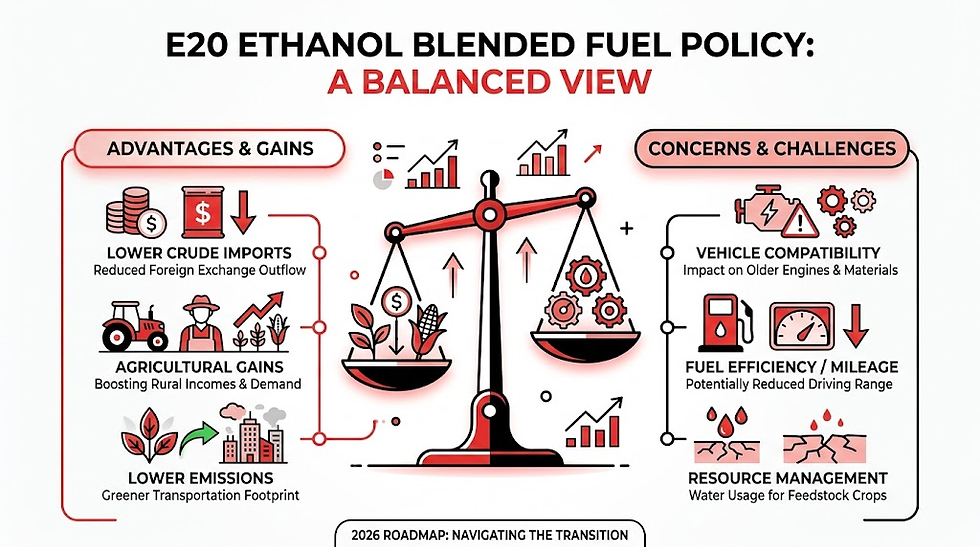
India's transport grid is actively diversifying. The massive adoption of Electric Vehicles (EVs), compressed natural gas (CNG), and high-percentage ethanol-blended petrol (aiming toward the E20 mandate) is gradually easing the single-source pressure on pure petroleum demand. This structural shift cushions the economy against total dependency on raw crude.
Will Petrol Prices Cross ₹150/Litre in India? The Verdict
Looking at the hard economic indicators of 2026, it is highly unlikely that standard petrol prices will cross ₹150/litre across mainland India in the immediate short term.
For prices to cross ₹150, Brent crude would need to sustain an unprecedented, multi-month streak above $135/barrel alongside a severely weakened Rupee and zero tax intervention from the government. Given the structural economic safety nets, retail prices are expected to remain tightly managed between ₹95 and ₹120 across various states, barring any catastrophic black swan event in global energy markets.
Frequently Asked Questions (FAQs)
Q1: Will petrol prices cross ₹150/litre in India by the end of 2026?
Ans: Based on current 2026 data, it is highly improbable that standard petrol will cross the ₹150 mark. Global Brent crude forecasts average between $100 and $106 per barrel, and the Indian government actively uses excise duty adjustments to shield retail consumers from extreme spikes.
Q2: Why is petrol cheaper in Delhi compared to Mumbai or Hyderabad?
Ans: While the central excise duty is uniform across India, each state imposes its own Value Added Tax (VAT) and localized cesses. For example, Delhi charges a 19.40% VAT, whereas states like Telangana and Andhra Pradesh levy upwards of 31% to 35% VAT plus road cesses, causing retail prices to vary by ₹15 to ₹20 per litre across borders.
Q3: How does the West Asia conflict affect my daily fuel expenses?
Ans: Since India imports 85% of its crude oil, geopolitical tensions in West Asia threaten vital shipping lanes and supply chains. This raises global oil procurement costs, forcing Indian Oil Marketing Companies to keep domestic retail prices elevated to maintain operational viability.
Q4: Does introducing a windfall tax reduce retail petrol prices?
Ans: Not directly. The government's recent imposition of a ₹3/litre windfall tax targets petrol exports. This mechanism ensures that private refiners prioritize domestic supply during international supply crunches rather than exporting all their stock for high overseas profits, maintaining steady fuel availability inside India.
Take Control of Your Financial Future
While fuel prices might not hit ₹150 anytime soon, managing your daily transport expenses and overall financial security requires smart planning. Don't let inflation dictate your monthly savings!
Track Domestic Prices Easily: Stay ahead of daily market shifts by monitoring certified updates directly on the Ministry of Petroleum and Natural Gas Official Portal.
Calculate Your Energy Spending: Use smart financial modeling to map out your commuting costs versus alternative energy investments using the Coverfox Insurance and Financial Tools.
Explore Fuel Efficiency Upgrades: If high-tax state rates are stressing your wallet, explore verified hybrid and electric vehicle alternatives evaluated on the Auto Punditz Automotive Insights Platform.


Comments