AI Cameras in 2026: How Smart Autofocus and 4K Video Are Changing Photography Forever
- 8 hours ago
- 3 min read
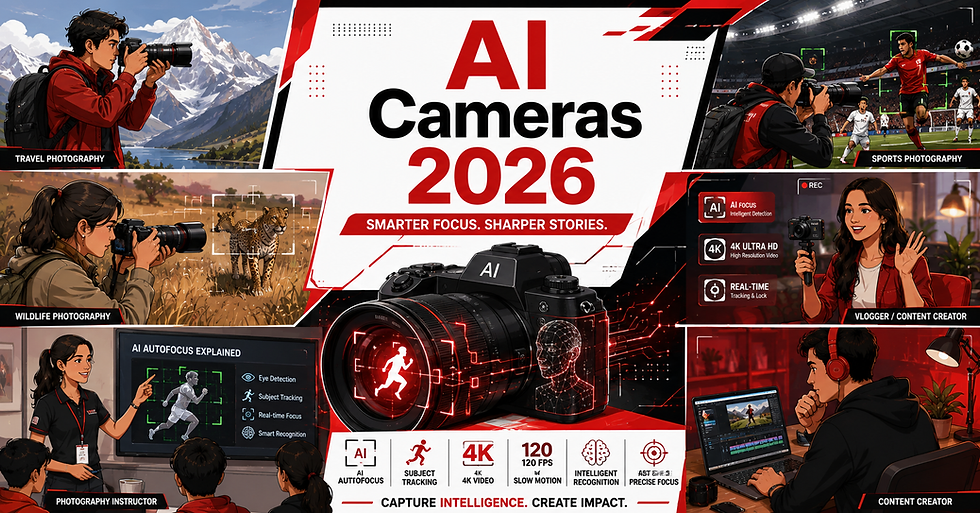
Photography has changed dramatically over the past decade, but 2026 marks one of the biggest technological leaps yet. Artificial Intelligence (AI) is no longer limited to smartphones—it has become a core feature in professional cameras, mirrorless systems, bridge cameras, and compact creators' cameras.
The latest generation of AI-powered cameras is designed to make photography faster, smarter, and more accessible. From recognizing human faces and animals to tracking moving vehicles and maintaining sharp focus during high-speed action, AI is redefining what modern cameras can achieve.
Whether you're a wildlife photographer, sports enthusiast, travel vlogger, filmmaker, or beginner creator, understanding AI Cameras 2026 can help you choose equipment that matches your creative goals.
What Are AI Cameras?
AI cameras use machine learning algorithms and dedicated processors to analyze scenes in real time. Instead of relying solely on traditional autofocus methods, these cameras recognize subjects, predict movement, and automatically adjust focus, exposure, and tracking.
Modern AI systems can identify:
Human eyes and faces
Birds and wildlife
Pets
Cars and motorcycles
Trains and aircraft
Insects in supported models
These capabilities help photographers capture sharp images even in fast-moving situations.
AI Autofocus Is Changing Photography
One of the biggest improvements in recent cameras is AI-powered autofocus. Traditional autofocus systems often struggled when subjects moved quickly or changed direction unexpectedly. AI autofocus continuously analyzes movement and predicts where the subject will be, helping maintain focus during bursts or video recording.
This technology is particularly useful for:
Sports photography
Wildlife photography
Weddings and events
Street photography
Children and family moments
The result is a higher keeper rate and less time spent correcting missed focus.
4K and High-Speed Video for Content Creators
Modern cameras now offer advanced video features that were once limited to cinema equipment. Many new models support high-frame-rate recording, allowing creators to produce smooth slow-motion footage while maintaining excellent image quality.
These improvements benefit:
YouTubers
Travel vloggers
Documentary filmmakers
Sports videographers
Social media creators
Improved stabilization, intelligent subject tracking, and enhanced audio options make professional-looking videos easier to produce.
Why AI Matters for Beginners
One of the biggest advantages of AI is that it reduces the learning curve. Beginners no longer need to master every camera setting before capturing great images.
AI can assist with:
Scene recognition
Exposure optimization
Subject tracking
Face and eye detection
Intelligent autofocus
Noise reduction
This allows new photographers to focus more on creativity than technical adjustments.
Travel Photography Becomes Easier
Travel photographers often need a camera that is lightweight, versatile, and capable of handling different environments.
AI-powered cameras can quickly adapt when moving between:
Bright sunlight
Indoor museums
Mountain landscapes
Wildlife parks
Night cityscapes
Combined with versatile zoom lenses, these cameras reduce the need to carry multiple lenses during travel.
Sports and Wildlife Photography
Capturing fast-moving subjects has always been one of photography's biggest challenges. AI helps cameras recognize athletes, birds, animals, and vehicles while maintaining continuous focus.
This improves success rates when photographing:
Football matches
Cricket games
Bird photography
Safari wildlife
Motor racing
Aviation
Photographers can concentrate on composition while the camera manages tracking.
Should You Upgrade to an AI Camera?
If your current camera struggles with autofocus, subject tracking, or video quality, upgrading to an AI-enabled model may offer meaningful improvements.
Consider upgrading if you:
Shoot action regularly.
Create online video content.
Travel frequently.
Photograph wildlife.
Need reliable eye autofocus.
Want faster performance.
However, excellent photography still depends on lighting, composition, timing, and creative vision. AI enhances these skills rather than replacing them.
Buying Tips
Before purchasing an AI camera, compare:
Sensor size
Autofocus capabilities
Burst shooting speed
Video resolution
Lens compatibility
Battery life
Weight
Connectivity
Weather sealing
Budget
Choosing the right camera depends on your intended use rather than simply selecting the newest model.
The Future of AI Photography
Artificial intelligence will continue shaping photography through smarter autofocus, automated editing, improved low-light performance, enhanced computational imaging, and more personalized shooting assistance.
As technology advances, cameras are expected to become even more capable while remaining easier to use for photographers at every skill level.


Comments