History of Israel–Iran Relations: From Allies to Enemies.
- Mar 4
- 5 min read

The current Israel–Iran war in 2026 may seem sudden to some, but the roots of hostility run deep — evolving over decades from pragmatic cooperation to bitter enmity. Understanding this history helps explain why two nations that once worked together are now locked in one of the most dangerous geopolitical rivalries of the 21st century.
This guide explores:
Early cooperation and strategic alignment
What changed after the Iranian Revolution
Proxy wars and ideological competition
Nuclear tensions and global diplomacy
How relations reached open hostility in 2026
Israel–Iran Relations Over Time
Era | Nature of Relationship | Key Drivers |
1948–1979 | Strategic cooperation and alliance | Shared geopolitical interests |
Post-1979 | Revolution and ideology shift | Islamic Republic vs Zionism |
1980s–2000s | Proxy conflicts and indirect hostility | Regional power struggles |
2000s–2010s | Nuclear issue emerges | Iran’s nuclear ambitions |
2020s | Direct military confrontation | Escalation to full-blown war |
1. Early Cooperation (1948–1979): Unexpected Allies
Contrary to popular perception, Israel and Iran were once pragmatic partners.
After the establishment of Israel in 1948:
Iran became one of the first Muslim-majority nations to recognise Israel — initially informally — and maintained practical cooperation.
Both nations viewed pan-Arab nationalism and Soviet influence with suspicion, which created a basis for cooperation.
Reports indicate that Israel provided strategic support to Iran in areas like military and intelligence training, and Iran sold oil to Israel.
One famous joint project was “Project Flower”, where Israel and Iran worked together on missile development in the late 1970s, showing deep defence collaboration.
This alignment was rooted less in ideological affinity and more in geostrategic necessity — a small state and a rising regional power finding common ground amid hostile Arab nationalism.
2. The 1979 Iranian Revolution: Paradigm Shift
Everything changed with the Islamic Revolution in 1979. The Shah, who maintained close ties with the West and Israel, was overthrown, and Ayatollah Ruhollah Khomeini established the Islamic Republic.
This changed the narrative:
The new Iranian leadership rejected the West and its allies, branding Israel as a “Zionist regime” and an ideological enemy.
Iran’s constitution explicitly called for support to Muslim causes, including opposition to Israel.
The earlier cooperation collapsed rapidly, replaced by rhetoric of hostility and support for anti-Israel groups.
The ideological transformation was profound: Iran shifted from conditional ally to ideological opponent, framing Israel as illegitimate and oppressive.
3. Proxy Wars & Regional Rivalry (1980s–2000s)
After 1979, direct conflict between Iran and Israel was rare, but the rivalry spread indirectly:
Hezbollah and Lebanon
Iran helped form and equip Hezbollah in Lebanon, which later fought Israel in multiple confrontations (notably in 2006). This became one of the earliest manifestations of Iran’s proxy strategy against Israel.
Support for Palestinian Groups
Iran’s backing of Hamas, Islamic Jihad, and other groups added an ideological front to the rivalry. Over time, these proxies began operating in Gaza and the West Bank, further irritating Israel and aligning Tehran with anti-Israel movements.
4. Nuclear Tensions: A Strategic Flashpoint
From the 2000s onward, Iran’s nuclear program became a central point of contention:
Israel viewed Iran’s nuclear ambitions as an existential threat and frequently lobbied for stringent sanctions.
Diplomacy around the Joint Comprehensive Plan of Action (JCPOA) saw temporary hopes for easing tensions, but subsequent U.S. withdrawal and renewed sanctions sharpened hostility.
Iran’s nuclear development became a justification for covert actions, cyber operations, and repeated military standoffs — even when not directly involving open battle.
This nuclear dimension internationalised the rivalry, with global powers deeply invested in either containment or negotiation.
5. Escalation to Direct Conflict (2020s–2026)
While previous decades mostly featured indirect hostility and proxy clashes, recent years have shifted toward direct military engagement:
Reported intelligence operations and strikes indicate that both sides have engaged in covert actions that go beyond proxy warfare.
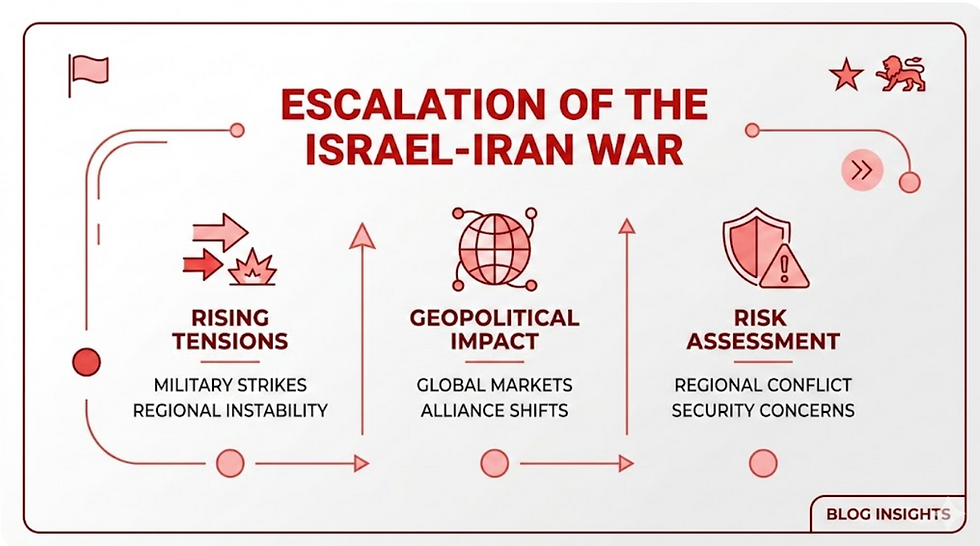
The 2026 conflict escalated into full-blown military exchanges, with strikes on Iranian territory and retaliatory attacks that now involve multiple fronts across the Middle East, moving far beyond indirect hostility.
This represents a new chapter where rivalry is no longer just expressed through proxies or nuclear brinkmanship — but through direct, lethal military confrontation.
Drivers of the Breakdown from Allies to Arch-Rivals
Several forces explain this dramatic transformation:
1. Ideology vs Realpolitik
The 1979 revolution replaced realpolitik cooperation with ideological confrontation — a shift that hardened both states’ narratives toward each other.
2. Regional Power Competition
Both Israel and Iran have sought influence in the broader Middle East:
Israel’s strategic alliances with Western powers and Gulf states
Iran’s efforts to create a sphere of influence through allied militias
This zero-sum pursuit made cooperation less feasible and rivalry more intense.
3. Proxy Mobilisation
Iran’s sponsorship of groups like Hezbollah and Hamas turned the rivalry into a multi-theatre struggle, forcing Israel into repeated military responses.
4. Nuclear and Security Dilemmas
Iran’s nuclear program, and Israel’s insistence on preventing a nuclear-armed Iran, introduced a strategic animation that persisted even through diplomatic negotiations.
The Present Reality: Sworn Enemies
Today, relations are among the most hostile in the Middle East. The idea that two nations could once cooperate — through covert agreements, shared strategic interests, and defence projects — seems almost unbelievable next to the current
war. But that history explains:
Why distrust runs deep
Why diplomatic channels are limited
Why regional alliances accentuate the conflict
History did not make hostility inevitable — but it created conditions where cooperation became increasingly unlikely and strategic confrontation became the dominant paradigm.
Frequently Asked Questions ( FAQs )
Were Israel and Iran ever allies?
Yes. Before the 1979 Iranian Revolution, Israel and Iran had strategic cooperation, including intelligence sharing and military collaboration.
What changed after 1979?
The Islamic Revolution replaced pro-Western leadership in Iran with a theocratic regime that ideologically opposed Israel, turning cooperation into hostility.
Did they fight directly before 2026?
Traditionally, conflicts involved proxy groups rather than direct state-to-state military engagement.
How did nuclear issues affect relations?
Iran’s nuclear program became a core strategic concern for Israel, intensifying diplomatic and covert confrontations.
Is there any peace movement between the two peoples?
Civil society initiatives like “Israel Loves Iran” reflect a desire among some for improved relations despite official hostility.
Final Takeaway
The journey from cooperation to confrontation in Israel–Iran relations spans geopolitical shifts, ideological revolutions, proxy wars, and security dilemmas.
What started as a pragmatic alliance before 1979 has, over four decades, become one of the Middle East’s most entrenched rivalries.
The current war in 2026 is the culmination of decades of mistrust, strategic
competition, and mutual fear — a stark reminder that historical relationships can transform in dramatic and unexpected ways, shaped by ideology, power politics, and regional dynamics.


Comments