India–US Trade Talks Begin April 20: What’s on the Negotiation Table.
- Apr 20
- 3 min read
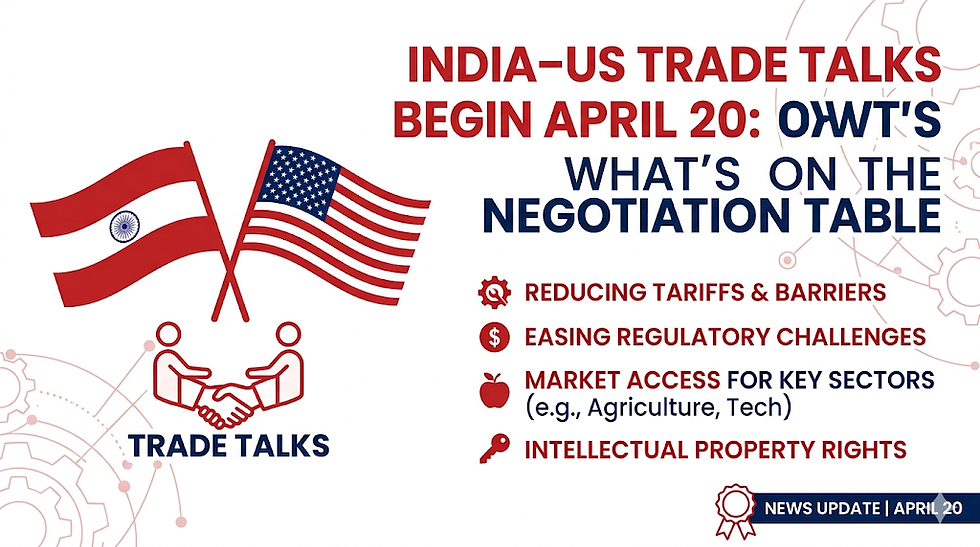
India and the United States have officially begun a fresh round of bilateral trade talks on April 20, 2026, aiming to strengthen economic ties and resolve long standing trade issues. These discussions are seen as a key step toward deepening the strategic and economic partnership between the two countries.
With both nations looking to boost trade volumes, improve market access, and address tariff-related concerns, the outcome of these talks could have significant
implications for multiple sectors.
India–US Trade Talks 2026
Title | Content |
Talks Begin | April 20, 2026 |
Countries Involved | India & United States |
Focus Areas | Tariffs, market access, digital trade |
Key Goal | Strengthening bilateral trade relations |
Sectors Impacted | Agriculture, tech, manufacturing |
Expected Outcome | Interim trade agreements, policy alignment |
Background of India–US Trade Relations
India and the United States share a strong trade relationship, with bilateral trade crossing significant milestones in recent years.
However, challenges have persisted, including:
Tariff disputes on certain goods
Market access restrictions
Regulatory differences
These issues have made regular negotiations essential to maintain smooth trade relations.
Key Issues on the Negotiation Table
1. Tariff Reductions
Both sides are expected to discuss reducing tariffs on select goods to improve trade flow.
India may seek relief on export products
The US may push for lower import duties on its goods
2. Market Access
Improving access for businesses in both countries is a major priority.
Easier entry for Indian pharmaceuticals and textiles
Greater access for US agricultural and dairy products
3. Digital Trade & Data Regulations
With the rise of the digital economy, discussions will also cover:
Data localization policies
Cross-border data flow
Digital taxation frameworks
4. Technology and Investment
Both countries are likely to explore:
Increased collaboration in technology sectors
Investment opportunities in manufacturing and startups
This aligns with broader strategic goals between India and the United States.
5. Supply Chain Cooperation
Post-pandemic global shifts have highlighted the importance of diversified supply chains.
Talks may include:
Reducing dependency on single markets
Strengthening Indo-US supply chain partnerships
Why These Talks Matter
The April 20 discussions are important because they could:
Boost bilateral trade volumes
Reduce trade barriers
Improve economic cooperation
Strengthen geopolitical ties
For businesses and investors, these talks signal potential policy changes and new opportunities.
Sectors Likely to Benefit
1. Information Technology
Indian IT firms could gain from relaxed regulations and increased collaboration.
2. Pharmaceuticals
Improved access to US markets could benefit Indian pharma exports.
3. Agriculture
US agricultural exports may see expanded opportunities in India.
4. Manufacturing
Joint initiatives could strengthen production and exports in both countries.
Challenges in the Negotiations
Despite optimism, several challenges remain:
Differences in regulatory frameworks
Sensitivity around agriculture and dairy sectors
Concerns over data privacy and digital policies
Reaching a balanced agreement will require careful negotiation from both sides.
Expected Outcomes
While a full trade agreement may take time, the talks could result in:
Interim agreements on specific sectors
Reduction in select tariffs
Frameworks for future negotiations
Even small breakthroughs can significantly improve trade relations.
Global Impact
The outcome of these talks could influence:
Global trade dynamics
Investment flows between major economies
Strategic alliances in the Indo-Pacific region
Stronger ties between India and the United States can have far-reaching economic effects.
Frequently Asked Questions ( FAQs )
1. When did the India–US trade talks begin?
The talks began on April 20, 2026.
2. What are the main topics of discussion?
Tariffs, market access, digital trade, and investment.
3. Will a trade deal be finalized immediately?
Unlikely; initial discussions may lead to interim agreements.
4. Which sectors are most affected?
IT, pharmaceuticals, agriculture, and manufacturing.
5. Why are these talks important?
They aim to strengthen economic ties and reduce trade barriers.
Final Takeaway
The India–US trade talks starting on April 20, 2026, mark an important step toward enhancing economic cooperation between two of the world’s largest economies.
While challenges remain, the focus on tariffs, digital trade, and market access highlights a shared intent to move forward.
For businesses, investors, and policymakers, the developments from these discussions will be crucial in shaping future trade opportunities and strengthening global economic partnerships.


Comments