Petrol Price Fluctuations in India: Reasons and Future Predictions
- Apr 6
- 5 min read

If there is one thing that dominates dinner table conversations and office water-cooler debates in India as much as cricket or the weather, it is the price of petrol. In 2026, as we navigate a complex global landscape defined by geopolitical shifts and an accelerating green energy transition, the "petrol pump pinch" remains a central concern for the Indian middle class and industries alike.
As of early April 2026, the price of regular petrol in the national capital, New Delhi, stands at ₹94.77 per litre, while in Mumbai, it hovers around ₹103.54. While these figures suggest a level of stability compared to the volatile swings of previous years, the underlying mechanics of these prices are more intricate than ever.
In this deep dive, we explore why petrol prices fluctuate, the hidden "tax tailwind," and what the future holds for your fuel budget.
1. The Anatomy of Petrol Pricing: Why Does it Change?
To understand fluctuations, we first need to look at how a single litre of petrol is priced. It isn't just the cost of the liquid; it is a combination of international markets, government policy, and logistics.
A. The Global Crude Oil Factor
India imports nearly 85% of its crude oil requirements. This makes our domestic fuel prices hyper-sensitive to international benchmarks like Brent Crude. When tensions escalate in the Middle East—such as the recent 2026 crisis in the Strait of Hormuz—global supply chains tighten, and Brent prices can surge past $110 per barrel.
B. The Currency Tug-of-War
Since crude oil is traded globally in US Dollars (USD), the value of the Indian Rupee (INR) against the Dollar is critical. Even if global oil prices remain steady, a weakening Rupee makes imports more expensive, forcing Oil Marketing Companies (OMCs) to hike retail rates.
C. The "Buffer" Role of OMCs
Companies like Indian Oil (IOCL), Bharat Petroleum (BPCL), and Hindustan Petroleum (HPCL) act as shock absorbers. Since May 2022, the Indian government and OMCs have often maintained "static" retail prices despite global volatility. This is known as a counter-cyclical model: OMCs earn higher margins when global prices are low to offset losses (under-recoveries) when global prices spike.
Current Context: As of April 2026, while regular petrol prices remain stable, OMCs are reportedly facing "under-recoveries" (notional losses) of over ₹24 per litre due to the surge in international prices caused by the West Asia conflict.
2. The Tax Burden: Central Excise vs. State VAT
A significant chunk of what you pay at the pump goes directly to the government. In fact, taxes often make up 35% to 45% of the final retail price.
Central Excise Duty
The Union Government levies a fixed excise duty per litre. In March 2026, the Centre announced a ₹10 per litre cut in excise duty to provide relief. However, in many cities, this hasn't translated to a lower price at the pump because OMCs used the "relief" to cover their mounting losses from high global crude costs.
State Value Added Tax (VAT)
This is where the price difference between cities comes in. States like Telangana and Andhra Pradesh have some of the highest VAT rates (above 30%), while others like Gujarat or Delhi keep it lower. This is why you might pay ₹107 in Hyderabad but only ₹94 in Delhi.
3. Key Reasons for Recent Fluctuations (2025–2026)
Several unique factors have shaped the 2026 fuel landscape:
The "Strait of Hormuz" Crisis: Military tensions and blockades in major maritime oil chokepoints have added a "risk premium" of $10–$15 per barrel to oil.
The Russian Oil Pivot: India’s strategic decision to import discounted Russian crude has helped keep prices lower than they would have been otherwise. However, as global sanctions and logistics become more complex, these discounts are narrowing.
Post-Pandemic Demand Surge: As the Indian economy targets 7% GDP growth, industrial and transport demand for fuel remains at record highs, keeping upward pressure on prices.
4. Future Predictions: What to Expect in 2027 and Beyond
Predicting fuel prices is notoriously difficult, but market analysts at J.P. Morgan and various Indian financial institutions point toward three likely scenarios:
The Bearish View (Stabilization)
If geopolitical tensions in the Middle East subside and OPEC+ (the oil-producing nations) increases supply, Brent crude could settle back to $70–$80 per barrel. In this scenario, Indian petrol prices could drop below the ₹90 mark by early 2027 as OMCs recover their losses.
The Bullish View (Continued Highs)
If the "West Asia" conflict remains a stalemate or escalates, we could see petrol prices staying above ₹100–₹110 across most Indian metros. High inflation and a volatile Rupee could further delay any meaningful price cuts.
The "Green" Impact
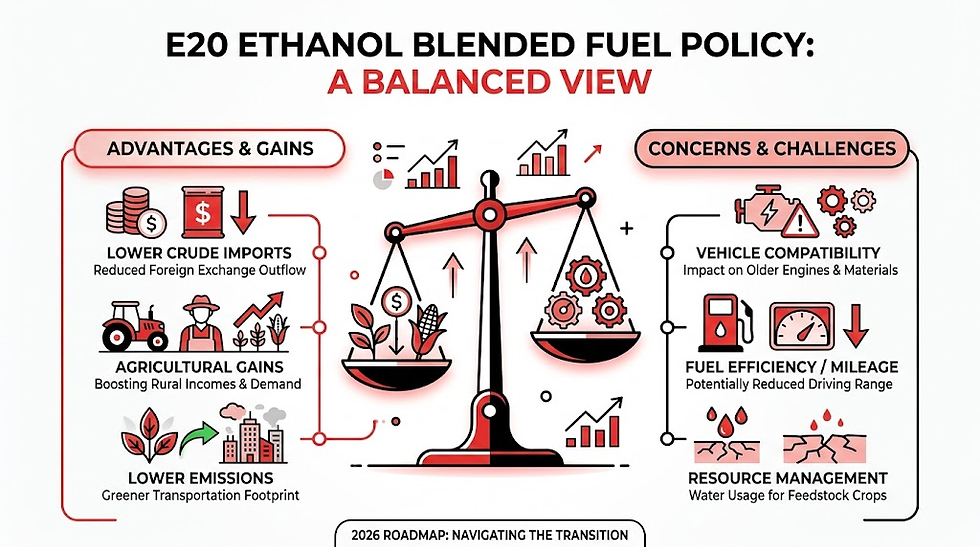
The rise of Electric Vehicles (EVs) and the government’s Ethanol Blending Program are the real wildcards. India has successfully achieved 20% ethanol blending (E20) in many regions. By reducing our reliance on pure petrol, these initiatives act as a long-term hedge against international price shocks.
5. FAQs:
Q1: Why is petrol cheaper in some states than others?
The difference is primarily due to Value Added Tax (VAT) levied by state governments and local cesses. Each state decides its own tax percentage, leading to price variations of up to ₹15 per litre across India.
Q2: Will petrol ever come under GST?
While there is constant debate, petrol and diesel are currently excluded from the Goods and Services Tax (GST). Bringing them under GST would likely lower prices (capping tax at 28%), but states are reluctant to lose a major source of independent revenue.
Q3: How does the Ethanol Blending Program help me?
Ethanol is produced domestically from sugarcane and food grains. By blending it with petrol (currently targeting 20%), India reduces its oil import bill, which helps stabilize prices and supports the domestic agricultural economy.
Q4: Why don't prices drop immediately when global oil prices fall?
Oil Marketing Companies often use periods of low global prices to recover losses incurred during high-price periods. This "smoothing" effect keeps prices stable for the consumer but prevents immediate drops.
Others:
Want to know how the latest fuel prices and economic trends affect your personal finances? Check out our Comprehensive Guide to Smart Financial Planning in 2026 here.
Conclusion
Petrol price fluctuations in India are a delicate balancing act between global geopolitics, domestic taxation, and the health of our state-run oil companies. While the 2026 landscape is currently dominated by international conflict and high crude costs, the Indian government’s aggressive push toward renewable energy and ethanol blending offers a glimmer of hope for a more stable future.
For the average commuter, the best strategy remains staying informed and perhaps considering the switch to a hybrid or electric vehicle as the infrastructure matures.


Comments