India Election 2026: Key States, Big Battles & What It Means for the Nation
- Apr 22
- 5 min read
India stands at a pivotal democratic crossroads this April 2026. As the nation readies itself for a series of high-stakes state assembly elections, the political atmosphere is charged with anticipation. From the coastal regions of Kerala and Tamil Nadu to the tea gardens of Assam and the bustling plains of West Bengal, millions of citizens are preparing to exercise their franchise. These elections are not merely about choosing state governments; they represent a significant barometer for the political pulse of the nation.
In this deep dive, we explore the dynamics of the 2026 state elections, the key battlegrounds, and what the outcomes might signify for the future of Indian federalism.
The 2026 Electoral Map: A Massive Democratic Exercise upcoming India Election
The Election Commission of India (ECI) has overseen a complex and robust schedule for the 2026 state legislative assembly elections. The states and union territory going to polls include:
Assam: A critical gateway to the Northeast, where governance and identity politics often intersect.
Kerala: A state known for its high literacy and distinct political binary between the LDF and UDF, now seeing an aggressive expansion push by the NDA.
Tamil Nadu: A political bastion where regional pride, Dravidian ideologies, and national aspirations clash.
West Bengal: A state defined by its intense political mobilization, where the battle between incumbent forces and national opposition is at its fiercest.
Puducherry: A vital Union Territory where the fight for local governance holds significant sway.
As of today, April 22, 2026, the nation is mere hours away from the next phase of voting, particularly in Tamil Nadu and West Bengal, where the intensity is palpable.
The Key Battles: Understanding the Regional Dynamics
Every election is a microcosm of local issues, but the 2026 cycle is characterized by a mix of local governance records and national ideological debates.
1. West Bengal: The High-Octane Contest
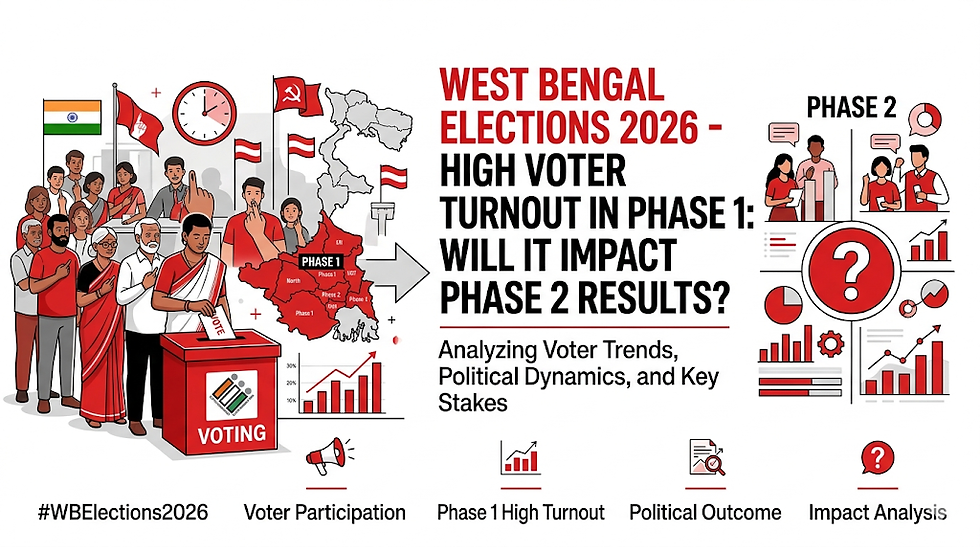
West Bengal remains perhaps the most watched battleground. With polling scheduled across two phases—April 23 and April 29—the stakes could not be higher. The discourse here centers on development, industrialization, and socio-political security. The Trinamool Congress (TMC) faces a formidable challenge from a resurgent Bharatiya Janata Party (BJP) and a determined Left Front. The sheer volume of voters—over 36 million in the first phase alone—underscores the logistical and political gravity of this state election.
2. Tamil Nadu: The Dravidian Heartland
In Tamil Nadu, the political narrative is deeply rooted in the legacy of Dravidian politics. With 234 assembly constituencies, the state is witnessing a multi-cornered contest involving the DMK, AIADMK, the BJP, and new entrants like the TVK. As voters head to the booths on April 23, the focus is squarely on economic welfare, water management, and the preservation of regional identity in a centralized national framework.
3. Kerala: The Ideological Pivot
Kerala’s election presents a unique scenario. The traditional fight between the Left Democratic Front (LDF) and the United Democratic Front (UDF) is being challenged by a robust campaign from the National Democratic Alliance (NDA). Issues of infrastructure development, the state’s socio-economic model, and secularism dominate the campaign trails here.
4. Assam: Development and Demography
In Assam, the election is a battle of narratives—balancing the "double-engine" government growth model against concerns regarding identity and the NRC/CAA discourse. The leadership of Chief Minister Himanta Biswa Sarma is being tested, with the opposition focusing on economic inclusion and local community rights.
Why This Matters for the Nation
While these are state elections, their outcomes invariably ripple across national corridors.
Federalism and Cooperation: State governments act as the primary implementers of central schemes. The results of 2026 will dictate the nature of the relationship between the Center and the States for the remainder of the decade. A cooperative federalist approach is essential for the seamless implementation of infrastructure projects, health initiatives, and education reforms.
Political Realignments: Every state election serves as a stress test for political alliances. National parties use these elections to refine their messaging, test their organizational strength, and gauge voter sentiment ahead of future general elections.
Youth and Governance: With a significant portion of the electorate falling in the 18–29 age bracket, these elections are forcing political parties to move beyond traditional vote banks and focus on employment, skill development, and digital governance.
The Role of Technology and the ECI
A notable feature of the 2026 elections is the seamless integration of technology. From the Election Commission’s mobile apps for voter services to the transparent monitoring of polling booths, the process is more accessible than ever. The use of Electronic Voting Machines (EVMs) and VVPATs ensures that the sanctity of the vote remains paramount. As citizens head to the polls, these tools are vital in ensuring that every voice is heard and counted accurately.
Frequently Asked Questions (FAQs)
Q1: When are the final results of the 2026 assembly elections expected?
The counting of votes for all polling states and the union territory of Puducherry is scheduled for May 4, 2026.
Q2: What is the Model Code of Conduct (MCC)?
The Model Code of Conduct is a set of guidelines issued by the Election Commission of India to regulate political parties and candidates during elections. It ensures that the ruling party does not use government machinery for campaigning and that all parties have a level playing field. It came into effect immediately upon the announcement of the election schedule on March 15, 2026.
Q3: How can I check if I am eligible to vote or find my polling station?
You can visit the National Voters’ Service Portal or use the ECI’s official mobile applications. These platforms allow you to search for your name in the electoral roll and locate your designated polling station.
Q4: What should I carry to the polling booth on election day?
You must carry your Electors Photo Identity Card (EPIC) or any other alternative photo ID document approved by the Election Commission, such as an Aadhaar card, PAN card, or Driving License, to verify your identity at the polling booth.
Q5: Why are some areas classified as 'sensitive'?
Areas are classified as 'sensitive' or 'super-sensitive' based on historical data regarding poll violence, law and order challenges, or geographical remoteness. In these areas, the ECI deploys additional security forces, surveillance teams, and quick-response units to ensure free and fair voting.
Others:
Stay informed and stay engaged.
Conclusion
The 2026 assembly elections represent the vibrant, albeit challenging, nature of Indian democracy. As we witness these events unfold, it is a reminder that the power to shape the future lies not in the hands of the elite, but in the hands of the voter. Whether it is the dense urban centers of Chennai and Kolkata or the tea estates of Assam, every vote contributes to the collective destiny of our nation.
As we look toward the results in early May, we hope for a peaceful, fair, and record-breaking voter turnout. A strong democracy requires active participation. If you are eligible, make sure your voice is heard—your vote is your power.


Comments