The Coding Pivot: Why Jensen Huang’s AI Job Warning Is Making Students Reconsider Their Careers
- 2 hours ago
- 7 min read

The year 2026 has brought a seismic shift to university campuses worldwide. For the last decade, computer science was widely regarded as the ultimate golden ticket—a guaranteed path to a high-paying, secure career straight out of graduation. However, a series of blunt public assessments from one of the technology world's most influential figures has completely disrupted that assumption. The Jensen Huang AI job warning has triggered widespread panic, introspection, and a massive realignment among students who are now actively forcing themselves to rethink their long-term career choices.
When the Nvidia CEO famously remarked that the traditional path of learning complex programming languages might soon become obsolete because "everyone is now a programmer" through natural human language, it felt like a distant hypothetical. By mid-2026, that hypothetical has transformed into an undeniable corporate reality.
With entry-level junior developer roles shrinking and AI agents handling a massive chunk of routine software syntax, students are left asking a critical question: If the machine can code, what am I getting this degree for?
The Genesis of the Warning: What Jensen Huang Actually Said
To understand why students are tearing up their carefully planned academic roadmaps, it is important to trace how the Jensen Huang AI job warning evolved from a controversial tech-summit talking point into an established market driver.
   [ Early 2024: The Spark ]
   Jensen Huang states at the World Government Summit that youth
   should stop focusing on pure coding, as AI will bridge the language gap.
             │
             ▼
   [ Late 2025: The Corporate Reality ]
   Nvidia absorbs thousands of engineers but pivots aggressively
   toward AI agent integration across all departments.
             │
             ▼
   [ Mid-2026: The Ultimatum ]
   Huang warns that traditional task-based roles face elimination:
   "If you don't use AI, you're going to lose your job to someone who does."
Huang’s core thesis is simple yet disruptive. Historically, computer science education spent roughly 80% of its time teaching humans how to speak the language of machines (Python, C++, Java, Rust). Huang argues that generative AI and agentic systems have flipped this dynamic on its head. Now, the machine understands our language.
In a recent address, Huang highlighted a brutal, sobering economic truth for anyone entering the workforce:
"Our job is not to wrangle a spreadsheet; our job is not to type into a keyboard. Everybody will have to use AI because if you don't use AI, you're going to lose your job to somebody who does."
For a generation of students who poured tens of thousands of dollars into tuition to learn how to do exactly that—type specific code into a keyboard—this statement landed like a thunderbolt. The warning was quickly backed by other industry titans, with Elon Musk amplifying the sentiment online with a brief but definitive endorsement: "True."
By the Numbers: The 2026 Tech Job Landscape
The panic on campus isn't just an emotional reaction to viral executive interviews. It is grounded in hard, undeniable data. For a long time, tech advocates claimed that AI would only create jobs and never destroy them. The reality unfolding in 2026 is far more nuanced, complex, and challenging for new graduates.
According to global technology workforce data compiled through the first half of 2026, corporate hiring practices have shifted dramatically:
AI-Driven Downsizing: In the first quarter of 2026 alone, tech tracking data recorded over 45,000 confirmed corporate layoffs globally. Strikingly, 20.4% of those layoffs were explicitly attributed to AI efficiencies and automation by the companies themselves. This represents a massive spike from 2025, when AI was cited in less than 8% of workforce reductions.
Graduate Unemployment Crunch: Employment metrics show that new graduate unemployment in technical fields has hit a four-year high.
The "Vibe Coding" Shift: Companies are increasingly relying on senior engineers paired with advanced "agentic AI" workflows, cutting out the need for large teams of junior developers whose primary job was writing basic boilerplate code.
Engineering Metric (2026 Market Data) | Historical Average (2021-2024) | Current 2026 Status |
Layoffs Explicitly Attributed to AI | Less than 5% | 20.4% |
Junior Dev / New Grad Job Openings | High Growth (+12%) | Four-Year Low |
Corporate Spending on AI Infrastructure | $15B - $30B annually | $90B+ (Nvidia Deal Spree) |
Primary Code Generation Origin | 90% Manual Human Typing | Over 60% AI-Generated/Assisted |
Why the Jensen Huang AI Job Warning Hits Fresh Graduates the Hardest
The fundamental challenge of the Jensen Huang AI job warning is that its disruptive impact is not distributed evenly across the workforce. Seasoned enterprise architects, senior engineers, and specialized product leads are actually doing exceptionally well. They are leveraging AI tools to automate their tedious tasks, allowing them to design systems at five times their previous speed.
However, this dynamic leaves university students and recent grads stranded in an incredibly difficult paradox.
1. The Death of the "Stepping Stone" Junior Role
Historically, a student graduated, took a low-level junior developer job, spent two years fixing basic software bugs and writing repetitive scripts, and learned the ropes through trial and error. Today, AI models handle those exact entry-level tasks instantly and for a fraction of the cost. Because companies no longer need armies of human junior coders to do the baseline heavy lifting, the vital bridge between being an unproven student and an experienced engineer is rapidly collapsing.
2. The Fallacy of the Analogy
Tech executives love to comfort the public by using historical analogies, such as the evolution of medical imaging. Huang regularly points out that when AI was introduced to read medical scans, people predicted the end of radiologists. Instead, the number of radiologists actually increased because the efficiency allowed hospitals to process far more patients.
While that holds true for an expert radiologist with 15 years of clinical experience, it provides very little comfort to a 22-year-old student. If an AI system can instantly read the scan or write the baseline code, an employer has zero incentive to hire an inexperienced graduate to do it poorly while they learn on the job.
How Students Are Pivoting: The New Career Paradigms
Faced with this clear structural shift, students are completely transforming how they approach their education. The traditional obsession with pure computer science is rapidly giving way to broader, multidisciplinary fields that are far more resilient to automation.
The Rise of "Domain Expertise"
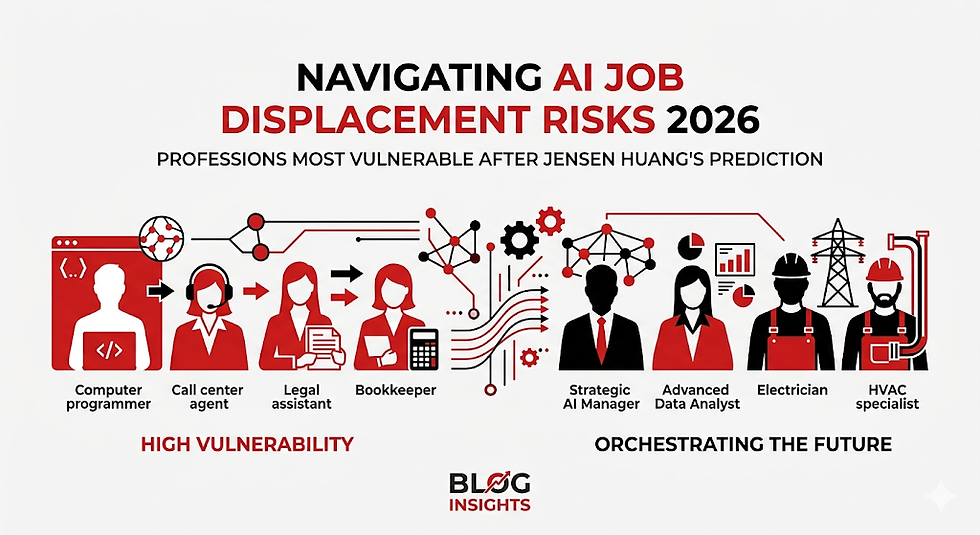
Students are realizing that knowing how to code is no longer a competitive advantage; knowing what to build is what matters. As a result, we are seeing a massive migration toward fields where human context, empathy, and physical reality cannot be simulated by software:
Bioinformatics and Computational Biology: Combining deep biological understanding with data science to revolutionize healthcare.
Industrial AI and Physical Robotics: Moving away from digital-only software and focusing heavily on how AI interacts with the physical world, hardware, and manufacturing.
Product Psychology and System Architecture: Shifting focus from writing code syntax to analyzing human behavioral patterns and defining the overarching structural parameters of complex software systems.
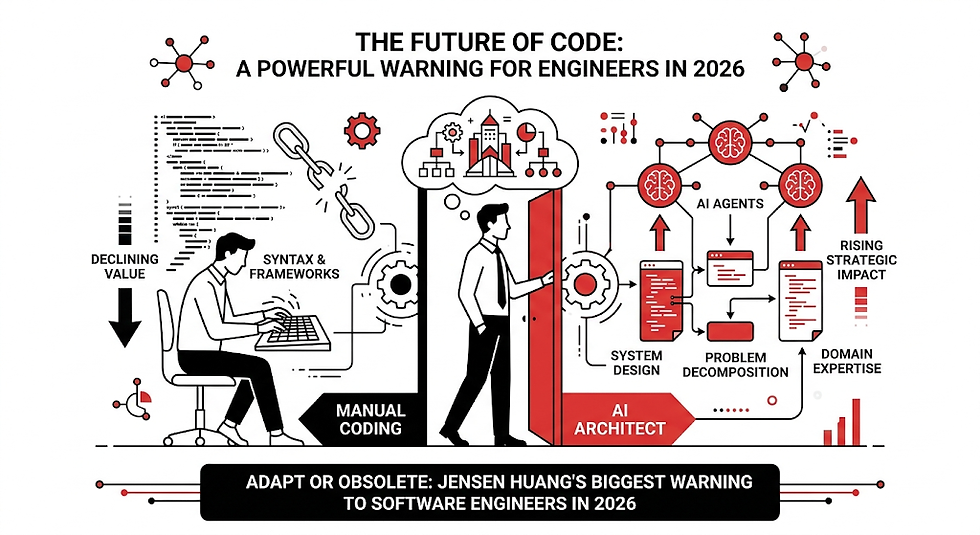
Instead of spending late nights memorizing programming syntax, forward-thinking students are training themselves to become "AI Directors." They are learning how to clearly state complex business problems, orchestrate groups of independent AI agents, and rigorously audit the code outputs for hidden architectural flaws, security risks, and systemic bias.
Summary: Survival Guide for the Next Generation of Workers
To survive and thrive in this highly automated landscape, students must actively pivot away from task-based learning and embrace high-level conceptual mastery.
┌────────────────────────────────────────────────────────────────────────┐
│               THE 2026 SKILLSHIFT EDUCATION MATRIX                     │
├───────────────────────────────────────┬────────────────────────────────┤
│   OLD MODEL (Rapidly Deprecating)     │     NEW MODEL (High Value)     │
├───────────────────────────────────────┼────────────────────────────────┤
│  • Memorizing syntax & code languages │  • Masterful AI Prompting      │
│  • Manual debugging of basic scripts   │  • System Architecture Design  │
│  • Building repetitive UI components   │  • Deep Industry Specialization│
│  • Working as an isolated solo coder  │  • Managing Agentic Workflows  │
└───────────────────────────────────────┴────────────────────────────────┘
The underlying message of the Jensen Huang AI job warning is not that technical education is dead, but rather that it must drastically evolve. The students who successfully navigate this transition are the ones who stop viewing themselves as mere text-editor operators and begin viewing themselves as high-level problem solvers.
Frequently Asked Questions (FAQs)
What exactly is the Jensen Huang AI job warning?
The Jensen Huang AI job warning refers to a series of analytical statements made by the Nvidia CEO regarding how rapid advancements in artificial intelligence are automating task-based roles, particularly entry-level computer programming. Huang advises that because human language is becoming the primary programming interface, workers and students must shift their focus away from manual code generation and toward strategic domain expertise and AI tool mastery.
Does this mean computer science degrees are completely useless?
Not at all, but the focus of the degree must shift. A degree centered purely on writing syntax is facing severe downward pressure. However, a computer science education that prioritizes deep systems architecture, machine learning engineering, data security, and managing complex agentic workflows remains incredibly valuable to modern employers.
What fields should students look into if they want to avoid AI displacement?
Students are highly encouraged to explore multidisciplinary fields that combine technical literacy with deep human or physical world context. Sectors like biotechnology, physical robotics, renewable energy engineering, and human-centric design require deep contextual understanding and physical interaction that AI agents cannot easily replicate.
How are companies changing their hiring models because of AI?
Many companies are shifting to leaner, highly leveraged team structures. Instead of hiring large cohorts of junior developers to do basic coding work, they are equipping experienced senior staff with agentic AI tools. This allows small, agile teams to deliver massive projects, which unfortunately reduces the total volume of traditional entry-level technical roles.
Interactive Career Pivot Explorer
If you are currently trying to navigate this fast-changing job market, use this interactive explorer to see how traditional career paths are transforming and find out which skills you need to prioritize to stay ahead.
Explore More Resources
Navigating the 2026 AI Job Shift – Official strategy panels and industry replays detailing the future of agentic workflows directly from the organizers of GTC 2026.
The Evolution of Software Engineering Careers – A comprehensive video breakdown analyzing the full history of executive statements surrounding coding automation, expanding hiring paradoxes, and what it practically means for students in tech today.
Comments