IMD Forecast: From 44.5°C Heatwave to Thunderstorms Across India.
- 54 minutes ago
- 3 min read
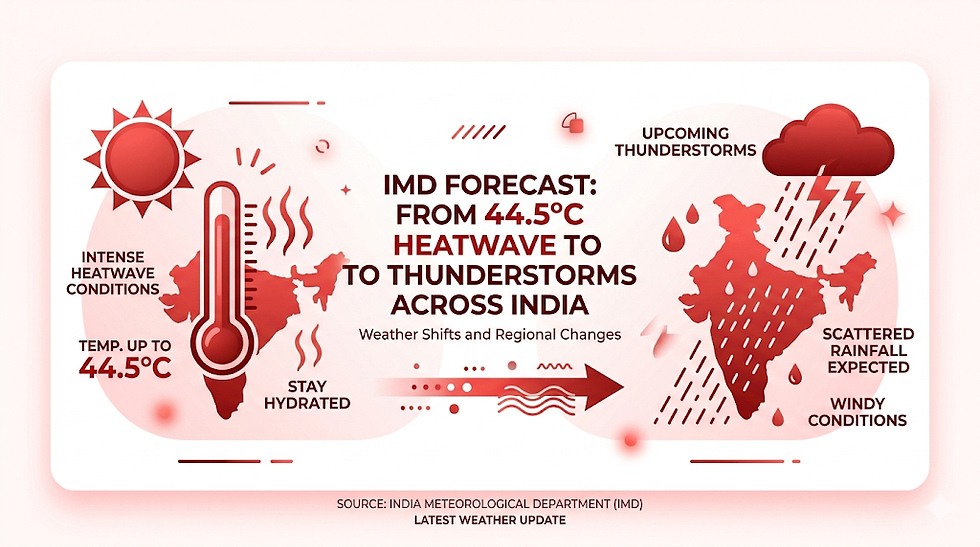
India is currently witnessing a dramatic shift in weather patterns, as the India Meteorological Department (IMD) forecasts a rare combination of extreme heatwaves and widespread thunderstorms across different regions of the country.
While parts of northwest and central India are experiencing scorching temperatures touching 44.5°C, several eastern, northeastern, and southern states are preparing for heavy rainfall, thunderstorms, and gusty winds.
This stark contrast highlights the growing complexity of India’s weather systems, driven by multiple atmospheric conditions acting simultaneously. As the forecast extends up to April 29, 2026, understanding these patterns becomes crucial for residents, travelers, and policymakers alike.
Phase-Wise Weather Overview Across India
Category | Details |
Maximum Temperature Recorded | 44.5°C (Rajasthan) |
Heatwave Regions | Rajasthan, Madhya Pradesh, Uttar Pradesh, Bihar, Vidarbha |
Thunderstorm Regions | Northeast, East India, South India |
Rainfall Type | Light to heavy rain with lightning |
Wind Speed Forecast | 30–50 km/h gusty winds |
Duration of Pattern | Till April 29, 2026 |
Primary Authority | IMD |
Weather Nature | Mixed extremes (heat + storms) |
IMD Forecast : Heatwave Situation: Temperatures Touch 44.5°C
India’s summer intensity has sharply increased, especially in northwestern regions.
Rajasthan recorded the highest temperature of 44.5°C, making it the hottest region in the country.
Several areas in Gujarat and Haryana have crossed 42–43°C.
Key Heatwave Regions
According to IMD forecasts:
Madhya Pradesh – Heatwave till April 27
Uttar Pradesh – Rising temperatures with dry conditions
Bihar – Heatwave till April 25
Chhattisgarh & Vidarbha – Severe heat pockets
Why Is the Heat So Intense?
Dry winds from desert regions
Lack of cloud cover
Anti-cyclonic circulation trapping heat
Rising seasonal temperatures
In some regions, temperatures are 4–5°C above normal, intensifying discomfort and health risks.
Thunderstorms & Rainfall: Relief in Other Regions
In contrast to the heatwave zones, several parts of India are set to receive active rainfall and thunderstorms.
Regions Likely to Experience Storms
Northeast India – Heavy to very heavy rainfall
West Bengal, Odisha, Jharkhand – Thunderstorms with lightning
Southern states like Tamil Nadu and Karnataka – Scattered rain and gusty winds
Weather Features Expected
Thunderstorms with lightning
Gusty winds up to 50 km/h
Localized heavy rainfall
Possibility of hailstorms in isolated regions
These conditions are caused by:
Western disturbances
Cyclonic circulations
Moisture inflow from the Bay of Bengal
The “Two-India Weather” Phenomenon
One of the most striking aspects of the current forecast is the sharp regional contrast:
Region Type | Weather Condition |
Northwest & Central India | Extreme heatwave |
Eastern & Northeastern India | Heavy rainfall |
Southern India | Thunderstorms & humidity |
Coastal Regions | Hot & humid conditions |
This phenomenon reflects how multiple weather systems are active simultaneously, leading to completely different experiences across the country.
Impact on Daily Life
1. Health Risks
Heatstroke and dehydration in heatwave regions
Increased humidity discomfort in coastal areas
Lightning risks during thunderstorms
The IMD has even introduced a “feels-like index” to better measure heat stress in cities like Nagpur, combining temperature, humidity, and wind factors.
2. Agriculture
Heat stress affecting crops in central India
Rainfall benefiting northeastern agriculture
Risk of crop damage due to hailstorms
3. Travel & Transport
Flight and train delays due to storms
Road disruptions in heavy rainfall areas
Travel advisories issued for extreme heat zones
IMD Alerts and Warnings
The India Meteorological Department has issued multiple alerts:
Heatwave alerts for Rajasthan, Gujarat, MP, and surrounding regions
Yellow alerts in cities like Mumbai for hot and humid weather
Thunderstorm warnings for eastern and northeastern states
Citizens are advised to:
Avoid outdoor activity during peak afternoon hours
Stay hydrated
Follow local weather updates
What Happens After April 29?
Forecast models suggest:
Heatwave conditions may gradually reduce in some regions
Rainfall activity could expand to additional areas
Temperature fluctuations will continue due to active weather systems
However, May and June are expected to bring even more intense heatwave conditions across India, according to seasonal outlooks.
Frequently Asked Questions ( FAQs )
1. What is the highest temperature recorded in India recently?
The highest recorded temperature is 44.5°C in Rajasthan.
2. Which regions are facing heatwaves?
Northwest and central India, including Rajasthan, Madhya Pradesh, and Uttar
Pradesh.
3. Which areas will receive thunderstorms?
Northeast, eastern states like West Bengal and Odisha, and parts of South India.
4. How long will this weather pattern last?
The current mixed pattern is expected to continue until April 29, 2026.
5. What causes such contrasting weather?
Multiple systems like western disturbances, cyclonic circulations, and regional temperature variations.
Final Takeaway
The latest forecast from the India Meteorological Department highlights an unusual and extreme weather contrast across India—with scorching heatwaves in one region and thunderstorms in another.
This “two-weather reality” underscores the increasing variability in India’s climate, where different regions simultaneously experience completely opposite conditions.
For citizens, the key takeaway is clear:
Stay alert to local weather updates
Take precautions against heat and storms
Prepare for rapidly changing conditions
As India moves deeper into summer, this pattern serves as a reminder that weather extremes are no longer isolated events—they are becoming the norm.



Comments